NEW PODCAST: OTIF Starts Long Before the Truck Arrives
Episode 276 of the Tech On Demand podcast, brought to you by GrowerTalks magazine, takes a close look at On Time In Full (OTIF) performance and why reliable fulfillment starts months before an order ships.

For USING SUPPLY CHAIN STRATEGY TO DELIVER OTIF, host Bill Calkins talked with Richard Shapiro, vice president of supply chain operations at Growscape, a North American manufacturer and supplier of horticultural containers, planters and garden products. Richard explained how forecasting, lead times, seasonality and sales and operations planning all come together to help suppliers meet customer expectations.
As we chatted, one theme came through loud and clear: Communication matters.
Richard repeatedly challenged customers and colleagues to “Tell me something I DON’T know!” Sharing new information, changing forecasts and potential challenges gives suppliers a chance to adjust before small issues become bigger problems. And in an industry increasingly reliant on email and text messages, Richard offered a refreshingly simple suggestion: Pick up the phone. A quick conversation about forecasts, production changes or unexpected demand can help you and your suppliers work through challenges together. That type of collaboration has always been one of the strengths of horticulture.
Richard also discusses how Growscape approaches sustainability across manufacturing, distribution and transportation and how planning decisions throughout the supply chain can impact the final delivery. In fact, check out the company’s 2026 SUSTAINABILITY REPORT—it’s really interesting!
The episode offers an unusually transparent look at how a major horticultural supplier operates within an intensely seasonal industry while serving businesses of many different sizes.
But the conversation went well beyond containers and logistics. Richard shared practical sales and operations planning (S&OP) strategies drawn from decades of experience leading businesses and managing supply chains.
For growers, the takeaway is simple: Strong OTIF performance isn’t created at the loading dock. It begins with forecasting, communication, planning and strong relationships between growers and suppliers.
Be sure to listen all the way to the end because Richard offered ideas for grower looking to improve their own supply chain and logistics as wholesale suppliers to retail greenhouses and landscapers.
There are now more than 275 Tech On Demand podcast episodes in the archive covering a huge range of topics related to the professional greenhouse, garden center, landscape, nursery and CEA markets. Jump back in to get caught up or take a minute to subscribe—that way you’ll never miss an episode.

Koppert Corner: Getting ahead of Thrips parvispinus
Each month, I connect with my friend Heidi Doering, a technical services expert at Koppert, as she shares tips and technical information that she runs across during her many visits to client sites across the nation. This time, she’s going to help you implement Thrips parvispinus prevention protocols this winter.
Thrips parvispinus (Tp) is a gnarly insect pest that continues to create headaches for propagators and finished plant growers across North America. This spring, Koppert technical advisors observed Tp successfully migrating from mandevilla and dipladenia to other preferred plant species nearby. Since Tp damage looks a lot like broad mite damage on a crop such as fuchsia, it’s mission critical to proactively scout for both of these insect pests on spring annuals.
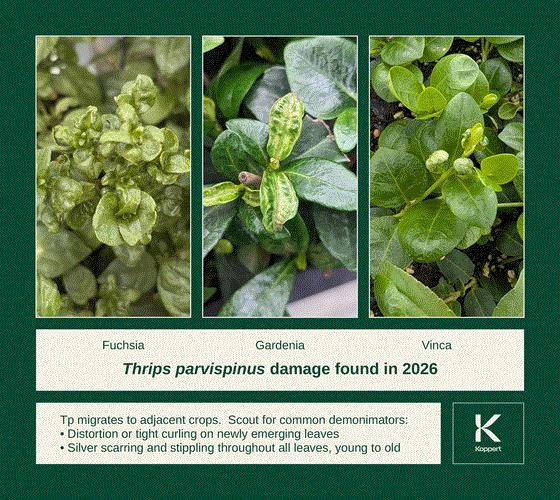
Treating unrooted cuttings
In 2024, researchers learned that mandevilla cuttings were arriving at rooting stations containing up to 9 Tp per 20 cuttings, some in the egg stage tucked inside the leaf cuticle and well protected from initial cutting dips. Their trials confirmed that cutting and liner dips are the safest and most effective method that we have to reduce the Tp load on incoming cuttings.
In 2025, the team continued trialing other clean-up strategies, including steam heat and cold temperature treatments to impact Tp on cuttings. They concluded that steam treatment, while effective at reducing incoming thrips, is costly due to the special equipment needed, so it is not a viable commercial strategy.
While cold treatment of cuttings was deemed effective, mandevilla/dipladenia breeders that I contacted warned that you should proceed with caution. Test your specific varieties for cold tolerance before treating all cuttings. Cold treatments on tropicals such as mandevilla/dipladenia can cause leaf drop or yellowing. Also, prolonged exposure to temperatures below 50F may damage the growing tip, causing an unintended pinch. This can negatively impact uniformity later in the crop cycle.
Treating rooted liners
Contact products are not adequately effective on Tp. Its foraging behaviors are cryptic and the larvae tend to migrate across the plant at different times of the day. As Tp is resistant to most pesticides used for its control, avoid using chemical insecticides on liners for early IPM. Instead, start by sprenching once weekly and spraying once weekly with Capsanem (Steinernema carpocapsae) + Isarid (Isaria fumosorosea) + Azadirachtin. Applying both a sprench and a spray of this tank mix each week impacts larvae, prepupae, pupae and adults. It effectively breaks their lifecycle, stopping Tp early in the growing season.
Contact a Koppert Technical Consultant to set up a comprehensive scouting and IPM plan to effectively monitor for and manage this insect pest throughout the winter months.

Nick’s Tip of the Week: Watch Out for Whiteflies
Each week, I’ll work with my buddy Nick Flax, a technical services expert at Ball, to share a concern that’s come up during one of his numerous calls with growers across North America. This week, he’s discussing shelter-seeking bugs (specifically whiteflies) that might be finding refuge in your greenhouses when their homes in neighboring fields are tilled up after harvest. Assuming you’ve already identified the pest, Nick will now get down to the business of chemical and biological management strategies.
PROBLEM: For many of you rural growers, your neighbors have probably just finished harvest season and fields are combined or tilled—while average daily temperatures are finally beginning to drop. This means you can expect pests to start making their way into your greenhouses. One specific pest to watch for is whiteflies. They should be scouted for and managed carefully during this time of year.
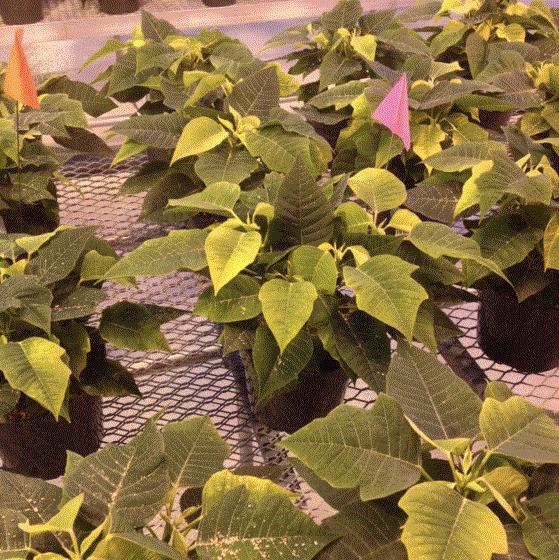
NICK’S TIP: Early identification, exclusion and preventative management are the keys to prevent whitefly population explosions. Below are several ways you can get out in front of major pressure ... But remember, some of these may not be the best option for your operation or stage in crop production right now. And while it may seem like a lot of effort to implement some exclusion and biological control strategies mentioned here, I strongly encourage you all to integrate these into your IPM programs in future years if you struggle to manage whiteflies each year.
URC or Liner Dips: Cutting and young plant suppliers do their utmost to ensure you receive pest-free material. However, hard-to-spot whitefly eggs and nymphs can slip through their detection “nets” and enter your greenhouse this way. Treatment of incoming URCs or young plants via a dip can help catch these hitchhikers early and prevent subsequent outbreaks. Biopesticides containing Beauveria bassiana, mineral oils and insecticidal soaps are all effective options in this process, but be aware that state and local restrictions on what can be used in this manner may exist. Check with your state’s department of agriculture for any potential restrictions and additional guidelines on how to implement this process in your operation before doing so. Also, be sure to check out this VIDEO on cutting dips. And see Dr. JC Chong’s notes from a past issue of his PESTTALKS E-NEWS for more details, as well as do’s and don’ts.
Biological Controls: I speak from personal experience when I say this: bios can really work well to keep whiteflies at bay. When deployed preventatively, parasitic wasps like Encarsia and Eretmocerous are powerful tools to keep whiteflies in check. Used in tandem with other biologicals like Ambylseius swirskii mites, other predatory insects and biopesticides or “soft chemistries,” you can implement a holistic strategy to keep whitefly populations at an almost undetectable level.
It takes dedication and a different mindset to make this approach work well, and it ultimately boils down to three key ideas:
1. Start with a very clean greenhouse and clean inputs. Rinse, wash, and sanitize the production area, remove all “pet plants” and other potential pest reservoirs in and around your greenhouse (weeds, etc.), and implement cutting/liner dips before transplant.
2. Work with a biological control agent (BCA) supplier to build a rotation of beneficials and low-toxicity pesticides that is compatible with your operation and targets the species of whiteflies you encounter. Some predators and parasitoids feed preferentially on one species of whitefly versus the other, so get your whiteflies properly identified first.
3. Deploy BCAs early and often to combat influxes of whiteflies and maintain a regular release schedule throughout the season to ensure the bios can keep the pressure on any stragglers. In more northerly climates, if you can keep whitefly populations low through October and into November when it’s too cold for them to survive outdoors, this makes maintenance of low populations much easier.
Chemical Control: If bio-IPM is not feasible for you now or your early attempts at this approach don’t work as well as you’d like, be ready to pivot to traditional chemical controls. And if you’re not interested in a full-on biological IPM program right now, that’s also fine. Just know that even when you choose to use traditional chemical insecticides to manage whiteflies, you cannot wait around for their numbers to build before you act.
Also, though many insecticides state that they control whiteflies, chemistry selection definitely matters. Historically, neonicotinoids have been used to manage whiteflies, but they are not always the best option. For info on which chemistries will have the most impact on your whitefly populations, check out this awesome GROWERTALKS ARTICLE from a few years ago on whitefly insecticide trials conducted by researchers at the Universities of Maryland and Delaware.

Cleaning Up Incoming Material
Speaking of cuttings dips (like Nick was just doing in the article above), I saw a demonstration of this process while touring greenhouses during the Plug & Cutting Conference in Pennsylvania a few weeks ago. During our visit to Star Roses & Plants, attendees had the opportunity to visit five or six stations covering various topics and one was to watch the Bioworks team dip cuttings and discuss protocols.
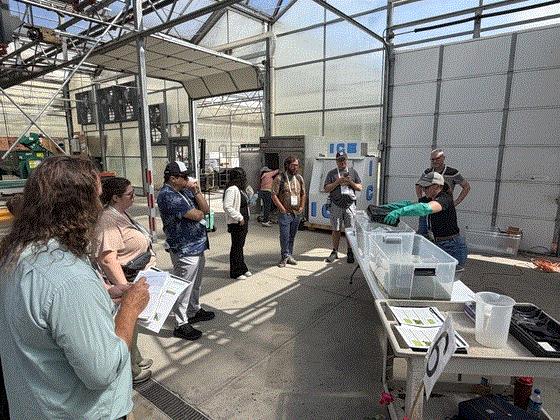
After the quick demo, we all got a handout titled UTILIZING DIPS: CLEAN UP INCOMING PLANT MATERIAL and I was happy to get a copy and made a note to include this info in the newsletter. As you can tell from the link I just shared, this great info is available online. I suggest you bookmark it and share the document with your team before young plants start arriving for spring 2027 production.
Now is also the time to get orders in for the products you’ll need for dipping. I know for a fact that this strategy is rapidly being adopted by more and more growers, so I imagine the products will be in high demand.
The link above is for the U.S. dipping guidelines. If you’re in Canada, HERE’S YOUR VERSION.

QUICK TECH TIP: Saving Petunias
The Tech On Demand team receives a lot of messages every year when young plants arrive with visible signs of poor health. It’s often a discussion around whether the damage can be reversed and the plants will be viable and healthy or if they should be reordered/replaced. Here’s an example of petunia liners that arrived with black or brown spots on the foliage.

Our tech team’s best estimation was that these cuttings received mild physical damage in transport and now Botrytis spores can be seen on several leaves. The dark spotting may be from the Botrytis, but it may also be the result of a combination of the physical damage and low nutrition and overall stress. Bottom line is to treat with a foliar fungicide and provide an optimum propagation environment with the goal of developing roots and then removing the plants from the misting (propagation) environment rapidly.
Finish Line … Cyclamen Disease
I had one more topic on the list to address this week, so I guess I’ll drop it in as a “Finish Line” item: cyclamen disease. Looking back through the problems many growers deal with this time of year (based on our team’s activity reports), disease symptoms showing up on cyclamen, like plants collapsing and rotting off, is something we should discuss.
In the past, we’ve heard from cyclamen growers asking if bacterial infection might cause “mushy” corms and poor root growth. Of course, any technical expert would advise growers to send samples to a reputable lab for the best diagnosis, but in the meantime, here’s some advice our team has given in the past.

When planting, the best practice is to leave the top portion of the corm above the soil line at planting. In the photo, you see plugs popped out of their tray, but corms should also look like this in the pot and not be buried.
Lots of rootzone pathogens will jump onto buried corms as the tissue gets stressed, so plants with buried corms that look fine right now will likely meet a similar fate eventually if you don’t maintain a tight fungicide program and very moderate soil moisture through finish.
Check the roots for cortex slippage, a strong indicator of Phytophthora or Pythium. If roots are discolored but the outer layer is not sloughing off, Fusarium may be the culprit. However, getting samples into a lab is the only way to be 100% certain.
For now, you can apply a fungicide such as Terrazole. Banrot is another option. Either will provide another strong mode of action to combat Pythium/Phytophthora and hopefully keep this issue at bay until you get confirmation of exactly which pathogen is in play.
Lastly, I found a COMPREHENSIVE CHART OF DISEASES THAT CAN AFFECT CYCLAMEN published by University of California Agriculture and Natural Resources (UCANR) that might be helpful.
Talk to you next week …


Please feel free to send your comments, constructive criticism and topic ideas to me at bcalkins@ballhort.com.

Bill Calkins
Editor—Tech On Demand
This email was received by you and 25,411 other fine subscribers!
If you're interested in advertising in Tech On Demand, contact Kim Brown ASAP and she'll hook you up.