NEW PODCAST: Avoid These Common Sanitation Mistakes!
Sanitation is about a lot more than power washing between crops. In THE LATEST TECH ON DEMAND PODCAST, I talked with BioSafe’s national sales manager for horticulture Eric Smith about how sanitation, crop protection and water treatment work together as part of a true IPM program.
Eric shared some common mistakes the BioSafe team sees out in the field—from choosing the wrong chemistry to overlooking areas where algae, biofilm and pathogens often hide.
One important distinction Eric touches on throughout the podcast is understanding the difference between cleaning, sanitizing and disinfecting. Acid cleaners are generally used to tackle mineral scale, while alkaline cleaners are better suited for the organic matter that hits the ground in every production area (leaf debris, media, etc.)

We also talked about some of the areas that are easy to overlook, including wet walls, roll-up curtains, groundcloth and pipes. Irrigation lines also require your attention because biofilm inside those lines can harbor some of the nastiest pathogens, including Pythium, Phytophthora, Fusarium, Xanthomonas and more.
Propagation is another area where good sanitation is critical. Tight plant spacing and high humidity from mist can create ideal conditions for algae and biofilm. So you really have to stay on top of sanitation in prop.
Eric also discussed some of the different application methods for sanitation products. He said spraying tends to be most common because most greenhouses already have the necessary equipment (and it’s effective), foam increases the amount of time active ingredients remain on vertical surfaces, and fogging can help reach difficult spaces.
Possibly the biggest takeaway from this episode is the importance of consistency. Sanitation shouldn’t be something you only think about or do between crops. Making it part of your regular production routine can reduce disease pressure, protect crops and improve overall quality of the products you grow and sell.
Listen all the way to the end for practical sanitation ideas you can put to work in your operation!
There are now more than 275 Tech On Demand podcast episodes in the archive, covering a huge range of topics related to the professional greenhouse, garden center, landscape, nursery and CEA markets. Jump back in to get caught up or take a minute to subscribe—that way you’ll never miss an episode.

Josh’s Tip of the Week: Maintaining Bract Quality While Finishing Poinsettias
Usually, I work with my buddy Nick Flax, a technical services expert at Ball Seed, to share a concern that’s come up during one of his numerous calls with growers across North America. This week, frequent contributor (and another member of the Ball Seed tech team) Josh Henry is taking over to share some timely info about why your poinsettias behave the way they do this time of year.
PROBLEM: The period between first color and market finish is often when poinsettia quality is won or lost. As bracts expand and develop color, plants become more sensitive to environmental stress, nutrient imbalances, disease pressure and chemical applications. Many issues that seem unrelated, including Botrytis, bract-edge burn, phytotoxicity and poor postharvest performance, can often be traced back to conditions during this final stage of production.
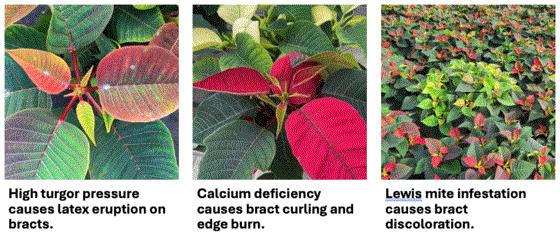
JOSH’S TIP(S): Understanding why poinsettias behave differently during bract expansion can help you avoid problems and maintain crop quality through shipping. Here are three tips to consider and share with your team:
Tip 1: Keep Bracts Dry and Disease-Free
-
Use drip or subirrigation and water early to keep foliage dry.
-
Provide sufficient airflow and spacing throughout the crop to keep bracts dry and reduce fungal disease risk. Avoid condensation on bracts—especially overnight—by monitoring the dew point. Be cautious of lowering temperatures, which can increase humidity and condensation risk.
-
Clean senesced leaves and plant debris that can harbor Botrytis.
Tip 2: Support Healthy Bract Development
-
Avoid significant swings in temperature, humidity and substrate moisture to reduce physiological stress. High humidity combined with wet substrate causes unsightly latex eruption or “crud” on the bracts.
-
Maintain fertility within your target range and avoid excessive soluble salts. Watch susceptible cultivars closely for bract edge burn. Use a Cal-Mag fertilizer and supplement with foliar calcium chloride sprays of 200–400 ppm Ca.
Tip 3: Protect Bract Quality
-
Lewis mites, thrips and whiteflies can reduce bract quality and marketability, so monitoring and prevention is key. Pest injury may be mistaken for nutrient deficiencies or normal color development issues. Many pesticide labels include specific application restrictions once bracts have formed! Trial unfamiliar products or tank mixes on a small group of plants before making widespread application.
-
Remember that cosmetic damage, whether caused by pests or chemicals, is unlikely to be outgrown at this stage.

OSU Conference Notes: Building Better Liners
Last week, I attended the third annual Ohio Floriculture & Nursery Conference, organized by Dr. Garrett Owen at THE Ohio State University. I went to the first one and missed last year, so I was excited to attend again this year. I know Ball and Ball Publishing are based in Illinois … but I’m an Ohioan and proud to support our state’s leadership in floriculture, and a high-quality conference like this one really shines a spotlight on how vital our state is to the industry. Research conducted by Dr. Owen (along with the entire department and extension services at OSU, of course) is cutting-edge and applicable, and conference attendees had the opportunity to learn from professors and engage with grad students.
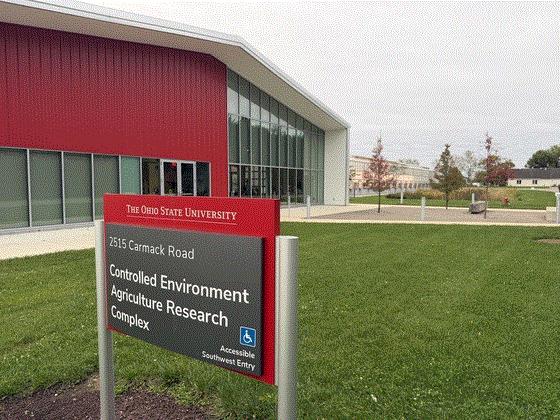
Over the next few newsletters, I’ll share from my notes taken during at least six conference sessions, starting with the first presentation of the day, which was a perfect example of OSU’s in-house research led by Dr. Owen.
Producing a high-quality liner starts well before plants are ready to transplant. In this presentation, Garrett shared research and practical strategies for improving callusing, rooting and overall liner quality in annuals, perennials and woody ornamentals.
One opportunity he spent time discussing is the use of foliar rooting hormones. This is a hot topic these days (or maybe it just feels that way to me because our research team at Ball has done A LOT OF WORK with rooting hormones recently …). Traditional rooting compounds containing synthetic auxins are commonly applied to the basal end of cuttings as powders, dips or soaks. Foliar applications of IBA offer another approach. The hormone is applied overhead and absorbed through the leaves before moving through the plant.
Research discussed during the session found foliar IBA applications can lead to rooting up to seven days earlier, along with faster rooting and greater root mass. Trials included Fine Americas' Advocate and Hortus IBA Water Soluble. Of course, concentration matters, and too little may not provide the desired response, while excessive rates can create problems. Timing matters, as well, with applications tested at 24 and 48 hours after sticking and on consecutive days.
Light is another major factor in successful rooting. Increasing light during propagation can improve rooting, but only to a point. Shading may still be needed to manage daily light integral and control growth. Garrett noted that if you are considering an investment in supplemental lighting, improving lighting in propagation may provide greater benefits than adding light later in production.
Root-zone temperature and moisture management are pretty much equally important, according to the presentation. Proper temperatures encourage callus development and rooting, while excessive heat can lead to slow downs and other issues. Moisture should follow appropriate wet-dry cycles rather than keeping media constantly saturated, because … as you’ve heard a million times in this newsletter, roots grow in air!
Nutrition and PGR management are also key parts of a solid rooting strategy. Excess mist can leach nutrients, and choosing the right PGR can help you and your team produce compact, well-branched and "pullable" liners ready for the next stage of production. And that’s the goal!

OSU Conference Notes: Don’t Let Your Roots Rot
Another awesome session at the Ohio Floriculture & Nursery Conference was presented by Michigan State University plant pathologist Dr. Mary Hausbeck. I think this really represents the collaboration that makes our industry strong. Not only was Dr. Hausbeck welcomed as the keynote guest (she is one of the best presenters in the game after all) but let’s recognize that OSU invited MSU to Columbus and everyone managed to get along! (Of course, if it was that school from Ann Arbor, things might have been different …)
But I digress … Here are my notes from her root rot talk:
In the second session of the day, Dr. Hausbeck shared strategies for dealing with Thielaviopsis, Phytophthora, Pythium and Fusarium. We all know root rots can be some of the toughest greenhouse diseases to manage so any chance we have to learn more about the pathogens and how to control them is valuable time spent.
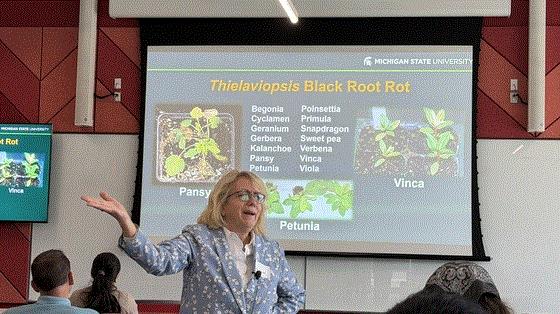
According to Mary, the first step is reducing plant stress. High or low pH, excessive salts and improper irrigation can all create problems. But perhaps the most important defense is sanitation. (See the new podcast mentioned at the top of this newsletter.)
Start with clean containers, benches, walkways and equipment. Pots, trays and flats associated with diseased plants should be cleaned before being soaked in disinfectant, and disinfectant solutions need to be replenished frequently. Remind your production team to keep an eye on racks and carts used to haul diseased plant material. Rolling a contaminated cart back into the greenhouse can bring pathogens right back in.
Diagnosis is equally important because identifying a root rot based on symptoms alone can be difficult. Stunting and uneven growth may be early warnings, but Dr. Hausbeck said one of the first things she looks for when entering a greenhouse is crop uniformity. If plants are uneven, it’s worth investigating why.
And don’t assume every struggling plant can be turned around. When disease is confirmed, removing infected plants early can help reduce the pathogen load. She said this is especially important with tough diseases such as Fusarium.
Fungicides remain important tools, but product selection, rates and rotation MUST stay top of mind. Of course, different pathogens require different chemistries, and (as we always reiterate) you need to alternate FRAC codes to help manage resistance. Applying less than the label rate isn’t a shortcut for prevention. Dr. Hausbeck advocates staying within label rates and adjusting application intervals according to the situation.
As Mary explained, good root rot management ultimately comes back to the basics. Keep plants healthy, manage moisture, control pests, maintain excellent sanitation, use a diagnostic clinic when problems appear … and work with your team make tough decisions (like dumping problem plants) quickly.

APHIS Deregulates Chrysanthemum White Rust
In Chris Beytes’ latest edition of ACRES ONLINE, he reported that the USDA’s Animal & Plant Health Inspection Service (APHIS) is deregulating chrysanthemum white rust (CWR), a fungal disease caused by Puccinia horiana, and removing its designation as a quarantine pest. CHECK OUT THE FULL RULING.
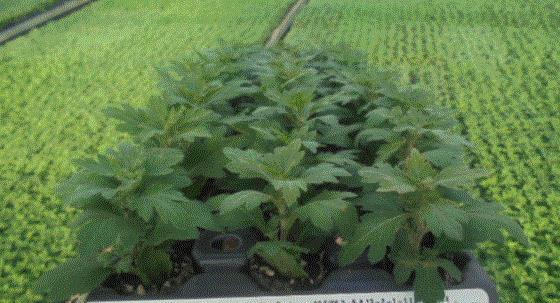
Here’s what Chris had to say:
This is big news for anyone producing mums—whether cuttings or finished plants. It means that CWR is no longer a death sentence for your crop—no more shipment holds, quarantines or destruction requirements, which have long been a challenge for mum growers due to federal restrictions.
But thanks to industry requests dating back years, APHIS accepted comments on deregulating CWR and they've concluded that because the disease is already established in the U.S. and that growers can manage the disease using available fungicides and other practices, the current eradication-based approach is no longer technically or economically justified.
This is a two-part story: That was part 1. Part 2 is that APHIS will now allow mums (Chrysanthemum spp., Leucanthemella serotina and Nipponanthemum nipponicum) to be imported into the continental U.S. as cuttings and in vitro plantlet from 20 countries, including Belgium, Bolivia, Brazil, Colombia, Costa Rica, El Salvador, Ethiopia, Germany, Guatemala, Kenya, Mexico, the Netherlands, Nicaragua, Panama, Spain, Tanzania, Tunisia, Uganda, the United Kingdom and Vietnam.
Up until now, all (or at least the vast majority) of mum cuttings distributed in the U.S. have originated in Florida or California. It’s worked just fine, as far as I know. But now, producers can—if they want to—produce their cuttings offshore in one of those listed countries and ship them here, no questions asked (other than following all the usual phytosanitary requirements, of course).
The new rule takes effect December 9, 2026.

Finish Line ...
I was posting some content to Ball Publishing’s LinkedIn earlier this week and saw a post that October 21 was World Earthworm Day. Interesting … I think we undervalue earthworms so it’s probably good that they are recognized each year. Subsequently, as we all do these days, I went down the rabbit hole on worms ... or would that be a wormhole?

Earthworms play an important role in healthy garden soils, moving through the soil and creating channels that can improve aeration and water movement. Their activity helps break down organic matter and recycle nutrients, supporting the biological processes that help build productive soil.
For gardeners, earthworm activity can be a welcome sign of a biologically active soil. I know when I find worms in my beds while prepping them for planting, I’m always happy and figure the soil is healthy. Then, adding compost and other organic matter can help create conditions where earthworms and other beneficial soil organisms thrive.
So today, let’s give a shout out to the humble earthworm. There's a lot happening underground that results in the plants we see above. They’re also pretty handy when fishing.
Talk to you next week!


Please feel free to send your comments, constructive criticism and topic ideas to me at bcalkins@ballhort.com.

Bill Calkins
Editor—Tech On Demand
This email was received by you and 25,398 other fine subscribers!
If you're interested in advertising in Tech On Demand, contact Kim Brown ASAP and she'll hook you up.