4 Questions for Lorentina McKoy, a Sales & Product Rep
As I keep recording these 4 Question podcasts, I’m reminded each time how amazing our industry is and how cool the people are who make is all happen!
For THIS INSTALLMENT, I was joined by Lorentina McKoy, the North American Sales & Product Representative for Suntory. Lorentina wears many hats with Suntory, from supply management and technical support to product trialing and selection, plus working as a liaison with offshore stock farms. She brings it all together with a unique skillset and plenty of past greenhouse experience. Her perspective is thoughtful and rooted in a passion for the green industry.
Lorentina also likes to channel her inner pioneer woman, weaving and canning vegetables—when she’s not in meetings spanning about a dozen time zones or visiting greenhouse across North America.
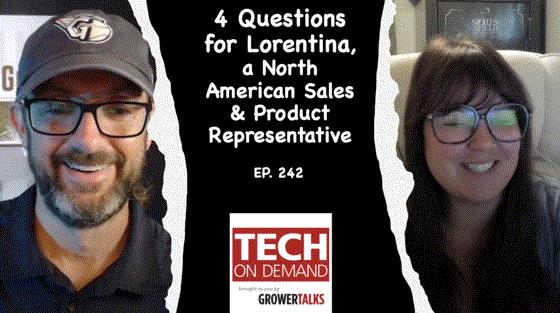
Be sure to listen all the way to the end of this episode because some of Lorentina’s best advice and greatest insights come at the end when we talk about reasons young people should consider getting into the horticulture business.
Here are the four questions Lorentina selected:
Q: How do you explain our industry to strangers, friends, family?
Q: If you had a free hour, what would we find you doing?
Q: If you won the lottery and could start a horticulture business from scratch, what would it be and what would it look like?
Q: What advice would you give to a young person considering pursuit of a career in horticulture?
Once again, this episode was sponsored by PROSPIANT—leaders in greenhouse design, manufacture and build.
There are more than 240 Tech On Demand podcast episodes in the archive covering a huge range of topics related to the professional greenhouse, garden center, landscape, nursery and CEA markets. Take a minute to subscribe—that way you’ll never miss an episode.

Koppert Corner: Understanding Isaria fumosorosea
As propagation and planting shifts to garden mums and poinsettias in May, it’s a good time to review the strengths of Isaria fumosorosea, strain FE 9901 (Isarid).
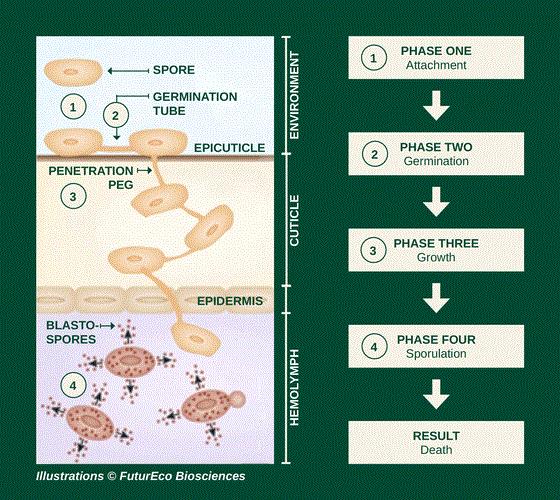
Isarid is highly effective in preventing and managing insect pests in two ways: on contact and endophytically (within the plant). Understanding how this powerful entomopathogenic fungi (EPF) functions will maximize its impact on targeted insect pests such as thrips, whiteflies, and fungus gnats.
How contact impact works: Upon contact with a suitable host insect, Isarid’s fungal spores produce enzymes which penetrate the insect’s cuticle or enter through body orifices and begin to germinate. The fungus produces enzymes, which degrade the cuticle and allow the fungal germ tube to penetrate the insect. Once inside the insect’s body cavity, or hemocoel, the fungus multiplies rapidly by forming blastospores, which disrupt internal organs and consume the host’s nutrients.
Secondary metabolites are also produced, which paralyze the host and suppress its immune system. Insects perish due to nutrient depletion, tissue damage, and the impacts of toxins. When environmental conditions are favorable, new mycelia emerge from the cadaver and produce new conidia spores to continue the infection cycle.
No concerns with pesticide resistance: Unlike with chemical pesticides, there is no known path of resistance to an EPF such as Isarid. This greatly simplifies the development of IPM strategies. Weekly Isarid spray applications can serve as the backbone of an insect pest management plan, with chemical pesticides added as tank mix partners when needed.
Next month, we will cover how Isarid works within the plant systemically when applied as a drench. This technique unlocks a second tier of crop protection that keeps away pests.
Want to start utilizing this highly effective entomopathogen? Reach out to a Koppert Technical Consultant.

Nick’s Tip of the Week: Peppers and Bacteria
Each week, I’ll work with my buddy Nick Flax, a technical services expert at Ball, to share a concern that’s come up during one of his numerous calls with growers across North America. This week he’s thinking about all of you who grow veggies—specifically, peppers.
PROBLEM: The potential economic gain from growing vegetable starts in-house rather than buying them in is well understood by growers and garden center owners, and many of you are currently propagating, finishing and in some regions shipping veggies. However, though veggies and herbs are relatively quick and easy to produce, every season I hear from growers about a problem that highlights the reason why peppers should be grown with more attention and care than most other herbs and vegetables.
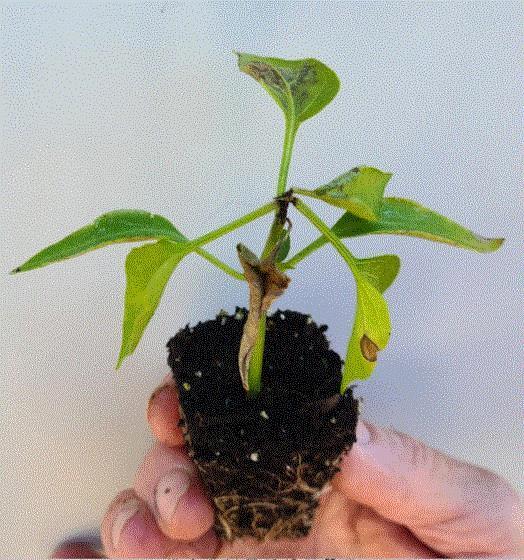
NICK’S TIP: Xanthomonas is its name and causing bacterial leaf spot (BLS) is its game. Telltale symptoms are distinctly round lesions on leaves with yellow halos around them, so if you see one or two spots pop up in your peppers, don’t wait to see what happens—take action! If you don’t, more lesions will appear, whole leaves will get swallowed up, and the whole plant will eventually be taken down.
The keys to managing BLS on peppers are exclusion wherever possible, good cultural practices, preventative measures and acting quickly when symptoms appear. Even growers exercising best-practices encounter this pathogen, so if you are running into Xanthomonas leaf spot for the first time, don’t feel bad.
Here are a few specifics to managing BLS:
Exclude. Always buy tested seed from a reputable source. Buying inexpensive seed can be an attractive prospect, but the few dollars you might save is not worth the heartache of having a major BLS outbreak. Testing does not catch 100% of infected seed, but it prevents most infected lots from making it to your greenhouse. The likelihood of having a major BLS incident from tested seed is significantly lower than if you buy cheap, untested seed, and is well worth the couple of extra bucks added to your input costs.
Good culture. BLS spreads primarily through splashing water, so avoid excessively watering over the tops of your peppers. This is difficult in the plug stage, but watering more basally (in other words, from the bottom) once plants are potted up is a simple way to reduce the potential for spreading the bacteria. Also, avoid nutrient-stressing your crops; this is often a significant trigger for BLS outbreaks. Think of it like a human with a weakened immune system: if you haven’t been eating properly, your immune system isn’t at its best, and the likelihood of you getting sick is higher.
Preventative management. Once infection occurs, it cannot be treated curatively. Isolate blocks of infected plants and apply preventative controls to unaffected plants. Copper-based products are highly effective, and other biological/biorational products are also effective for preventing disease. Be sure to rotate regularly between different active ingredients, and reapply protectants diligently (within label guidelines, of course) if your watering strategy heavily wets the foliage.
For even more information, be sure to check out our AT-RISK CROPS BULLETIN on peppers and managing BLS. If you’d prefer a video, we have you covered! Here’s a presentation on BEST PRACTICES FOR PRODUCING PEPPERS AND MANAGING BLS we put together a few years ago.

Are You Over-applying Phosphorus?
It’s a good question and one with far-reaching implications. Applying too much phosphorus is fairly common in greenhouse production. It not only impacts the environment (by encouraging algal bloom, which negatively impacts waterways and can lead to fish death) but also adds to your production costs, with little or no benefit to plant growth in many cases.
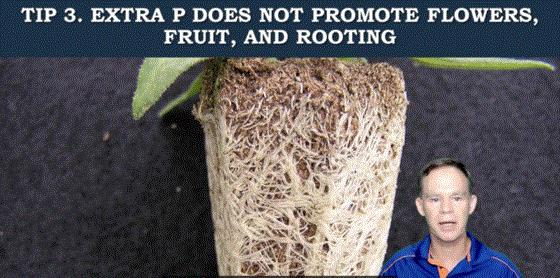
The question is: How much P do plants actually need?
Paul Fisher of the University of Florida's IFAS Extension tackled this subject in a video titled FIVE TIPS ON EXTRA PHOSPHORUS FOR FLOWERING (AND OTHER MYTHS). In it, Paul explained research on how much phosphorus you really need for crops such as transplants, flowers, blueberries and even cannabis. In this video you’ll learn how to improve plant quality while saving money and the environment.
When you’re done with this video, be sure to explore UF’s Greenhouse Training Online channel where you’ll find more content on crop nutrition, greenhouse lighting and more in English and Spanish.

Deficiencies, Toxicities & Imbalances
Nutrient deficiencies and toxicities commonly occur during commercial production when there are issues with the substrate pH, electrical conductivity (EC) or fertilizer management. When working with growers on nutrient challenges, the Tech On Demand team always offers this advice: First, identify and describe the observed symptoms and compare them with published descriptions. Then, check the current fertilization strategy and confirm the diagnosis with in-house nutrient monitoring techniques.

Photo: PremierTech
Here’s a quick overview of some common deficiencies, toxicities and pH imbalances. For more, CHECK OUT THIS TECH TRAINING DOCUMENT from Josh Henry on the Ball Seed Technical Services team.
Nutrient Deficiencies. While plants may develop deficiencies to any of the essential macro- or micronutrients, nitrogen (N), phosphorus (P), magnesium (Mg) and iron (Fe) deficiencies tend to be more common. Boron (B) and calcium (Ca) deficiencies can also occur but tend to be environmentally driven (cold temperatures, high humidity and poor air movement) or can be more common for a particular species. Deficiencies of potassium (K), sulfur (S) and most micronutrients are relatively uncommon if a complete fertilizer is being used.
Nutrient Toxicities. In many cases, nutrient toxicities occur when the pH is out of balance. The best example of this is when Fe and manganese (Mn) hyperaccumulate in the lower leaves when substrate pH is low, and these micronutrients become excessively available for plant uptake. In other cases, toxicities are simply a result of overfertilization, which can easily be checked by measuring substrate electrical conductivity (EC).
pH Imbalances. Deficiencies and toxicities are often the result of a pH imbalance in the substrate. High pH typically leads to micronutrient deficiencies with Fe deficiency being most common. In contrast, low pH often leads to toxicities of Fe and Mn due to greater availability. While nutrient disorders are often the direct result of an imbalance of the substrate pH or EC, these imbalances can occur due to improper alkalinity management or using a suboptimal fertilizer analysis given a particular species and water quality. For instance, using a basic fertilizer like 13-2-13 with high water alkalinity can result in high substrate pH and lead to Fe deficiency.
Check out this NUTRIENT DISORDER DIAGNOSTIC KEY for a concise visual look at symptoms.

Finish Line … Save the Date!
Once again, Darwin Perennials will host its ANNUAL PERENNIALS EVENT (that’s funny to write … “annual perennials” …) and new variety showcase in The Gardens at Ball in West Chicago, Illinois, on Wednesday, June 17. Darwin Perennials Day has grown over the years and is now one of the premier events for perennial growers in the professional greenhouse and nursery industry.
Attendees range from perennial plant greenhouse producers, nursery growers, landscapers and designers, garden center retailers, botanical garden staff, garden media and just about anyone in commercial horticulture. The reason folks make the trip to Chicagoland for this even each year is that the Gardens at Ball are blooming with thousands of perennial plants (in hundreds of different varieties) in display gardens, trial beds and large containers. Plus, there are endless opportunities to engage with industry peers and product representatives. More than 25 leading perennial vendors will be on hand, as well as expert-led educational sessions and opportunities to tour the gardens and Ball Horticultural Company facilities.

The event lasts from 8 a.m. until 2 p.m. and includes lunch. Consider bringing multiple team members because there’s a lot to see and do! REGISTER NOW and mark your calendars—Darwin Perennials Day is truly a can’t-miss summer event.
Check out THIS VIDEO from last year to get a taste of what to expect.
Talk to you next week!


Please feel free to send your comments, constructive criticism and topic ideas to me at bcalkins@ballhort.com.

Bill Calkins
Editor—Tech On Demand
This email was received by you and 25,380 other fine subscribers!
If you're interested in advertising in Tech On Demand, contact Kim Brown ASAP and she'll hook you up.