Three New “4 Questions” Podcasts
I mentioned this a few weeks ago and have gotten some great feedback and seen solid download numbers, but now we have some more episodes to shout out: My plan for the “4 Questions” podcast series is to catch up with different people in the professional horticulture space and find out a little bit about their careers, passions, journeys in the world of plants and much more. I sent each potential guest a list of 12 questions and they picked four to answer and discuss.

My goal (an admittedly loose one) is to share one of these episodes just about every week. The first is with Shannon Carmody, a plant pathologist; number two is a conversation with Broch Martindale, a strategic account manager; and the third is with Diane Blazek, an executive director. All three are passionate green industry diehards with very different roles in horticulture.
Each episode is about 20 minutes and super casual and conversational. You’ll feel like you’re in the same room having a chat about the things folks in the industry like to discuss. Check out “4 Questions” episodes within the Tech On Demand podcast, brought to you by GrowerTalks.
In fact, there are more than 235 episodes in the archive covering a huge range of topics related to the professional greenhouse, garden center, landscape, nursery and CEA markets. Take a minute to subscribe—that way you’ll never miss an episode.

Nick’s Tip of the Week: Avoiding Phytotoxicity in Packed Greenhouses
Each week, I’ll work with my buddy Nick Flax, a technical services expert at Ball, to share a concern that’s come up during one of his numerous calls with growers across North America. This week, he’s trying to help you get ahead of a common issue in spring production: phytotoxicity.
PROBLEM: When your greenhouse is packed to the gills and finished material is really starting to ship, it can be difficult to keep track of the small things. What got sprayed and what didn’t? Which fungicide did I use? What rate did I use? These are all questions that many of you probably ask yourselves when reporting odd symptoms appearing on your crops.
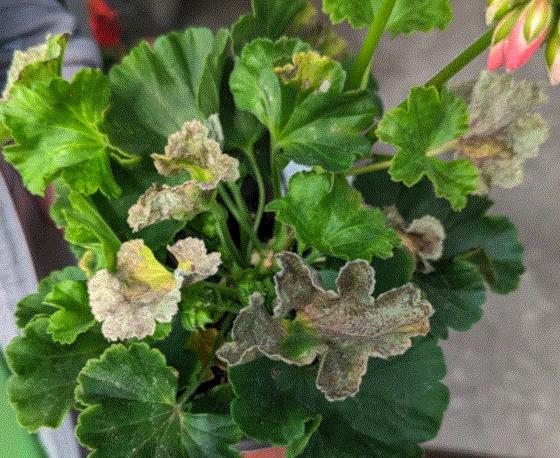
NICK’S TIP: Let’s review a few common causes of phytotoxicity that occur in North American spring crops, along with how to avoid these issues this spring and moving forward.
Note: Trade names will be emphasized in this week’s tip, but these are not meant to be criticisms of the products mentioned. In fact, it is my hope that specific mentions here will help build awareness of common errors made with these products out in the greenhouse and help you all to be more successful with them in the future.
Fungicide Phyto
One of the harder-hitting fungicides in the bedding plant grower toolbox is fludioxonil, more commonly known and sold as Medallion (a FRAC 12 fungicide). This is one of my go-to fungicides for managing pathogens like Fusarium and Rhizoctonia, but it also has broader use in combating Botrytis and several fungal leaf spot pathogens.
However, there are a couple of crops that Medallion should never be applied to, and the label specifically cautions applicators against doing so—geraniums (any Pelargonium spp.) and New Guinea impatiens. Stunting, chlorosis, and/or distortion are typical symptoms that result when applied to these two crops, and the only real path forward is to push through the stunting and flush new growth out over damaged foliage.
Most often when this occurs, the grower/applicator needed to make a quick decision on which fungicide to apply and forgot the cautionary statement on the label. While you should always thoroughly review the label of any IPM product before using it, glossing over the footnote about potential phyto is an understandable oversight.
If you aren’t sure if a fungicide can be safely applied to a given crop and you can’t read the fine print on the label attached to the bottle, run a quick check on the digital label. Visit the product manufacturer’s website, find the most up-to-date version of the product’s label, and open it as a PDF. Then, hit Control + F (or Command + F for Mac users) and type the common name of the crop in question and again using the Latin name, if you know it. If there are any cautionary statements regarding the crop in question, the search function will take you right to it, rather than searching line by line or potentially missing it all together.
While it may seem painfully simple, write “DO NOT apply to X, Y, or Z crop” on the side of the container with an industrial Sharpie for Medallion or other fungicides with similar phyto concerns on specific crops. This way, every time you take this fungicide out, there’s a highly visible reminder to avoid applying it to the wrong crops. Just be sure to rewrite the note if the marker starts to smudge or fade.
Insecticide/Miticide Phyto
Much like the crop-specific phyto concerns of Medallion, insecticide/miticide products can pose similar risks.
Misapplication of spirotetramat (commonly sold as Kontos here in the U.S.) is a frequent cause behind distortion, stunting and chlorosis on finished geraniums around this time each year.
Kontos is a staple in many growers’ IPM toolboxes—especially for managing two-spotted spider mites and broad mites—but this one should be left out of the rotation on your geraniums and a few other tropicals/foliage plants (see the label for more details).
While phytotoxicity that can result when this product is applied to geraniums looks concerning, most mature crops can push through the damage and recover within a couple of weeks. Higher dosage earlier in the crop cycle can have longer-term impact and delay time to finish, but Kontos phyto most often occurs as a later-season “oops” in the spray program. Be sure to add a “NOT for geraniums” note to the bottle for this one, as well.
The moral of the story here is: Always read the label and take a couple of extra minutes to make sure your IPM product is safe to apply to your target crop. It’s easy to get caught up in the hectic nature of spring and grab the first thing on your chemical storage shelf, but an accidental misapplication could be the difference between getting a premium for your plants and getting them to retail a week or two late.

Three Tips for Managing Algae, Moss & Liverwort
The Tech On Demand team put together a training document to help growers deal with algae, mosses and liverwort in their greenhouses. Here’s a bit about why these three nasty characters can be an issue, as well as three tips to manage them effectively. At the end are some excellent resources to check out if you want to dig deeper.

Algae, moss and liverwort are not just an aesthetic nuisance in greenhouse production, they are indicators of consistently excessive moisture and sanitation concerns. When substrates, floors and benches remain wet for extended periods, algae, mosses and liverwort are quick to establish and can be difficult to eliminate. They create slipping hazards, restrict water infiltration into the substrate, compete for nutrients and serve as breeding grounds for fungus gnats and shore flies. Effective management requires a combination of moisture management, sanitation, environmental manipulation and carefully selected chemical tools.
Tip 1: Manage Moisture to Prevent Establishment
-
Algae, moss and liverwort thrive in consistently wet substrates. Be sure to dry substrates sufficiently between irrigations, and increase air circulation and venting to reduce humidity.
-
Adjust irrigation frequency in response to weather conditions.
-
Pay special attention during propagation, when constant moisture makes prevention more challenging.
Tip 2: Prioritize Preventative Sanitation
-
Physically clean algae, moss and liverwort from growing surfaces and disinfect between crops. Clean surfaces by scrubbing, pressure washing or with products like Strip-It, and disinfect surfaces with products containing quaternary ammonium (like KleenGrow) or peroxide (like ZeroTol.)
-
Eliminate standing water and improve drainage throughout and around growing areas. Spores can move in from outdoor areas between and around greenhouse perimeters.
Tip 3: Use Chemical Controls Carefully & Strategically
-
Common active ingredients include hydrogen dioxide (peroxide-based products), peroxyacetic acid, quaternary ammonium compounds and sodium carbonate peroxyhydrate. You can use higher rates for surface sanitation when crops are not present. But go with lower rates for use around or on crops. And always verify crop safety and follow the product label!
-
Avoid stressful conditions, including excessive light and heat during application, to limit phytotoxicity risk.
-
Constant injection through irrigation systems can suppress spore load but may increase phytotoxicity risk to crops.
Some more resources to check out:
Tech On Demand Video: Mystery Solved: Slime, Moss & Algae
e-GRO Alert: Managing Algae and Moss Inside Greenhouses
e-GRO Alert: Identification and Management of Liverwort in Greenhouses

Succulent Soft Rot
In an Alert from our friends at e-GRO, Dr. Jean Williams-Woodward, a plant pathologist at University of Georgia, shared some excellent information on BACTERIAL SOFT ROT, most often caused by the bacterium Pectobacterium carotovorum subsp. cartovorum (formerly known as Erwinia carotovora). This soft rot is not super common, but when it does hit your succulents, it leads to widespread plant loss. Basically, it’s something you want to avoid at all costs.
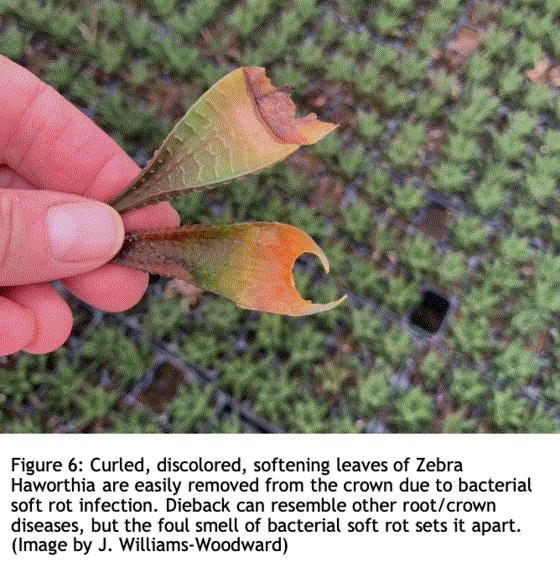
As Dr. Williams-Woodward writes, soft rot bacteria are often associated with plants, previous crop plant debris, water, rooting media and soil. In the alert, she explains that soft rot bacteria are opportunistic pathogens that require wounded or stressed tissues, as well as favorable environmental conditions, to infect and cause disease. Stress and wounding may be due to environmental stresses or propagation and production activities, like cutting or pinching. Making matters worse, if you irrigate succulents using a flooding method, anaerobic conditions increase, leading to pathogen survival and spread.
In the report, it’s emphasized that bacterial soft rot symptoms are often confused with different fungal root pathogens before rapid collapse occurs. Unless, of course, you smell it first. The author equates the pungent odor to dead fish—not good!
Once you spot the symptoms, there’s no control. That’s the bad news. The good news is that avoiding the disease centers on sanitation. Immediate disposal of infected plants and thorough cleaning goes a long way. And remember, the disease can survive for months in soil and plant debris, so stay clean.
Dr. Williams-Woodward shares a lot more detail and helpful photos in the alert, so I suggest you read the FULL REPORT.

Stay On Guard for Fungus Gnats
Looking back to previous years and our tech team activity reports, it seems that fungus gnat issues are frequently reported during this late March/early April time period. So, I wanted to share a fantastic article written by insect and mite guru Dr. Raymond Cloyd that ran in GrowerTalks a few years ago.
In A CONSTANT SCOURGE, Dr. Cloyd shares just about everything you need to know about fungus gnats, and he does so in a useful and understandable way. Instead of trying to paraphrase him, I’ll share a short excerpt and recommend you read the full article (and bookmark it for future reference).
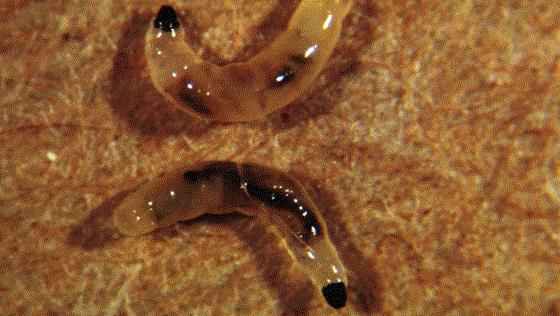
Fungus gnats, Bradysia spp., are insect pests of greenhouse-grown horticultural crops and are one of the few insect pests where the damaging life stage—larvae—is located in the growing medium. Fungus gnat larvae cause plant damage under moist conditions when plants are young. Fungus gnat adults don’t cause plant damage but can be a nuisance when flying around. Adult females lay eggs in the growing medium. The larvae that emerge from the eggs cause direct plant damage when feeding on the roots.
Damage. Fungus gnat larvae direct feeding damages developing root systems, which interferes with the ability of plants to uptake water and nutrients. Direct damage results in stunted plant growth and wilting. Larvae can also cause indirect damage during feeding by predisposing plants to infection from soil-borne diseases by creating wounds that allow entry of soil-borne plant-pathogenic fungi.
After covering the basics, Dr. Cloyd gets into the nitty gritty—control strategies including cultural/environmental management and chemical and biocontrol solutions.

Finish Line ...
Less than 48 hours after hitting send on this newsletter, I’ll be heading west to California Spring Trials for something like my 20th time. It’s a week I look forward to more than any other on the work calendar.
Although more than 1,000 industry members attend CAST, most of you do not, which is why the Ball Publishing team works overtime (literally—it's like 18-hour days) to bring you industry-leading coverage that makes you feel like you’re riding along with us!
I encourage you to follow along with the daily Acres of buZZ! newsletter, videos from every stop and featuring every exhibiting company, and my social posts on multiple channels! Below are all the links you need to keep up:
WATCH OUR DAILY VIDEOS on the GrowerTalks YouTube channel. We shoot them live at each trial location and post them every night.
READ OUR DAILY NEWSLETTER COVERAGE which should hit your inbox in the middle of the night following each day we’re on the road. Sign up by clicking the link.
FOLLOW US ON INSTAGRAM for pretty plant pics—@growertalksgreenprofit
FOLLOW US ON FACEBOOK for more pretty plant pics, short live videos and some behind-the-scenes shenanigans.
It all kicks off on Monday, March 23! Talk to you in a week (although if you watch the videos, you’ll see plenty of me before then …)


Please feel free to send your comments, constructive criticism and topic ideas to me at bcalkins@ballhort.com.

Bill Calkins
Editor—Tech On Demand
This email was received by you and 25,400 other fine subscribers!
If you're interested in advertising in Tech On Demand, contact Kim Brown ASAP and she'll hook you up.