Videos for Finished Crop Production
I’ve been involved with making crop culture and production videos for about five or six years and in that time, we’ve released hundreds across a range of topics too broad to start listing here. You can find them on YouTube organized into a bunch of fairly-organized playlists.
As I was putting together goals for 2025, it became clear than our menu of propagation videos was robust, but the list of crop finishing videos was pretty slim. So that became a key goal for FY2025. Of course, I'm not an expert in greenhouse production and rely on experts for content. Thankfully, I work with an experienced team, and they were willing to dedicate time putting together presentations and picking key annual and perennial crops off a prioritized list.
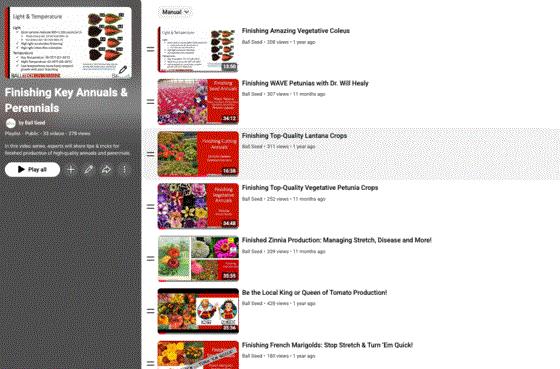
After about a year, I think we now have a solid playlist of crop-specific videos to help growers finish most of the major crops. Of course, we'll continue to add to the list because you can’t really have too many of these. If there’s a particular crop we haven’t covered, but you think we should—SHOOT ME AN EMAIL!
As of Week 7 2026, here’s a list of crops that you can find IN THIS YOUTUBE PLAYLIST:
-
Angelonia
-
Begonia (Seed)
-
Begonia (Vegetative)
-
Calibrachoa
-
Chrysanthemum
-
Coleus (Seed)
-
Coleus (Vegetative)
-
Dipladenia/Mandevilla
-
Impatiens
-
Lantana
-
Marigold
-
Ornamental Pepper
-
Pansy
-
Petunia (Seed)
-
Petunia (Vegetative)
-
Petunia (Wave)
-
Sunflower (Sunfinity)
-
Tomato
-
Viola
-
Zinnia

Koppert Corner: Prior Planning Prevents Poor Performance
This adage is one that I learned when taking university business classes. The premise is also perfectly applicable to winter/spring greenhouse production. Before young plants and cuttings arrive, stop and take note of past years’ performance and consider whether proactive measures can improve the outcome of this crop for 2026.
Before we begin, check the expiration date on any myco-insecticides and micro-biological products in your pesticide storage area. They nearly always have an expiration date or “best by” date. If it’s past that date, don’t expect it to work. Source fresh product for the current season.
Consider prior planning at three levels:
Floor
Be on the lookout for ants in cracks and edges of greenhouse spaces. Ants farm/harbor aphids and later carry them out onto newly placed crops.
Fungus gnats and several thrips species may harbor on dirt, gravel or landscape fabric-covered floors. Begin controlling for the soil-borne life stages of these insect pests as soon as plant material is introduced.
Proactive sanitation measures are critical on concrete floors to prevent algae growth, which can lead to employee slips and falls.
Root zone
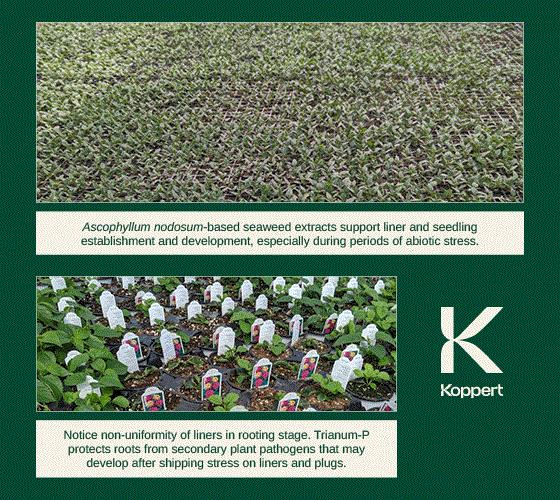
Drench incoming liners and plugs with Isarid and Entonem upon arrival before planting to eliminate hitchhiking insect pests, especially thrips and fungus gnats.
Drench incoming liners with Trianum-P to protect against root pathogens Fusarium, Pythium, Rhizoctonia and Thielaviopsis.
Plant canopy
Hang Yellow Horiver cards as liners/plugs arrive to know what level of insect pests are arriving on incoming material. Every adult thrips mass-captured from liners or the newly planted crop is one that will no longer lay eggs nor reproduce.
Did liners/plugs experience cold or other stress in shipping? Offset this stress by applying an Ascophyllum nodosum-based seaweed extract that will maximize plant potential during periods of stress.
Begin beneficial insect releases within a week after planting or apply a weekly spray/sprench application of Isarid + Azadirachtin or Isarid + Entonem until there's enough greenhouse area potted up to begin releasing biological controls.
HAF fans, when not operating properly or not at all, can leave areas of dead, non-moving air. This creates a perfect microenvironment for pest and disease development. When walking greenhouses, look up!
How plants are handled and cared for in early weeks of production can have a direct impact on time-to-finish and plant quality at ship/sell week. Connect with a Koppert technical expert to perfect your prior planning for 2026!

Nick’s Tip of the Week: What’s Causing These Bumps?
Each week, I’ll work with my buddy Nick Flax, a technical services expert at Ball, to share a concern that’s come up during one of his numerous calls with growers across North America. This week he’s been fielding a lot of calls about intumescence, a fairly common issue this time of year.
PROBLEM: Cold and cloudy weather means many greenhouses have been buttoned up tight for the last few weeks. While I’ve often talked with growers about moisture- and humidity-related issues since Week 1, an old familiar “friend” that occurs in early spring under similar conditions has come back to visit North American growers this week. It’s bumpy and weird looking and evokes goosebumps if you run your hand across it just right: it’s intumescence!
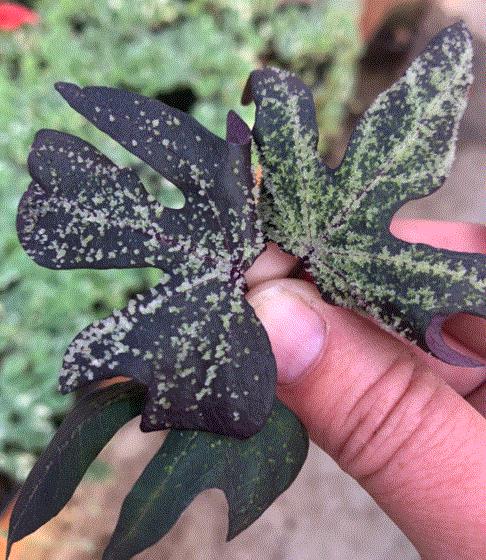
NICK’S TIP: While occurrences have been linked to a lack of UVB radiation in greenhouse environments during crop production, it’s still not 100% clear why intumescence occurs. However, this disorder results in some concerning symptoms—especially if you aren’t familiar with how to identify it—and growers are often (and understandably) freaked out when they see it for the first time.
Early symptoms often present as rows of bumps or “pustules” along stems, leaf petioles and midribs. Depending on the crop, lesions may range in color from light to dark and sometimes translucent.
When symptoms are severe, lesions can coalesce into masses and oftentimes appear more broadly across the undersides and even on tops of leaves. As lesions mature, they often become darker in color and eventually take on a corky color and eventually become blackish brown as the tissue senesces.
Intumescence is known to affect several crops, but sweet potato vine (Ipomoea batatas) and Black-eyed Susan vine (Thunbergia alata) are two of the most frequently reported. Tomato (Solanum lycopersicum) and Cuphea spp. are also more common victims of this disorder.
Lesions on thunbergia, cuphea and tomato are most often circular or spherical, while lesions on ipomoea are often more angular or geometric in appearance when viewed under magnification.
At first glance, many growers mistake intumescence lesions as insect eggs, fungal spots or crown gall (Agrobacterium tumefaciens). However, if you see symptoms in your greenhouse on one or two of the crops mentioned in this week’s tip and not on anything else it’s most likely just intumescence.
Some varieties are more prone to intumescence, so make note of any varieties that seem to be more affected than others in your operation. If customers express concerns or any of your crops are unsaleable due to unsightly symptoms, it may be wise to avoid growing these varieties in the future.
While this is certainly an unsightly disorder, it won’t negatively impact overall development and health of the crop. Affected plant parts don't recover (lesions don’t disappear), but new growth tends to be less and less affected as spring progresses. If you receive young plants that have intumescence symptoms, don’t worry—they can be grown on to maturity without issue. Some selective cleanup and removal of affected leaves before plants hit retail may be advisable, but be sure to wait until new growth is symptom-free before doing so.
Check out these awesome e-GRO Alerts on intumescence of ipomoea and thunbergia for some great photos and more details.

Follow-up Tech Tip from Nick: Edema
Edema (or oedema) is another physiological disorder like intumescence that often afflicts crops early in spring, but the reason it happens is much better understood and, thus, it can be more easily managed. Simply put, edema occurs when turgor pressure (internal water pressure in plant cells) gets too high, which causes cells to rupture. The earlier you can catch edema symptoms and make necessary corrections, the better.
Water-soaked lesions on the undersides of leaves are one of the earliest symptoms. However, once ruptured epidermal cells have closed and lesions are no longer wet looking, they often resemble thrips damage.
As ruptured cells heal, they often take on a corky color. In severe cases, damaged cells develop into callused masses that resemble blisters. These blisters are almost always on the undersides of leaves and not visible from above, so growers often confuse this with rust, Agrobacterium or mite damage when it occurs.
Geraniums, particularly ivy geraniums (Pelargonium peltatum), are one of the most edema-prone spring bedding plants. Much like intumescence, some varieties are more sensitive to edema than others.
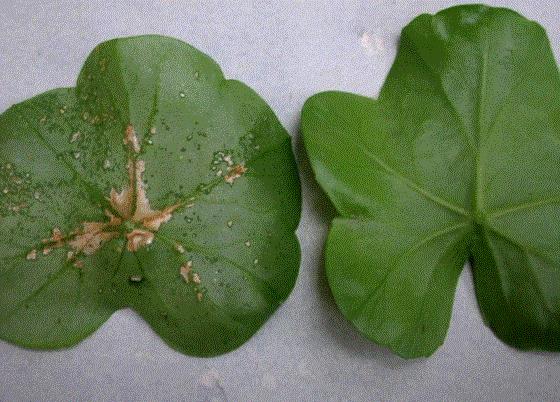
Photo: Cornell University.
Edema occurs most often when substrate moisture levels remain high for extended periods and weather is cloudy and/or relative humidity is high. Be sure to avoid overwatering and allow for thorough wet-to-dry cycles between irrigation events to reduce this tendency.
Increase air flow in the greenhouse to encourage transpiration, even if weather conditions make reducing relative humidity challenging. A little more air movement can make a big difference to reduce edema incidences and severity.
Mild edema seldom affects overall growth and quality of plants, and symptoms subside as weather improves, but severe damage can cause reduce aesthetic quality and cause leaf senescence. Geraniums with lots of senescent leaves can rapidly become Botrytis factories, so be sure to clean up heavily edema-damaged foliage ASAP and apply a broad-spectrum fungicide as a protectant, if necessary.
Here are a couple short edema-related videos from the Tech On Demand team:

Temperature & Plant Growth
Average daily temperature impacts plant growth more than any other environmental factor. The goal is finding the perfect temperature to reduce crop time without sacrificing quality—much easier said than done. But years of research and crop production optimization has led to solid temperature guides and recommendations for most crops—cool-season and warm-season.
Here’s a fantastic article by the experts at Premier Tech that explains how optimum temperatures are calculated leading to a temperature growing guide for key annuals and perennials. Then the author, Ed Bloodnik, explains how the information can help growers schedule crops and ultimately reduce greenhouse heating costs. Ed shares why growing at lower temperatures often leads to advantages beyond cost and even takes a look at the accounting balancing act required to determine if it’s better to buy in larger inputs.
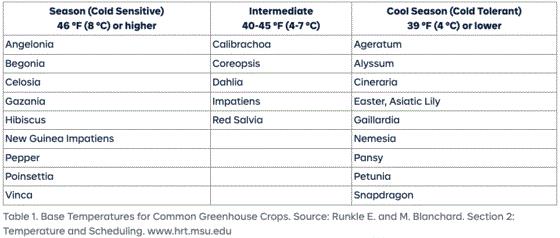
Check out TEMPERATURE REQUIREMENTS FOR GREENHOUSE CROPS from the Premier Tech team.
Finish Line …
I was planning to shout out the February issue of GrowerTalks at the end of my newsletter and had it on my weekly list of what to cover and then my fellow newsletter editor, JC Chong (PestTalks—hopefully, you’re subscribed because it’s awesome), beat me to the punch earlier in the week. JC so eloquently recapped what you can find in the issue that there’s no point reinventing the wheel, so I’ll just copy and paste.

From JC: IPM in GrowerTalks
Pest management takes central stage in the FEBRUARY ISSUE OF GROWERTALKS. The front cover features a spider mite being consumed by predatory mite Phytoseiulus persimilis. That’s biological control in action! For a bug nerd, that makes my heart flutter.
In addition to Paul Pilon’s article on sanitation (referenced in JC’s newsletter this week), there are several articles on managing pests and diseases so that you’re prepared to start your spring crop on the right foot.
Mary Ann Rose, the Director of the Pesticide Safety Education Program for The Ohio State University Extension, reminds us of the importance of staying safe and legal when using pesticides. That’ll involve reading pesticide labels (always do that!), select the right product for the right use site and crop, and adhere to restricted entry interval (REI), personal protective equipment (PPE) and ventilation requirements.
Broch Martindale of Corteva talks about why you need to think about formulation when selecting which pesticide to use. That’s because different formulations may have different delivery efficacy, effectiveness and crop safety.
Anissa Poleatewich and Katie Gustafson of Mycorrhizal Applications discuss different types and benefits of mycorrhizae and answer several questions on how to use mycorrhizal products effectively. In addition, Michelle Jones and Laura Chapin in the Department of Horticulture & Crop Science at The Ohio State University talk about an experiment where they evaluated the benefits of mycorrhizae and Bacilus subtilis products in promoting growth of pansies at low fertilizer rates.
Brian Jackson of North Carolina State University and Anissa Poleatewich also contributed an article on the suppressive effect of some engineered wood components in substrates on root rot diseases, such as Pythium and Rhizoctonia. The experimental results in Brian and Anissa’s paper are quite striking.
On the insect and mite front, Luis Cañas in the Department of Entomology, again from The Ohio State University, talks about the importance of collecting data from scouting programs. After all, pest management is more effective and efficient if it can be driven by decisions made based on data. Luis also introduces us to several new sampling tools and methods and the potential of using environmental DNA to identify pests in greenhouses.
Andrew Britten of Ball Horticultural Company outlined pests common on tropical foliage plants and the chemical and biological solutions to these pest problems. Lastly, Jeremy Webber of Koppert takes a deep dive into the biological solutions for thrips, spider mites and caterpillars.
Thanks for the closing, JC! And I’ll talk to you all next week.


Please feel free to send your comments, constructive criticism and topic ideas to me at bcalkins@ballhort.com.

Bill Calkins
Editor—Tech On Demand
This email was received by you and 25,429 other fine subscribers!
If you're interested in advertising in Tech On Demand, contact Kim Brown ASAP and she'll hook you up.