What’s Better Than A.I.? A.W.!
I don’t think we’re at the point (yet) when your preferred A.I. bot can be trusted to give greenhouse production protocols. “Hallucinations” are common and the last thing you want is ChatGPT to add a zero to the recommended PPMs, confuse units or completely make something up and recommend it for your petunia crop based on a research paper about broccoli. You get my point. And I’m personally not about to start using A.I. to write this newsletter—have no fear. I like writing too much …
But what I have been using for the past few weeks is A.W. This brilliant learning platform has been around in our industry for more than 40 years and might have actually been in YOUR greenhouse!
What I’m referring to is “Actual Will.”
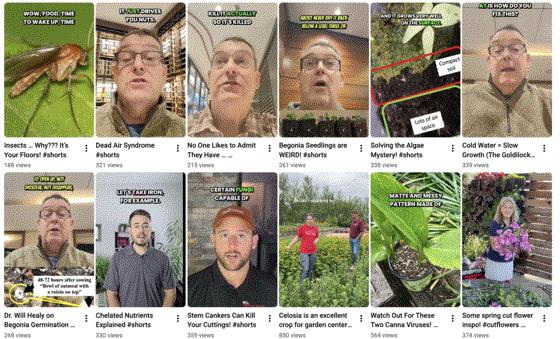
Retired Ball Seed technical guru Dr. Will Healy saw the view counts on the YouTube Shorts and Instagram Reels I’ve been posting lately and decided to start flipping his phone camera around and recording quick videos discussing some of the most common issues he helped growers deal with during the course of his career. In fact, he has been sending them to be daily in batches. At the time of writing this newsletter, I have 16 in my downloads folder with about 9 still awaiting editing. I’m sure there are more to come so I need to stay on top of them.
You can find at least seven of them posted already on OUR YOUTUBE SHORTS PLAYLIST. You should definitely subscribe to the channel and hit the notification bell so you don’t miss it when I drop the rest. If you’re a member of our FACEBOOK GROUP, I’m posting them there, as well. And on Instagram—@balltechondemand.
So far, here are the topics generated by A.W.:
-
Seeding Begonias
-
Cold Water = Slow Growth
-
The Algae Mystery
-
Seed Begonia Propagation
-
Liverwort
-
Dead Air Syndrome
-
Clean Your Floors

Josh’s Tip of the Week: PGR Liner Dips—Consider the Benefits
Technical specialist Josh Henry is taking over Nick's spot this week to discuss something that’s becoming more and more common but definitely requires close attention and careful selection (of crops and active ingredients): PGR liner dips.
PROBLEM: Chemical plant growth regulators (PGRs) are typically applied as a foliar spray, sprench or substrate drench. But liner dips, also known as liner soaks, can be an efficient and effective application method for liners just prior to transplant. NOTE: Only certain PGRs can be applied as a liner dip, so always read and follow the product label as directed.
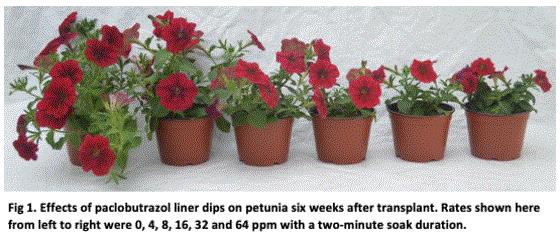
JOSH’S TIP: Liner dips involve briefly submerging the root zone of a liner tray into a PGR solution, which requires less total PGR due to the smaller volume of substrate found in a liner compared to the finished container.
Why Liner Dips? When compared with sprays, sprenches and drenches, liner dips offer unique benefits. They provide uniform application across trays, they use active ingredient effectively, and they are especially effective for managing vigorous varieties before transplant, particularly in mixed containers. Only PGRs with root activity, such as paclobutrazol, uniconazole, flurprimidol and ancymidol, are effective as liner dips, and not all products with these ingredients are labeled for this use. Always read the product label to verify whether it is approved for liner dips.
Best Practices for Application. Achieving reliable results with liner dips depends on several key details during application.
- Liners should be uniformly moist but not saturated or excessively dry at the time of application, as this ensures predictable PGR absorption and minimizes variability across trays. Water liners the afternoon prior to treatment and apply dips the following morning for best consistency.
- The depth of the solution should cover at least half the liner, ensuring adequate root contact.
- Dip durations of 30 seconds to 2 minutes are typical, but longer soaks may be needed to account for high substrate moisture levels.
- Well-rooted liners respond more predictably, while poorly rooted liners are more prone to overregulation.
- Document application protocols, including rates, dip duration and substrate moisture at the time of application. And consider running small-scale trials before treating entire crops.
Uses and Environmental Factors. Liner dips are especially useful for combination planters, allowing targeted control of vigorous species before transplant without affecting less aggressive ones.
Rates and efficacy vary by species, variety and environmental conditions based on the time of year or geographical location. Southern growers generally require higher rates than Northern growers, due to warmer temperatures and higher light. For example, “low” paclobutrazol dip rates may range from 2 to 6 ppm in the South, but only 0.5 to 4 ppm in the North (Table 1). Always start with trial rates and adjust based on plant response.
 Labeled liner dip rates for paclobutrazol and uniconazole in northern and southern climates.
Research and Future Opportunities. Although extensive research supports the effectiveness of PGR liner dips, some active ingredients such as ancymidol and flurprimidol do not currently have liner dips listed as an approved application method on any commercial product labels, including A-Rest, Abide and Topflor. Studies show these active ingredients can work well when applied as a liner dip but using them in this way is currently considered off label. As product labels are updated, new application options may become available, so it remains essential that you thoroughly read and understand the label before making any application.
Always consult the product label, GrowerTalks Annual and Perennial PGR Guides and university extension resources for approved uses and recommended rates.

Broad Mite Management
Although Josh took over the tech tip of the week, Nick Flax wasn’t off the hook. Here’s some info about a pest that we want to avoid in spring production, but not uncommon to find when scouting—broad mites.
According to Nick, broad mite management is tough when an infestation occurs, so diligence and persistence is the key to curb an outbreak. Check out Dr. JC Chong’s tips on broad mite identification and management HERE for more details, but here are a few key points from JC:
-
 Scout symptomatic leaves and shoots using high magnification. I recommend at least 40x for folks who know what they are looking for and closer to 100x magnification if you are not familiar with what eggs or the different life stages look like.
-
DO NOT SAVE INFESTED PLANTS! Carefully bag infested plants where they sit on the bench and throw them out ASAP. Also remove plants immediately surrounding them, as mites are likely present even if they do not currently show feeding damage symptoms.
-
Be aggressive with your miticide cleanup efforts and continue to remove symptomatic plants as they appear. Total eradication of a broad mite infestation is like a battle of attrition. If you slip up and give the mites an opportunity to regain a foothold, they will!
-
Keep the pressure on and operate under the assumption that there are likely still some eggs or mites hiding somewhere.
-
Consider implementation of URC or liner dips on incoming material and deploy preventative biocontrols for broad mite-prone crops like NGIs. Several species of predatory mites are very effective at outbreak prevention and cleanup under low pressure.
-
Be sure to monitor substrate EC regularly in NGI crops and target a pour-thru value of around 1.3 mS/cm or lower.
-
Mature crops can tolerate an EC of around 1.5, but the risk of high EC damage increases substantially at or above this value—especially if plants dry down hard between irrigations.
-
If the substrate EC value starts to creep up into the danger zone, leach the crop with clear water before you resume fertilizer applications.
-
If damage occurs, new growth will return to normal once excess salts are leached and substrate EC remains at an appropriate level.

QUICK TECH TIP: Liner-Planting Best-Management Practices
Every year, Tech On Demand experts hear from growers who are struggling to get liners and plugs off to a strong start. Usually, many photos are attached to the text or email, and the team takes a look to see what’s up. More often than not, the issue is quite visible—like in this photo.
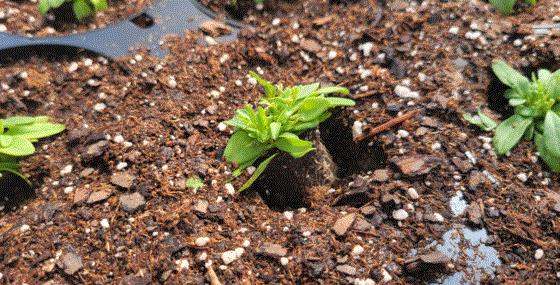
When it’s time to plant up liners and plugs, be sure to have your team close up the dibbles around the young plants to increase soil to root contact. This helps the little guys maintain moisture and not dry out. Sometimes this simple step can be the difference between healthy rooting crops and weak, wilting ones.
Another Quick Tech Tip: Dahlia Deficiencies
Here’s another challenge our team helped a grower with early in spring production a couple years ago. Again—not uncommon and potentially something you could encounter in the coming months. When a grower noticed marginal and interveinal necrosis on new growth and immature leaves in his dahlia crop, he reached out for some solutions, as one might do.
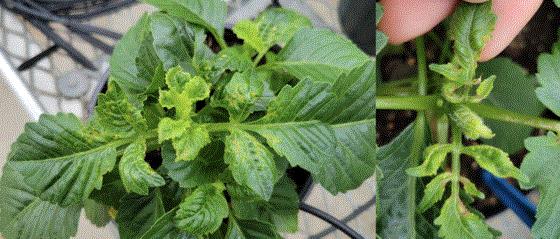
Our experts quickly assessed the situation, collected some info from the grower and shared this tip:
The symptoms seen in the photos are likely calcium deficiency. To remedy the issue, quickly apply a foliar feed with calcium nitrate or calcium chloride. For even better results, include CapSil or another surfactant to improve uptake. Then, simply continue feeding with a calcium-based fertilizer.
Finish Line ...
I want to close with something a bit more positive than deficiencies and diseases. Our industry has a bunch of excellent organizations that work day in and day out to promote horticulture to new audiences and get folks excited about flowers and plants and hopefully show them something about career opportunities that will inspire them to think more about professional floriculture.
One of these amazing initiatives is Seed Your Future (SYF). If you don’t know about SYF, I honestly don’t have space to share all they, do so here’s A LINK where you can learn more. Succinctly, the vision of SYF is a country where everyone understands the power of plants, and everyone is aware of the promising careers in the art, science, technology and business of horticulture. SYF's mission is to promote horticulture and inspire people to pursue careers working with plants. We can all agree that this is positive and powerful stuff!
For more, check out the SYF YOUTUBE CHANNEL for all sorts of cool videos you can share with your team and folks outside of our industry.

Another organization I want to shout out is KidsGardening.org (KG). For full disclosure, I’m on their board and that means I know first-hand how impactful KG can be—from resources for educators and a community to share ideas to garden grants that help build school and community gardens.
KG resources reach more than 2.5 million kids each year, and the organization has distributed more than 1,000 grants and installed gardens across the country. Like SYF, KidsGardening has a powerful mission: to create opportunities for kids to play, learn and grow through gardening, engaging their natural curiosity and wonder.
Take a few minutes to familiarize yourself with KG by perusing their WEBSITE, but if you really want to see the initiative in action, visit THEKIDSGARDENING COMMUNITY. If you know an educator who would like to incorporate more garden-based curriculum into their classroom or community group, pass the link along. It’s packed with resources for a range of grade levels.
I guess I should close with an ask. If you have the ability to support either (or both) of these organizations with time, talent or dollars, I think both are very worthwhile causes that can only benefit our industry, as well as the young people with whom they engage. One key element to keep our industry thriving into the future is creating a pipeline of passion and talent. This starts the moment a kid first interacts with a plant.
Until next week, stay warm and keep an eye on those little plants. Getting off to a strong start is the best way to maximize your crops’ chances for success.


Please feel free to send your comments, constructive criticism and topic ideas to me at bcalkins@ballhort.com.

Bill Calkins
Editor - Tech On Demand
This email was received by you and 25,437 other fine subscribers!
If you're interested in advertising in Tech On Demand, contact Kim Brown ASAP and she'll hook you up.