PPA's Perennial of the Year
One of my favorite activities of the New Year is to look ahead at many of the perennials being featured and promoted during the upcoming year. I typically start with the Perennial Plant Association’s (PPA) Plant of the Year. Before I get there, please allow me a quick moment to provide a recap of the Perennial Plant of the Year (PPOY) program.
The PPOY program started in 1990 and has been going strong since then. In fact, many of the PPOY selections became best sellers in their category (genus) and other cultivars within these categories also experienced up-ticks in their popularity and sales.
Each year, members vote for previous nominees, as well as submit up to two plants for future consideration. The PPOY committee reviews and selects three or four to be placed on the ballot for its members to vote for the next year's winner.
The perennials selected are considered to be standouts among their peers and have been chosen to have a wide range of growing climates, are low maintenance, provides multiple seasons of interest, are relatively pest and disease free, and are readily available.
Andropogon gerardii Blackhawks
Blackhawks is an impressive, big bluestem cultivar with a strong vertical habit reaching 60-in. (152-cm) tall and 24-in. (60 cm) across. It emerges dark green and develops reddish-purple tips as the summer progresses. This warm-season grass sports an eye-catching near-black foliage coloration in the fall. Cold hardy to Zone 3.

Proven Winners' Perennial of the Year
Proven Winners selects a perennial from its perennial offerings and features it as their National Perennial of the Year. These plants have been chosen for their proven excellence and ability to be used successfully nationwide by growers and gardeners alike.
The Proven Winners 2026 National Perennial of the Year is ...
Astilbe Dark Side of the Moon
Dark Side of the Moon is the only dark leafed astilbe with purple flowers on the market. It forms attractive mounds of rich, deep chocolate burgundy foliage. The glossy leaves emerge yellow with dark margins and become darker as they age. Dark stems with rosy-purple flowers develop in the late summer. Dark Side of the Moon grows approximately 20-in. tall and is hardy to Zone 4.
Year of the …
The National Garden Bureau (NGB) selects one plant from different categories to be their “Year of the …” plants—one annual, one perennial, one bulb crop, one edible, one houseplant and one shrub is selected and promoted each year. These selections are chosen because they're popular, easy-to-grow, widely adaptable, genetically diverse and versatile.
|
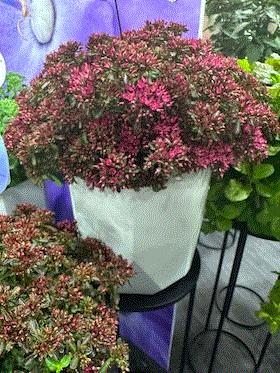
Groundcover sedum: Spot On Red from Syngenta Flowers
|
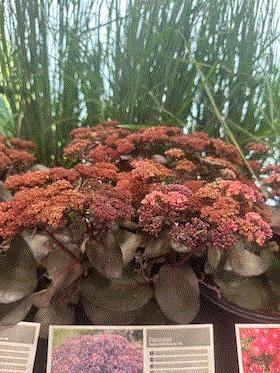
Upright sedum: Wineberry Delight from Walters Gardens
|
There are numerous types of sedums in the trade; most of them are marketed as groundcovers or upright “garden” sedums, but several fall somewhere between these major categories. Sedums are mostly known for their drought tolerance once established and trouble-free demeanors. Most sedum are cold hardy to Zone 3, but check catalog listings to confirm each cultivar's hardiness.
Growers and retailers can easily take advantage of the extra promotion sedums will be receiving this year.

Vykenda Insecticide/Miticide Efficacy
This is hot off the press: JC Chong, the Pest Talks newsletter editor-at-large, shared efficacy results for Syngenta’s newest insecticide and miticide, Vykenda. JC included so much content I couldn’t possibly do it justice summarizing it, so here’s JC's article in its entirety:
First, a recap: Vykenda contains isocycloseram (called Plinazolin technology by Syngenta), which is a new active ingredient in IRAC Group 30. Vykenda may be sprayed at 4 to 10.3 fl. oz. per 100 gal. to control beetles and weevils (including black vine weevil, redheaded flea beetle and Japanese beetle), caterpillars, leafhoppers, leafmining flies, mites (all species), plant bugs, psyllids, spotted lanternfly, stink bugs and thrips. Vykenda can also be used to suppress apple maggot, mealybugs and scale insects. Application rates differ by pest species, so read the label for the appropriate rates against your target pests.
The Vykenda website and information sheet contain data from two studies (on western flower thrips and two spotted spider mite) conducted at Syngenta’s Vero Beach campus. Here, I’ll go through data from the IR-4 Environmental Horticulture (EH) Program and see what insights into Vykenda’s efficacy I can glean.
Researchers conducted trials on Vykenda under the IR-4 EH Program as early as 2017, but the majority of the studies were conducted from 2020 to 2025. New data will be generated in the coming years. Efficacy data on various pests—thrips, mealybugs, scales, flatheaded appletree borer, European pepper moth, Japanese beetle, etc.—were collected. (The IR-4 EH Program didn’t conduct any trial on mites.) Because of the large number of trials, I’ll only provide the aggregated efficacy rating (compared to the untreated control) for a few major pest groups in this newsletter. You can dig deeper into the data by going HERE.
Let’s start with thrips. Eight trials had been completed against western flower thrips and one trial on chilli thrips. For western flower thrips, seven trials reported excellent efficacy (90% to 100% overall population reduction) and one trial reported good efficacy (76% to 80% reduction). The trial on chilli thrips reported mediocre efficacy (71% to 75% reduction).
Vykenda was tested as a foliar spray at 3.85 and 5.76 fl. oz. per 100 gal. three times at weekly intervals and tank mixed with Capsule at 0.05% in the majority of these trials. (Remember that the low label rate is 4 fl. oz., so use the low label rate instead of the tested rate.)
I took the liberty of adding this efficacy data to JC's article. These results show how much foliar damage from thrips feeding was reduced with Vykenda compared with other commonly used insecticides.
In most trials, the counts of thrips adults and nymphs were done separately. I’m glad to see that Vykenda achieved control of both adults and nymphs. I’ve seen in previous work (including my own) excellent control of nymphs, but poor control of adults by some other products. I think the discrepancy between the two life stages exists because residues of most insecticides don’t have enough repellence or residual lethality to keep adults (which constantly fly in) away.
Most of the trials were tested against relatively isolated populations in greenhouses, so it’s possible that the observed efficacy of Vykenda against adult thrips might be due to a reduction of immature thrips population (as fewer developed into adults) instead of repellency against adults. More research looking into the repellency should be conducted. For now, I suggest that Vykenda should be sprayed regularly to prevent thrips damage to flowers, especially in houses where thrips influx is possible.

Vykenda Part 2 (JC continued)
The numbers of trials completed on mealybugs and scale insects are seven for citrus mealybug, three for crape myrtle bark scale, two for striped mealybug, two for hemispherical scale, and one each for calico scale, cotton mealybug, Florida red scale and Madeira mealybug. Vykenda was sprayed at 3.84 and 5.76 fl. oz. per 100 gal. twice at a two-week interval and tanked mixed with Capsil in these trials. Since there’s only one study on an armored scale species (Florida red scale), we can’t draw too many conclusions from that.
Vykenda was reported as excellent or good for crape myrtle bark scale even at 3.86 fl. oz. and somewhat variable for soft scales (hemispherical and calico scales). Efficacy on citrus and Madeira mealybugs was great to excellent at the low rate, but poor on cotton mealybugs. The best performance of any sprayed insecticides can be achieved by targeting crawlers. I think it’s no different in Vykenda.
JC didn’t talk about mites in the article, but I wanted to show you how effective Vykenda is at controlling two spotted spider mites as well.
Vykenda was also reported as having excellent efficacy against European pepper moth (one trial), good to excellent against Japanese beetle adults (five trials) and variable against flatheaded appletree borer (two trials). When tested against these pests, Vykenda was applied at 5.76 and/or 7.68 fl. oz. per 100 gal. and one to three times at weekly or biweekly intervals. Capsule is typically included in the solution. When tested against redheaded flea beetle adults, weekly application of Vykenda at 3.86 fl. oz. was reported to be good to excellent in efficacy.
Forty-four crop safety trials covering 19 plant taxa have been completed. Vykenda was found to be safe on major crop species (mums, gerbera daisy, impatiens, pansy and more) at 11.5 fl. oz. (above the high label rate), except for azaleas (species and cultivar not reported; two out of three trials), bigleaf hydrangea (cultivar wasn’t given; one out of four trials), rose (Knock Out; one of two trials) and zonal geranium (cultivar wasn’t reported; one out of two trials).
The observed phytotoxicity was mainly chlorosis and some necrosis on leaf edges. Plant growth wasn’t impacted over time. I think more crop safety trials still need to be conducted by multiple researchers so that observed phytotoxicity can be confirmed. In the meantime, it's always a good idea to test Vykenda on a small group of plants of each taxon you're growing just to make sure there are no surprises.
Vykenda seems to be a highly effective insecticide in IR-4’s trials. But if you think you've finally been given a silver bullet that solves all your bug problems forever and ever, well, I suggest you think again. We’ve learned over the years that insects and mites have an amazing ability to develop pesticide resistance in a very short period of time. So please don’t overuse Vykenda. Instead, think of Vykenda as a new tool or mode of action that you can incorporate in the rotation programs you already have. I think the good folks at Syngenta would probably agree with this recommendation.
This is just a sampling of the great content JC sends out twice a month. If you like this type of information and you're not already a
Pest Talks subscriber, I encourage you to sign up for a
FREE subscription.

Winter Trade Events
There’s already been a number of high-quality trade events in the first couple weeks of the year and there are even more on the horizon. Here’s a listing of several upcoming events I thought might be of interest to some of you. Simply click the name of the event to get all the details.
|
January 20-22, 2026 |
St. Paul, Minnesota
|
|
|
|
|
January 20-22, 2026 |
Grand Rapids, Michigan
|
|
|
|
|
January 21-22, 2026 |
Plantsville, Connecticut
|
|
|
|
|
January 27-30, 2026 |
Essen, Germany
|
|
|
|
|
January 27-28, 2026 |
Edison, New Jersey
|
|
|
|
|
January 27, 2026 |
Brooklyn, New York
|
|
|
|
|
January 27-28, 2026 |
Bloomington, Illinois
|
|
|
|
|
January 29-30, 2026 |
Columbia, South Carolina
|
|
|
|
|
February 5, 2026 |
San Mateo, California
|
|
|
|
|
February 9-11, 2026 |
Indianapolis, Indiana
|
|
|
|
|
February 25, 2026 |
Secaucus, New Jersey
|
|
|
|
|
February 25-27, 2026 |
Schaumburg, Illinois
|

And the Nominees Are ...
Now, this is where you come in. We need your help with nominations for the 2026 GrowerTalks' Young Grower Award and Green Profit's Young Retailer Award. These two awards are excellent ways to recognize the up-and-coming professionals in greenhouses and garden centers.
The nominees for each of these awesome awards must be under 35 years old as of July 14, 2026, and reside in the U.S. or Canada. The editors of Ball Publishing will sort through the candidates and will select three finalists for each award. The finalists will each get to write guest editorials for the June 2026 issues of GrowerTalks (Young Grower Award) or Green Profit (Young Retailer Award), attend Cultivate’26, and attend a special dinner alongside Ball Publishing’s editors, judges and sponsors.
The winners for each of these awards will be announced at AmericanHort’s Unplugged event during Cultivate. Each winner gets a cover story in the September issue of these prospective magazines. Additionally, the winners will get to help select the 2027 winners.
The deadline to submit your nominations is March 1, 2026. You can nominate a friend, colleague, coworker, employee or even yourself. Follow these links to submit your nominees:
Thanks to all of the sponsors (AmericanHort, Ball Horticultural Company, BASF and The Garden Center Group) for making these awards possible!


My email is paul@pace49.com if you have any comments, article suggestions or if you'd just like to say hello.
Best regards,

Paul Pilon
Editor-at-Large—Perennial Pulse
National Sales Manager—Pace 49, Inc.
This email was received by you and 34,058 other fine subscribers!
If you're interested in advertising in Perennial Pulse, contact Kim Brown ASAP and she'll hook you up.