NEW PODCAST! 2025 Recap with Broch
This episode’s guest should be quite familiar to you by now, as he’s joined me multiple times to cover a range of topics related to IPM from a pest- and disease-specific angle, as well as seasonal controls and prevention strategies, and even weed management.
He is Broch Martindale, the National Nursery & Greenhouse Strategic Account Manager at Corteva, and downloads of his episodes are always strong, proving that loyal listeners and many others across the industry are well aware of his ability to share detailed, research-based cultural information blended with real-world greenhouse and nursery production experience. Check out the show notes for links to all of Broch’s past episodes covering a range of topics.

This time, WE LOOK BACK ON 2025—spring, summer and fall production—to highlight pests and diseases that were particularly troublesome over the past 12 months, as well as the products and approaches growers used to effectively go to battle before and after symptoms emerged. We talk spring pests like aphids and thrips that were prevalent coast to coast, mum diseases and issues due to warmer-than-average weather, and poinsettia growers facing pathogens and insect/mite pests.
Broch also went into detail about how investments in R&D by companies like Corteva drive product effectiveness, even when active ingredients might look alike on labels. Did you know that particle size can dictate the amount of active ingredient actually getting to where it needs to be for full mortality—which, in turn, reduces the risk of resistance?
As you wrap up your year, take a listen to this episode to hear about things you might have faced AND challenges you might encounter in future years. And check out the resources in the show notes for trialed, tested and proven products to add to the proverbial toolbox.
Be sure to subscribe to the Tech On Demand podcast on your favorite app so you never miss an episode. And if you’re not a regular listener, jump back into the archives and get caught up—there are more than 200 to choose from!

NEW VIDEO! What’s in Your Growing Media?
Explore some substrates, additives and amendments commonly used in commercial greenhouse production—whether you buy pre-mixed media or mix yourself—in A NEW TRAINING VIDEO from Ball Seed Technical Services.
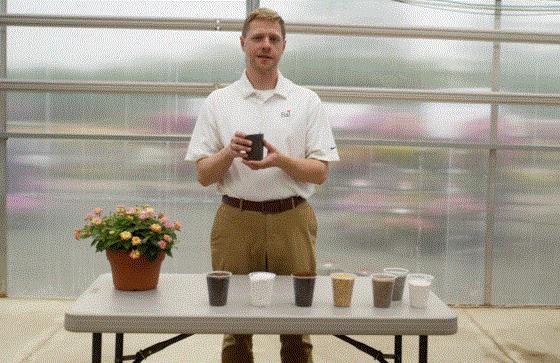
Join Dr. Nathan Jahnke (Ball’s culture research manager) for a look at some different options and why they’re incorporated into greenhouse and nursery production systems. Nathan touches on peat, perlite, rice hulls, coir, controlled-release fertilizers and more. Each has its own set of nuances—so, be sure to know what’s in your mix!
Nick’s Tip of the Week: Water Quality Deep Dive—Part 2: Soluble Salts, Macro- and Micronutrients and pH
Each week, I’ll work with my buddy Nick Flax, a technical services expert at Ball, to share a concern that’s come up during one of his numerous calls with growers across North America. This week, he’s continuing last week’s discussion about interpreting water test results.
PROBLEM: Alkalinity is arguably the most important water quality factor to monitor and manage when growing greenhouse crops, but it’s not the only factor that requires special attention and care. If you missed the last tip on Understanding Alkalinity and Managing Too-low Alkalinity, check out LAST WEEK’S NEWSLETTER.
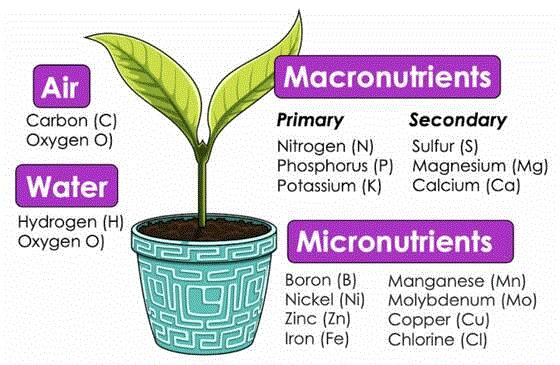
NICK’S TIP: This week, we’ll focus on other key water quality parameters, and how to interpret and manage them when reviewing water test results.
Soluble Salts
It’s critical to factor your water’s baseline electrical conductivity (EC) into crop management decisions. Whether you’re troubleshooting issues with EC-sensitive crops or performing routine maintenance like fertilizer injector calibration, a current, accurate EC reading is needed to ensure you are taking appropriate action. Most often reported in mS/cm (millisiemens per centimeter), EC is a measure of how many ions (like Ca2+, K+, Mg2+, NO3–, NH4+, etc.) are present in your water. Pure water is not a good conductor of electricity on its own, but ions (such as salts) dissolved in water increase its ability to do so. The higher the EC value, the more ions are present.
-
Ideally, your water’s EC should be below 0.5 mS/cm for plug and liner production. Young plants grown with water that has an EC much above 0.5 mS/cm often experience issues due to salt accumulation in the growing media. When young plants are grown using above-optimal EC water, ions present in your water and ones added via fertilizer can build up and burn roots, stunt growth or open the door for disease. Monitor growing media EC regularly and leach with clear water as needed to avoid damage to plugs and liners.
-
Many finished crops can be grown with few issues using water that has an EC as high as about 0.8 mS/cm, and some can even tolerate a baseline EC of up to 1.0. However, using water with a lower EC is almost always better and reduces the chance of complications. New Guinea impatiens, for example, can become stunted and distorted when soil EC is above ~1.5 mS/cm for extended periods. If your water’s baseline EC is 1.0 and fertilizer adds 1.14 mS/cm when mixed at 150 ppm N, you’re applying a solution with a total EC of 2.14 mS/cm each time you feed the crop. When applied enough times without a clear water leach in between, the growing media’s EC can climb and potentially cause issues.
Macro- and Micronutrient Levels
Thorough water tests provide readouts for most (if not all) essential mineral nutrients for plant growth. Understanding which mineral nutrients are already present in your water is critical when choosing fertilizers or investigating odd, abiotic symptoms that appear in your crops.
-
Water test reports should include nitrogen (N; ideally nitrate-, ammonium- and urea-forms), phosphorous (elemental P & soluble P2O5), potassium (elemental K & soluble K2O), calcium (Ca), magnesium (Mg), sulfur (elemental S & soluble SO4), iron (Fe), manganese (Mn), boron (B), copper (Cu), molybdenum (Mo), zinc (Zn), sodium (Na), chloride (Cl) and aluminum (Al).
-
If one or more macro- or micronutrients is in abundance or out of balance in your water, select a fertilizer formulation that will help balance what’s already present with what you still need to provide for good growth. Sometimes this is difficult or impossible solely using commercially available fertilizers—instead, you need a custom blend from your supplier.
-
Depending on the nutrient and how over- or underabundant it is in your water, more drastic management measures may be necessary. For example, excessively high levels of boron (B) may make producing floriculture crops very difficult (or even impossible!) and installing a reverse-osmosis system may be necessary to correct the issue.
-
Another option is a fertilizer system that automatically adjust or that can be manually tuned to add individual macro- and micronutrients based on continuous sensor reading. However, these are often expensive investments and costly to maintain, so large growers are typically the only operations that utilize them.
-
If surface water is your primary source, macro- and micronutrient concentrations should be monitored regularly—especially if you have a closed or recirculating irrigation system. Monthly macro- and micronutrient tests should be your minimum goal when irrigating from a retention pond, reservoir or other surface water source.
-
Mineral nutrient levels in most municipal water supplies remain stable over time but this is not always the case, so you should perform twice-yearly water testing, at a minimum. In some cities, you can request periodical readouts from your municipal water supplier free of charge. While the report they send is rarely a full irrigation water report, major changes in concentrations of specific ions that they do report can serve as good indicators that you may need to adjust your feed program or have a more comprehensive test performed to get in front of potential issues.
Water pH
While not as important a standalone factor as alkalinity, your water’s pH (how acidic or basic it is) can serve as an indicator of water quality changes. This is one of those “a square is always a rectangle, but a rectangle is not always a square,” situations.
High alkalinity often correlates with higher water pH (generally above about 7.0) on a test report, but high pH alone does not necessarily indicate high alkalinity.
It’s critical to look at pH and alkalinity together to make fertilizer and other crop culture decisions. A good irrigation water test always includes both pH and alkalinity.
If you perform regular pH and EC tests on your raw water in-house, a sudden increase in pH can serve as a good indicator that your water quality is changing and a more in-depth test should be performed ASAP.

2026 Prep: Starting Strong with Seed Annuals
As we head toward spring 2026 production, I want to take this opportunity to share some videos from our “In the Break Room” PLAYLIST. The goal with this series is to offer technical and cultural training that can be viewed in the time it takes to eat lunch—hence the break room reference. These videos are intended to share with both new and experienced growers in an effort to get everyone in your operation on the same page before the season kicks off.
In THIS VIDEO, Drs. Will Healy and Todd Cavins address the early stages of Seed Propagation by taking you through key propagation processes, from reviewing inputs and prepping your seeding operations to sowing and radicle emergence. Here are the topics covered, taking you from prep through Stage 1:
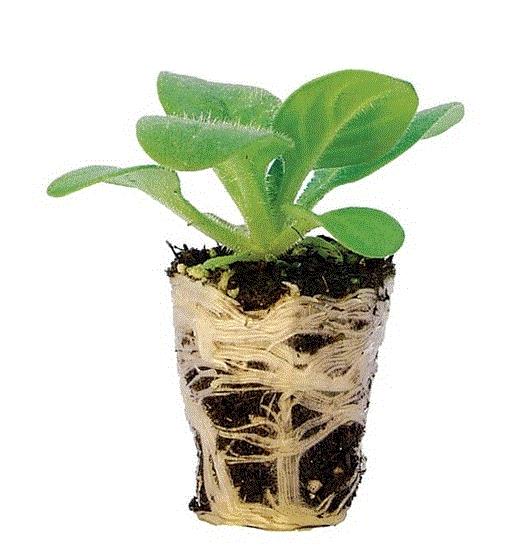
Before seed is sown (Stage 0):
-
Review Inputs for Success
-
Sanitation
-
Review soil components
-
Test soil, fertilizer and water
-
Uniform tray filling and soil density
-
Flat filler maintenance
-
Seeder maintenance
-
Review covering strategy—uniform application!
Stage 1: Sowing to Radicle Emergence
-
Review germination process
-
Uniform moisture = uniform germination and yield
-
Water management
-
Root development

2026 Prep: Starting Strong with Vegetative Propagation
Another In the Break Room video you should check out is all about vegetative crops in the early stages. Sure, we have many in-depth video series on this important topic, but THIS VIDEO is a much shorter, more bite-sized version. I hope you caught my pun … "bite-sized" because you and your crew can watch this one in the time it takes to grab lunch.
This time, Will and Todd tackle the ins and outs of vegetative propagation by taking you through the four beginning stages of young plant production. Check out the topics covered and then click the link above to watch:
Stage 0: Prep for Success
-
Sanitation
-
Test soil & water
-
Cutting receipt
-
Temp check
-
Hydration check
-
Organizing kits (URC + Label + Group)
-
Rooting hormones
-
Sticking efficiencies
-
Media moisture
-
Close the dibble
-
Holding time & dehydration
-
Laydown plan
-
Rehydration on the bench
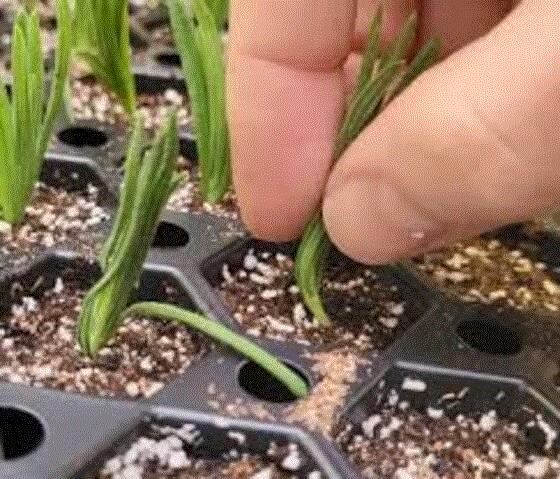
Stage 1 & 2: Stick to Root Initials
-
Hydration (turgid, no wilt)
-
Mist program
-
Foliage moist?
-
Fungicides for root development
-
K-IBA sprench
-
Swelling to break epidermis
-
Foliar feed to maintain color
-
PGR to control stretch
-
Monitor for insects & mites
Stage 3: Developing Roots & Shoot Growth
-
"Fish grow in water, roots grow in air"
-
NPK
-
Fe:Mn, Ca:B
-
Promote branching
-
Light intensity
-
Photoperiod
-
Monitor for insects & mites
-
Soil & tissue fungicide program
-
Monitor EC & pH
Stage 4: Preparing for Transplant
-
Toning with light & temperature
-
Plant on schedule
-
Shear to promote branching
-
PGR to tone growth
-
20-10-20 to liner at transplant
-
Firm soil around liner
-
Irrigate to draw roots out and down

Finish Line ...

I hope everyone had a safe and fun Thanksgiving yesterday. As I mentioned last week, Jennie, me and the girls spent a couple days in West Virginia hiking and exploring the Smoke Hole Caverns and let me just say it was awesome to be out in fresh air and underground, seeing amazing rock formations, stalactites and stalagmites. Legend has it, the name “smoke hole” came from early Native Americans who smoked meat down there. Later, the story goes that it was used by Civil War soldiers hiding medical supplies and ammo, and then by moonshiners.
Then we headed east to the DC area where we met up with my parents, cousins and family friends for a big feast. Yes, I ate far more than my allocation ... let’s just say, the stuffing was epic!
That’s it for this week. We head home tomorrow and I’ll be back at my desk Monday refreshed and ready to tackle the home stretch of 2025. Hopefully, most of your poinsettias have shipped and you can enjoy a bit of R&R before spring production kicks into full gear.
Until next week, get to work—those leftovers aren’t going to eat themselves!


Please feel free to send your comments, constructive criticism and topic ideas to me at bcalkins@ballhort.com.

Bill Calkins
Editor - Tech On Demand
This email was received by you and 25,486 other fine subscribers!
If you're interested in advertising in Tech On Demand, contact Kim Brown ASAP and she'll hook you up.