Thanksgiving Trivia
In lieu of opening the newsletter with a diagnostic challenge, I thought it would be a fun and nice change of pace to mix things up for Thanksgiving and have a little trivia challenge. Similar to my other challenges, first I’ll list the trivia questions, then provide a few articles for your enjoyment, and finally reveal the answers before signing off for the week. Let’s get started!
Thanksgiving Trivia Questions
|
1. What year was the first Thanksgiving celebrated? |
|
A. 1621 B. 1627 C. 1631 D. 1731 |
|
|
|
2. How many pilgrims came over on the Mayflower? |
|
A. 102 B. 175 C. 200 D. 272 |
|
|
|
3. How long did the first Thanksgiving celebration last? |
|
A. 2 hours B. 1 day C. 3 days D. 1 week |
|
|
|
4. When did the first Macy’s Thanksgiving Day Parade take place? |
|
A. 1912 B. 1924 C. 1930 D. 1942 |
|
|
|
5. What meat was NOT served at the first Thanksgiving? |
|
A. Turkey B. Venison C. Swan D. Duck |
|
|
|
6. What state raises the most turkeys? |
|
A. Ohio B. Minnesota C. Nebraska D. South Dakota |
|
|
|
7. Which president made Thanksgiving a National holiday? |
|
A. Abraham Lincoln B. James Madison
C. George Washington D. Thomas Jefferson
|
|
|
|
8. How many pumpkin pies are consumed every Thanksgiving? |
|
A. 1 million B. 20 million C. 50 million D. 62 million |
|
|
|
9. In the iconic Friends Thanksgiving episode, who is wearing the turkey with sunglasses on their head? |
|
A. Joey B. Phoebe C. Monica D. Ross
|
|
|
|
10. Which type of apple is used traditionally in apple pie? |
|
A. Honey Crisp B. Granny Smith C. Red Delicious D. Gala
|
|
|
|
11. On average how many calories does the average American consume at Thanksgiving dinner? |
|
A. 750 B. 1,200 C. 3,500 D. 4,200 |
|
|
|
12. Which NFL teams have played each other every Thanksgiving since 1978. |
|
A. The Lions and The Cowboys B. The Lions and The Tigers
C. The Cowboys and The Packers D. The Bears and The Cowboys
|

UGA’s Top Performing Perennials
The Trial Gardens at the University of Georgia has an excellent program for evaluating the performance of the newest ornamental plants from the top breeding companies around the world. UGA is the “go-to” garden for testing plants when it comes to evaluating heat tolerance and humidity adaptability.
Each cultivar is evaluated every two weeks for “horticultural” performance. Performance ratings are assigned based on several attributes, including overall appearance, leaf color, uniformity of habit and flower, the number of flowers and resistance to insects and diseases. The performance rating is based on a 1-5 scale where 5 is considered exceptional and 1 being nearly dead.
Below are several perennials with the highest performance ratings in their genera:
Coreopsis Sunfetti Yellow Bicolor
This fast growing hybrid coreopsis from Darwin Perennials covers itself with an abundance of petite yellow and deep red flowers.
Sunfetti Yellow Bicolor forms attractive 14-in. mounds and offers strong resistance to powdery mildew, and is also resistant to deer feeding. This pollinator magnet is cold-hardy to Zone 5. Sunfetti Yellow Bicolor received a 4.88 rating and was an Industry’s Choice Winner during the trials.
Digitalis Hanabee Pink
Hanabee Pink from American Takii is the newest generation of F1 digitalis to hit the market. Its innovative breeding offers unrivalled uniformity, compact growth and a multi-branching habit, creating a continuous “bouquet” effect. It grows 16 to 24 in. tall and truly creates a great impression with its branching habit and flowering appearance. Hanabee Pink received an average rating of 4.63 and was a July Plants of Distinction Winner during the trial. Hardy to Zone 4.
Echinacea Revelation Coral
Revelation Coral from Terra Nova Nurseries has a mounding habit with good foliage cover and produces incredibly sturdy stems that supports its extra-large, long-lasting, stunning coral-pink flowers. Revelation Coral has fragrant flowers, grows 24 to 30 in. tall and is hardy to Zone 4. It received a performance rating of 4.69 at the UGA trials.
Gaillardia Guapa Flamenco Bicolor
Guapa Flamenco Bicolor from Darwin Perennials produces loads of bicolored flowers with burgundy center petals encircled by vibrant golden yellow flower tips throughout the entire summer. Its attractive mounds reach 15 to 17 in. tall and are deer resistant, heat tolerant and great for attracting pollinators. Hardy to Zone 5. Guapa Flamenco Bicolor received a 4.69 performance rating and was a July Plants of Distinction Winner.
Salvia nemorosa Perpetual Purple
Perpetual Purple from Bloomin’ Easy received a near-perfect 4.97 performance rating at the UGA trials. This achievement was likely earned by its showstopping, long-lasting purple blooms on tall flower spikes. The spikes retain their vibrant hue even after the flower petals have fallen. Perpetual Purple looks great in the landscape before, during and after it flowers. It grows 16 to 18 in. tall, flowers spring to fall, is drought tolerant, pollinator-friendly, deer-resistant and hardy to Zone 5.

Is it Time for Cold Protection?
During the fall and early winter, plants are working on acclimating or becoming tolerant of cooler temperatures. This transitional time of year is very important as it lays the foundation to a plants ability to survive exposure to cold temperatures during the winter months. One of the most common mistakes I see growers make is providing too much cold protection too early in the winter. The warmer temperatures this early protection provides can negatively affect future survivability.
The survival of the root system is the main objective of overwintering. Plants in containers do not receive the protective insulative properties that plants grown in the ground get. Therefore, it’s important to provide adequate cold protection to containerized perennials.
Many growers prepare their perennials for winter by removing the old top growth, grouping the pots together and acclimating them inside houses in the late fall.
Unfortunately, there’s not a one-size-fits-all approach that will work for every grower. The amount of cold protection to provide varies widely by geographic location. For example, southern growers typically need to provide little to no cold protection, whereas it’s essential for northern growers to provide cold protection to ensure the survival of their containerized perennials.
From my experience, roots seldomly get damaged at the onset of winter. So during the late fall, allow the roots to become well-acclimated to cold temperatures before using any type of cold protection. It’s okay, and even beneficial, for plants to receive frost and freezing temperatures before even thinking about providing any cold protection.
Conditions vary from one year to the next, so implementing cold protection based on a calendar is often not the best approach. Always consider the current conditions and the weather forecast for the coming days before taking action.

Easing into Cold Protection
Many growers cover Quonset houses too early in the fall and/or apply protective blankets too soon in the early winter. These practices can delay the acclimation process and decrease the level of cold tolerance the plants achieve (they won’t be able to tolerate as low of temperatures as they would if they were acclimated without protection and colder temperatures in the late fall and early winter).
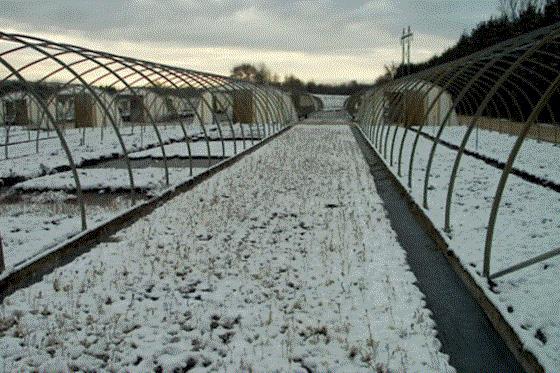 It’s beneficial to allow plants exposure to cold, frost and even light snowfall in the late fall/early winter to help them become acclimated to cold prior to providing cold protection.
The best strategy is to keep the temperatures in the fall and early winter the same as or as close to outside temperatures as possible. This allows perennials the best chance to become fully and properly acclimated. Proper acclimation is easily accomplished in outside locations, but more difficult when being done inside structures.
When structures have good ventilation systems, manage them so the temperatures inside basically mimics as best you can the outside temperatures 24/7. It may be necessary to stop ventilating and possibly even running minimum heat when outside temperatures fall much below freezing (perhaps at 5 degrees below freezing). Otherwise, maintain temperatures as cold as you are comfortable with.
Structures with little ability to ventilate will be more challenging for growers to achieve proper acclimation. These types of houses will require more active efforts to provide cold to the plants inside them. If the houses are uncovered in the summer and early fall, apply the plastic as late in the season as possible—even after the first snow flies. Unfortunately, I understand due to the availability of labor and time, it’s often not possible to wait until acclimation has been achieved before the coverings are applied. My message in these cases is to wait as long as possible before covering them.
Once houses are covered, or with houses with some but probably less than adequate ventilation systems, it will require some effort for a while to provide and manage temperatures inside these structures. Actively manage the vents and/or doors to keep the temperatures as close to outside temperatures as possible. When the outside temperatures are significantly below freezing, you can close the doors and temporarily stop ventilating.
I may be a little late delivering some of these comments to you this year, as many growers have already covered their houses, but I wanted to remind you of the importance easing your plants into winter. Cold temperatures are essential for acclimation and winter survival. What you provide now greatly affects a plant's ability to tolerate cold and aids in its cold survival over time.
I’m planning to cover protective blankets in the next newsletter, so you’ll have this information in time for when additional cold protection is needed.

The Answers Are…

I hope you had fun with the trivia questions above. If you already haven’t scrolled down here to find the answers, here they are.
Thanksgiving Trivia Answers
1. What year was the first Thanksgiving celebrated? C. 1631
2. How many pilgrims came over on the Mayflower? A. 102
3. How long did the first Thanksgiving Celebration last? C. 3 days
4. When did the first Macy’s Thanksgiving Day Parade take place? B. 1924
5. What meat was NOT served at the first Thanksgiving? A. Turkey
6. What state raises the most turkeys? B. Minnesota
7. Which president made Thanksgiving a National Holiday? A. Abraham Lincoln
8. How many pumpkin pies are consumed every Thanksgiving? C. 50 million
9. In the iconic Friends Thanksgiving episode, who is wearing the turkey with sunglasses on their head? C. Monica
10. Which type of apple is used traditionally in apple pie? B. Granny Smith
11. On average how many calories does the average American consume at Thanksgiving dinner? C. 3,500
12. Which NFL teams have played every Thanksgiving since 1978? A. The Lions and The Cowboys
Bonus Question: What are you grateful for?
I’m thankful for so many things, including you. Thanks for reading, and enjoy the holiday season!


My email is ppilon@ballpublishing.com if you have any comments, article suggestions or if you'd just like to say hello.
Best regards,

Paul Pilon
Editor-at-Large—Perennial Pulse
National Sales Manager—Pace 49, Inc.
This email was received by you and 34,102 other fine subscribers!
If you're interested in advertising in Perennial Pulse, contact Kim Brown ASAP and she'll hook you up.