Perennial Problem Children Podcast Rewind
As I’ve mentioned before in this newsletter, back in the early days of podcasting I hosted one called STEM: Insider Tips for Greenhouse Pros. Things were a lot different back then—using an old-school headset mic, trying to get the best sound out of Skype, file converting that still haunts me in nightmares … but the topics were important, and the guests were top-notch. Every now and then, I go back to the origin audio files, clean them up and re-release them as “Rewind” episodes via Tech On Demand.
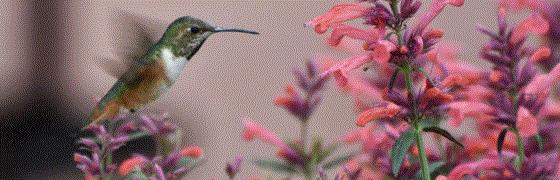
In the latest Rewind, I’m joined by Darwin Perennials’ General Manager Karl Batschke who (in 2016) took us through some new ways to better produce key and emerging perennial genetics. The cool thing is, he didn’t talk about the easy ones. Instead, Karl addressed some of the more challenging crops and newer crops that require different cultural and technical regimes. We dubbed them PERENNIAL PROBLEM CHILDREN.
Like a good guidance counselor, Karl treated each problem-child crop as an individual and created a custom plan to maximize its potential so you can achieve the results you want—your best crops ever.
But since I had Karl on the hook for 40 minutes, I asked him plenty of questions about the market for perennials, what he was seeing and hearing in his travels (back in 2016), and thoughts and predictions for the future—which, since this conversation is almost eight years old, could be what we’re experiencing today! Karl has tons of industry knowledge and experience, and I was really happy to have this chance to pick his brain.
You can find the Tech On Demand Podcast, brought to you by GrowerTalks on Spotify, Apple Podcasts and just about any other app. You’ll want to subscribe so you never miss an episode. And take some time to jump back in the archives for more than 135 episodes covering a wide range of topics for greenhouse professionals.
TECH ON DEMAND ON SPOTIFY
TECH ON DEMAND ON APPLE PODCASTS

Nick’s Tip of the Week: Get Your Poinsettias “On the Curve”
Each week, I’ll work with my buddy Nick Flax, a technical services expert at Ball, to share a concern that’s come up during one of his numerous calls with growers across North America. This week, his goal is to help you keep poinsettias on track to hit your retail specs.
PROBLEM: Most poinsettias for the 2024 holiday season have been planted and pinched, so the name of the game now is to bulk them up before we hit short days (and to keep your crop on track). However, when you plant liners in August and ship finished plants at the end of November, it’s easy to lose sight of your crop’s progress. Have your points gotten too big too early? Do your crops need additional size to meet your finished spec?
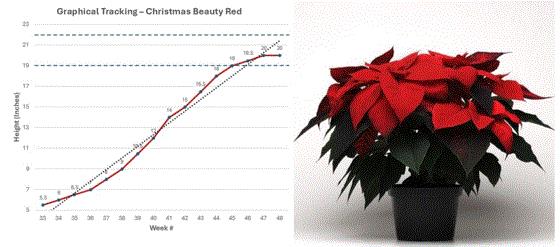
NICK’S TIP: To hit the mark and make effective management decisions throughout the crop cycle, it’s critical to implement graphical tracking for your poinsettias.
To set up graphical tracking, you need three critical dates:
-
Pinch date. The actual date depends partly upon the size pots your crops are produced in and how many plants per pot you have. For example, larger crops like 10-in. need additional time after pinch for vegetative growth than 6 1/2-in. That said, the standard go-by for pinching is about 10 to 14 days after liners are planted or once roots hit the container sidewalls—whichever comes first.
-
Start of “short days.” This is when critical daylength for flower induction is achieved.
-
Your finish/ship date. When plants need to be at their finished height and the cyathia (little yellow flower parts) are just about open and start to shed pollen. (For a hilariously scientific explanation of this term, CHECK OUT HORTISTICIAN DR. MARVIN MILLER’S VIDEO!)
Quick sidebar … The term “short days” is relative for poinsettias, so keep these points in mind:
The night length required to induce flowering in poinsettias varies slightly across varieties, but 11 hours and 40 minutes is considered the average minimum night length needed to trigger flowering. Inversely, this means when natural daylength is 12 hours and 20 minutes or shorter, most poinsettias will begin their flowering response.
When you reach natural short days depends on how far north or south you are. For example, this year, short days for poinsettias start on September 19 in Bellingham, Washington and September 13 in Miami, Florida.
Once you have these three dates nailed down, create a graph. You can use grid paper or computer software like Excel, Numbers, Google Sheets—whatever you’re comfortable with. Just make sure your graph has:
-
A consistent scale along the X- and Y-axes (if it’s hand-drawn).
-
An X-axis labeled “Week #” and a hashmark for each week from pinch until finish.
-
A Y-axis labeled “Height” where the maximum measurement is the upper limit of your finished spec and a horizontal line for the lower limit of your spec. For example, if 18–22-inch height at finish is your spec, the top of the Y-axis should end at 22 and there should be a dotted line or other mark at 18 to denote the minimum acceptable height.
-
A diagonal line from “Week 0” and starting height of your poinsettias after pinch to the middle of your finished spec range at the final week on the graph.
Once the graph is ready, flag a few plants in your crop that you’ll measure each week. Be sure to avoid flagging plants on the corners or along the edges of a block of a production block.
On the same day each week, measure the height of the plant from the top of the growing media to the tallest shoot/leaf, and plot the value on your graph. Connect the “dots” each week to get a better visualization of week-to-week changes in growth and development rate. Compare “where your plants are” to “where they should be,” based on the diagonal line you drew from your height in Week “0” when plants were pinched to your finished spec.
Ultimately, as you connect the plotted points on your graph, the shape of your crop growth should be sigmoidal/S-shaped. Growth in the first few weeks will be minimal, then accelerate, and slow down again as you approach your ship week.
When you use graphical tracking to grow poinsettias, you ensure that all crop management decisions are made based on the facts—not how much you feel your plants grew over the last week. If the crop slows down, you know you need to increase fertilizer, bump up the greenhouse temperature, etc. If your poinsettias start to grow too quickly, you can decide on a PGR strategy that appropriately curbs a spike in growth. It gives you peace of mind and a clear illustration of whether your crop is on-track and if it will finish on time.
If you haven’t started your graphical tracking program this year, it’s not too late to get it going.
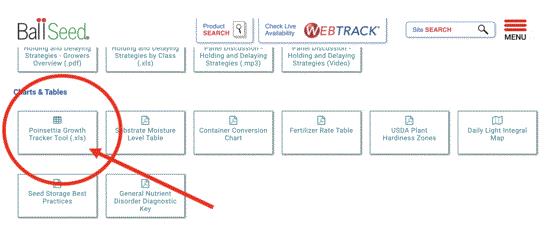
IF YOU NEED A READY-MADE GRAPHICAL TRACKING TOOL, Ball Seed has you covered. Click that link and scroll down to “Charts & Tables.”

Syngenta’s New Mainspring Xtra (ft. Comments from JC)
I had this on my content list for last week but ran out of space, so I moved it to this week’s list. Then I saw that my newsletter buddy JC Chong covered it in his newsletter, PestTalks, so I figured I’d defer to his expertise in all things crop protection and pick up what he wrote about Syngenta’s upgraded Mainspring insecticide:
Syngenta announced last week that it’s introducing Mainspring Xtra to the ornamental market. This new insecticide is currently approved in 19 states. More state registrations will be approved in the coming months.

Y’all know Mainspring GNL, right? It contains cyantraniliprole, one of my go-to for thrips, whitefly, flea beetle and caterpillar management. So where does the “Xtra” come from? That Xtra is thiamethoxam, the active ingredient of Flagship 25WG.
Both cyantraniliprole and thiamethoxam are systemic insecticides, but they have different modes of action (cyantraniliprole is a diamide, or IRAC 28, and thiamethoxam is a neonicotinoid, or IRAC 4A), and chemical and insecticidal properties. The combination is complimentary. Thiamethoxam provides fast activity and cyantraniliprole provides residual control. The addition of thiamethoxam also enhances cyantraniliprole’s activity on sucking insects, such as aphids and whiteflies.
Mainspring Xtra is registered for use on ornamental plants in commercial and residential landscapes, as well as ornamental plants, non-bearing fruit and nut trees, Christmas tree seedlings, and vegetable transplants (such as eggplant, pepper and tomato) in greenhouses, shadehouses, nurseries and interiorscapes. I guess the new uses on edible plants are also an “Xtra” to the original Mainspring GNL.
Mainspring Xtra is formulated as a water-dispersible granule (WDG or WG). It can be applied via foliar spray, media drench, cold fogging and chemigation. Application rates range from 2.5 to 10.5 oz. per 100 gal. or 5 to 10.5 oz. per acre depending on use site, application method, pest and crop.
After comparing the labels of Mainspring Xtra, Mainspring GNL and Flagship 25WG, I found that the low application rate of Mainspring Xtra (2.5 oz. per 100 gal.) delivers the same amount of thiamethoxam as the low rate of Flagship 25WG (2 oz. per 100 gal.), but slightly less cyantraniliprole than the low rate of Mainspring GNL (2 fl. oz. per 100 gal.). The maximum label rate of Mainspring Xtra (10.5 oz. per 100 gal.) also delivers the same amount of thiamethoxam as the high rate of Flagship 25WG (8.5 oz. per 100 gal.) and an amount of cyantraniliprole that’s between the high and maximum rates (8 and 16 fl. oz. per 100 gal., respectively) of Mainspring GNL.
The restricted entry interval (REI) of Mainspring Xtra is 12 hours but is extended to 24 hours if the product is applied with cold foggers in unventilated greenhouses. Early entry is permitted after certain personal protective equipment (PPE) and ventilation requirements are met. PPE are pretty standard—coveralls, chemical resistant gloves, shoes plus socks and protective eyewear. I need to point out that Mainspring Xtra has a bee box, so y’all must follow label restrictions and instructions for pollinator protection.
Go HERE to find more information—including approved states, label and other literature—of Mainspring Xtra. You’ll find specific instructions on pollinator protection, REI and PPE on the label.

Cyclamen Culture & Tech Sheets
I’ve seen some cyclamen chatter coming through the Tech On Demand team’s interactions with growers, as well as on professional grower social media pages. Seems like a good time to share cultural and technical info on this key crop many of you grow for the holidays. Of course, cyclamen are excellent gift plants all year long and landscape favorites in some regions of North America … but I see a huge number ordered for holiday assortments. If it’s a crop you only produce once a year, these tips and tricks might be appreciated!
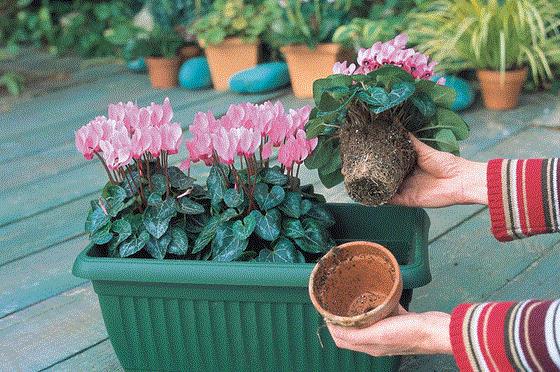
Morel is a French cyclamen breeder and producer who’s been in the game for generations, and they offer quite a bit of online technical information on their WEBSITE. I encourage you to bookmark it.
Digging deeper into Morel’s resources, you’ll find a solid list of cultural topics covering production protocols for their specific cyclamen series, but also a range of more general FAQs—from substrates and potting to lighting and nutrition. There’s also a comprehensive library of tech sheets on common cyclamen pests and diseases.
While you’re ON THE TECH NEWS WEB PAGE, go ahead and sign up for their e-newsletters, which always contain timely and helpful tips.

Poinsettia Lighting & Humidity Control
Nick covered graphical tracking and height management in his tech tip, but I wanted to share some more poinsettia strategies before closing this week. As he mentioned, you’re coming into the home stretch, but attention to detail remains critical. Your greenhouse environment should be top of mind while daylight decreases and temps fluctuate.
Here are a couple of short, timely videos to help your team get on the same page as it relates to light and humidity:
The first topic is FINISHED POINSETTIA LIGHTING. As days get darker and your crop keeps moving along, instead of reducing light, you now want to maximize the amount of light hitting the plants, especially if you’re growing in northern regions. Light dramatically affects bract temperature and development, critical pieces to the puzzle that ends with an optimal crop. One of the best tips is to remove any shade paint on your roof to increase light coming in. It’s a challenge that natural light is the lowest as you are finishing your crop, but one that can be managed.
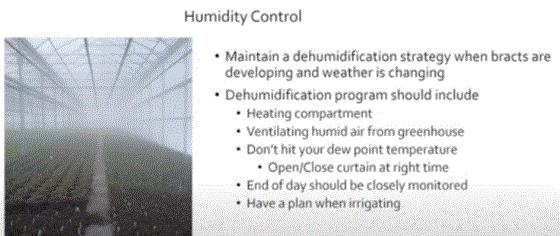
Next on the list is humidity. It’s your friend in propagation and after pinch, but it becomes your enemy when you begin finishing the crop. You will need a plan for humidity control, because it increases as you approach finish, which can lead to disease and reduced transpiration. GET YOUR PLAN HERE, IN THIS VIDEO!

Finish Line ...
Following summer events where the Tech On Demand and Ball Publishing teams were out and about talking to growers and sharing resources, we’ve received a lot of requests for GrowerTalks’ Grower Guides. Over the years, these have become important tools for many of you. Thanks to our partners and sponsors, they’re updated regularly to stay cutting-edge and relevant—adding new products and the latest techniques.
I always want to make sure you have these resources close at hand to make your greenhouse detective work and strategies as efficient as possible. Whether you’re trying to figure out how best to apply plant growth regulators (PGRs) on your annual or perennial crops (and even which ones to use) or about to battle with persistent greenhouse pests, Ball Publishing has you covered.
Here are three you need to bookmark and share:
-
PLANT GROWTH REGULATORS FOR ANNUALS: With the expansion of PGR options, as well as new chemistries to control and expand growth, encourage branching and even new application methods, staying up to speed on these solutions is as critical as ever. The guide covers specific crops like hanging baskets, poinsettias and more, as well as sharing an overview of just about every PGR on the market.
-
GROWTH REGULATORS FOR CONTAINERIZED HERBACEOUS PERENNIAL PLANTS: Like the annuals guide, this one covers some crop specifics, new research findings and how you can use them in your greenhouse, as well as a comprehensive overview of chemistries. If you grow perennials and you haven’t yet seen this guide, I can pretty much guarantee you’ll be blown away by the amount of information.
-
INSECTICIDE, MITICIDE & FUNGICIDE GUIDE: The title says it all—this guide is packed with information your entire team needs to grow the best crops possible, with the fewest issues. Some of the top researchers in the industry share detailed information on a wide range of greenhouse challenges, from specific bugs to the most wicked pathogens. There are plenty of charts to reference, addressing greenhouse and nursery fungicides, as well as a thorough list of pesticides. And as a bonus, it’s also available in SPANISH!
Until next week, stay cool! It may be hot for many of you this week, but we all know things are going to change soon. Hang in there!


Please feel free to send your comments, constructive criticism and topic ideas to me at bcalkins@ballhort.com.

Bill Calkins
Editor - Tech On Demand
This email was received by you and 25,771 other fine subscribers!
If you're interested in advertising in Tech On Demand, contact Kim Brown ASAP and she'll hook you up.