6/1/2026
Setting the Stage for Success in Summer Mum Production
Nancy Rechcigl
Summer is a pivotal time for ornamental growers producing mums for fall sales. Warm temperatures and longer days create ideal conditions for building a high-quality crop, but they also favor insect pressure and disease development. Success hinges on preparation, sanitation and a proactive, season-long management strategy.
Start clean: Building the foundation
Successful mum production begins with early preparation and a focus on minimizing risk before plants are even in place. The production environment plays a critical role in determining plant health throughout the season, especially under summer conditions.
Site selection is key. High temperatures, intense sunlight and overly saturated soils can all increase stress and elevate disease pressure. Choosing a location that supports good drainage and avoids prolonged heat or moisture extremes can help create more favorable growing conditions from the start.
Sanitation and water management should also be prioritized. Clean production areas, level ground and well-drained soils or media can help limit the introduction and spread of soilborne pathogens. Irrigating early in the day can further reduce risk by preventing excess moisture from persisting overnight. When possible, elevating plants off the ground can improve airflow and reduce contact with native soil, helping to minimize exposure to pathogens and support overall crop health.
Proactive planning for insect management
Production in outdoor or minimally controlled environments makes early, consistent scouting critical for persistent threats, including aphids, thrips and lepidopteran pests.
Aphids have piercing-sucking mouthparts that they insert in the phloem and use to extract plant sap, which affects overall plant vigor. Damage from adults and nymphs can include reduced leaf expansion, leaf discoloration or silvering, and leaf loss.
Thrips are tiny, elongated insects that scrape and pierce plant tissue, then suck out the sap and cellular contents from leaf tissue, flower buds and/or unexpanded shoot tips. This can cause leaf stippling (silvery streaking), scarring and distortion.
Loopers, armyworms and other lepidopteran pests can damage mums if not found in time. Growers should look for moth activity in production areas and be ready to apply appropriate controls to stop worms before they feed on plant terminals.
These pests cause more than just physical damage; they also serve as vectors for destructive plant viruses such as Tomato Spotted Wilt Virus (TSWV) and Chrysanthemum Virus B (CVB). Insects also play a critical role in disease development by creating entry points for pathogens.
A proactive approach includes:
- Routine scouting of foliage, terminals and undersides of leaves
- Identifying hotspots early and treating locally when appropriate
- Managing weeds and surrounding vegetation that can harbor pests
Populations can escalate quickly under summer conditions, so waiting until visible damage appears often means control efforts are already behind. A preventive mindset supported by regular monitoring can help maintain control and reduce the likelihood of widespread outbreaks.
1. Late stages of Fusarium on chrysanthemum. 2. Internal vascular discoloration. 3. Fusarium sporodochia. 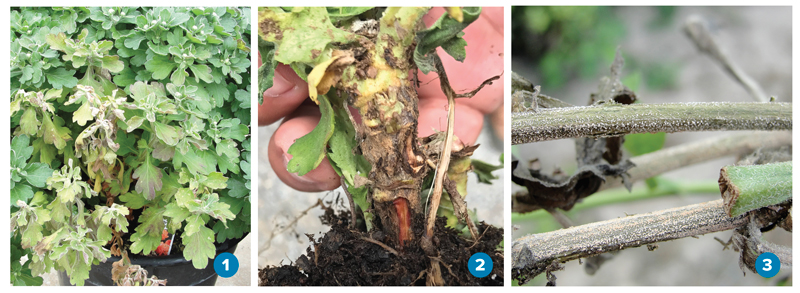
Common diseases: Know the pressure points
Root and stem diseases, particularly those caused by Pythium and Fusarium spp., are among the most common challenges in summer mum production. These pathogens thrive under high temperatures and moist conditions, making them especially problematic during periods of frequent rainfall or inconsistent irrigation.
Roots are often compromised by repeated cycles of wetting and drying, which can create small wounds that serve as entry points for infection. Elevated soluble salts in the growing media can further stress roots, leading to burn and increasing susceptibility to disease.
Frequent rain events can accelerate Pythium infections. Early symptoms often include pale green foliage and midday wilting, with plants appearing to recover in the evening. As the disease progresses, plants become stunted and fail to rebound. Fusarium is more commonly associated with plant stress. Infected plants may exhibit a distinct one-sided wilt as the pathogen moves through the vascular system, along with lighter-colored foliage and decline that progresses from the lower canopy upward. Infections often initiate early- to mid-summer so protecting plants during this time can prevent problems from developing later.
A programmatic approach to protection
Given the overlapping pressures of insects, diseases and environmental stress, a structured agronomic program is essential for summer mum production. Effective programs are built on:
- Preventive applications timed to crop stage and environmental conditions
- Rotating modes of action to mitigate resistance development
- Integration of insect and disease control strategies
- Flexibility to adjust based on scouting data and weather patterns
A programmatic approach ensures protection that’s consistent throughout the production window, rather than reactive and fragmented. It also helps reduce plant stress, which in turn can lower susceptibility to both insects and pathogens.
In practice, this means targeting key windows early, before populations build or infections become visible, and maintaining coverage through periods of peak pressure.
Integrating proven tools into your rotation
Within a well-structured agronomic program, insect management plays a central role in preserving plant quality. Vykenda insecticide/miticide features a unique mode of action for growers managing key pests, such as thrips and caterpillars, during summer production. It works through contact and ingestion to quickly knock down a wide spectrum of insects and provides long residual control of larvae and adults.
As the first ornamental active ingredient in IRAC Group 30, Vykenda is an excellent rotation partner with Mainspring GNL insecticide in IRAC Group 28 to control nearly all common insects. Rotating between chemistries with different modes of action can improve overall control and help preserve product longevity by reducing resistance pressure. The mum agronomic program from Syngenta can provide tips on rotations and timing so growers can finish the season with success.
Finishing strong starts early
The quality of a fall mum crop is largely determined long before buds set. In a production environment where weather, pest pressure and disease risk are largely outside of a grower’s control, preparation remains the most powerful tool. By setting the stage early and maintaining a proactive approach throughout the season, growers can consistently deliver high-quality, market-ready mums, even under the challenges of summer production. GT
Nancy Rechcigl is a technical services manager for Syngenta.