12/31/2025
Managing Chrysanthemum Aphid
Dr. Raymond A. Cloyd
 Chrysanthemum aphid (Macrosiphoniella sanborni) is an insect pest native of Asia that only feeds on chrysanthemums (Tanacetum x grandiflorum). In 2025, chrysanthemum aphids were prevalent on chrysanthemum crops in greenhouse production systems.
Left: Chrysanthemum aphid adult.
Right: Chrysanthemum aphid nymph.
Biology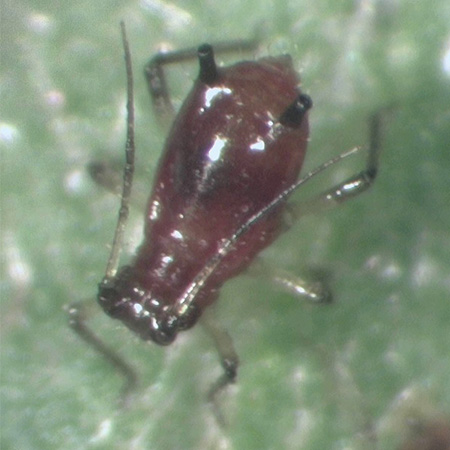
Chrysanthemum aphid females are approximately 1/16 of an inch (1.5 mm) long, dark red to black with black cornicles (tail pipes) protruding from the end of the body (Figure 1). All chrysanthemum aphids in greenhouses are females that produce, without mating (parthenogenesis), four to eight live nymphs per day, which are also females. Nymphs are red with long legs and antennae, and short black cornicles (Figure 2). Nymphs mature into wingless females that produce nymphs for the next generation.
 Chrysanthemum aphid populations can increase rapidly within a short period of time with chrysanthemum plants extensively infested with hundreds of aphids (Figure 3). When chrysanthemum plants are extensively infested with aphids, nymphs develop into winged females that move to non-infested chrysanthemum plants to start a new infestation.
Left: Terminal growth of a chrysanthemum plant extensively infested with chrysanthemum aphids.
Chrysanthemum aphids overwinter in greenhouses and feed throughout the winter if chrysanthemum plants are present. During spring through summer, chrysanthemum aphids may leave greenhouses in search of new plants to feed on. Chrysanthemum aphids can be moved to other greenhouse facilities by means of infested plants that are shipped.
Damage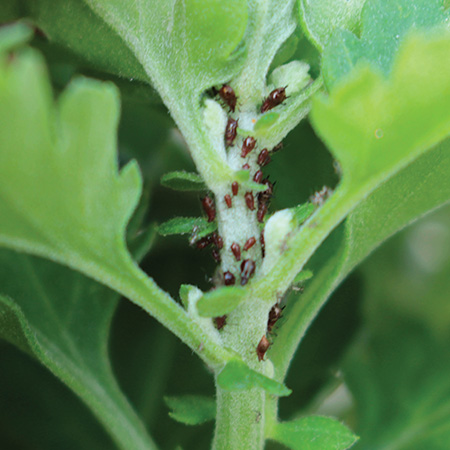
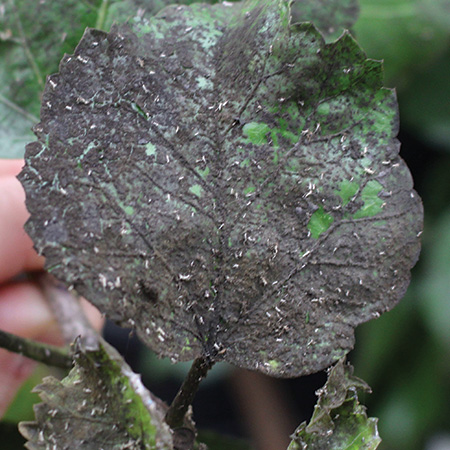
Chrysanthemum aphids feed on new terminal growth (Figure 4). They also feed on the stems (Figure 5) and leaf undersides, (Figure 6) removing plant fluids with their mouthparts. During feeding, chrysanthemum aphids produce honeydew, a clear, sticky liquid that serves as a substrate for black sooty mold (Figure 7). Feeding results in stunted growth and leaves may be covered with molted skins (Figure 8). Chrysanthemum aphids can transmit Chrysanthemum Vein Mottle Virus and Chrysanthemum Virus B.
Right: Chrysanthemum aphids feeding on new terminal growth.
Management
Managing chrysanthemum aphids below plant-damaging levels involves scouting chrysanthemum crops regularly, removing heavily infested chrysanthemum plants, applying insecticides during the growing season and releasing biological control agents early in the crop production cycle.
 Scouting
Chrysanthemum plants should be checked once per week to detect chrysanthemum aphids early in the growing season. Flag plants in the greenhouse that will be checked weekly. From our observations, we’ve found that many chrysanthemum cultivars are susceptible to chrysanthemum aphids, including Gigi Yellow, Gigi Orange, Gigi Coral, Cheryl Sparkling Yellow, Cheryl Frosty White and Cheryl Spicy Orange.
Left: Chrysanthemum aphids feeding on a stem.
Right: Chrysanthemum aphids feeding on the underside of a leaf.
Physical removal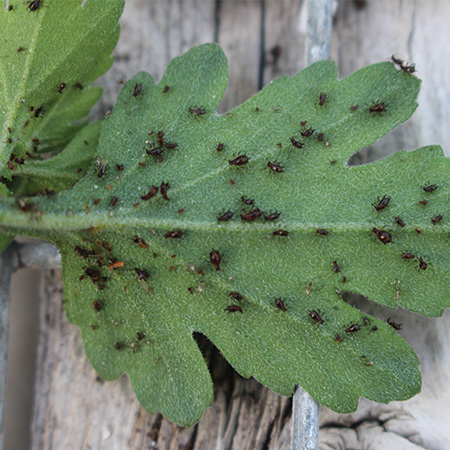
Remove chrysanthemum plants extensively infested with chrysanthemum aphids to prevent them from spreading to non-infested plants. In addition, check plants near those extensively infested with chrysanthemum aphids because they may also be infested with chrysanthemum aphids.
Insecticides
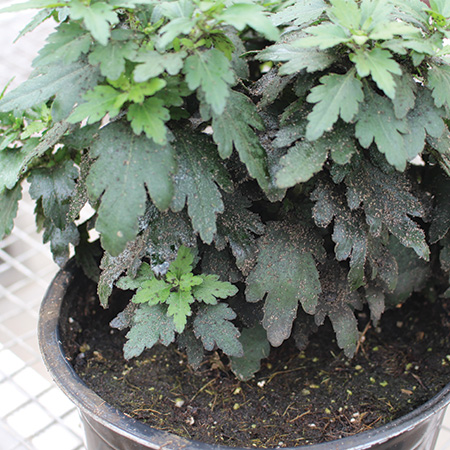
Insecticides can be applied to manage chrysanthemum aphids below plant-damaging levels, although thorough coverage of all plant parts—including terminal growth, leaf undersides and stems—is important. However, thorough coverage of plants with complex plant architectures (Figure 9) will be difficult. Use water-sensitive spray cards to verify your actual coverage of plants with insecticide spray applications. Repeat applications will be required because of the reproductive ability of chrysanthemum aphid females.
 Water all chrysanthemum plants to be treated thoroughly and apply insecticides in the early morning or late evening so that residues can dry before plants are exposed to direct sunlight. Apply systemic insecticides as a liquid drench or as granules to the growing medium early in production before chrysanthemum aphids are noticed or established. Be sure to rotate insecticides with different modes of action across generations to delay the development of resistance.
Left: Black sooty mold on a leaf.
Center: Lower leaves of a chrysanthemum plant covered with molting skins.
Right: Thorough coverage of chrysanthemum plants with complex plant architectures is difficult.
Biological control
There are no parasitoids commercially available for use against chrysanthemum aphids; however, green lacewing (Chrysoperla rufilabris or Chrysopa carnea) larvae, which are predators of aphids, may be an option, although they must be released early in production to maintain chrysanthemum aphids below plant-damaging levels. GT
Dr. Raymond A. Cloyd is a Professor and Extension Specialist at Kansas State University in Manhattan, Kansas. He can be reached at (785) 532-4750 (office), (785) 236-9150 (cell) or rcloyd@ksu.edu.
All photos are by Dr. Raymond A. Cloyd.