8/31/2026
Dianthus Sprint Series Growing Guide
Katie Miller, Dümmen Orange
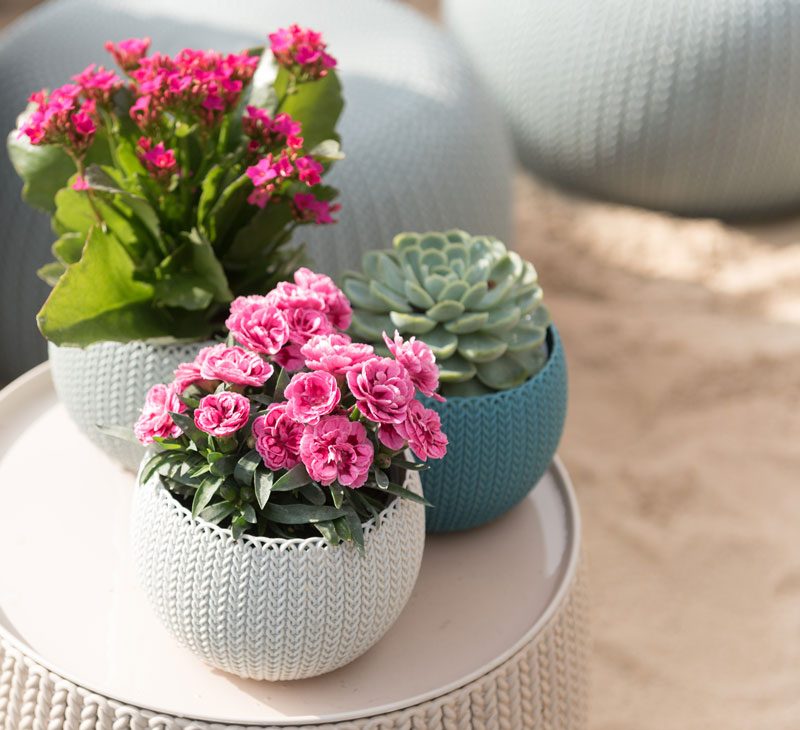
The dianthus hybrid Sprint series was developed to be a compact carnation-type selection. The prolific number of flowers and well-matched habits across the series, as well as being first-year flowering, make it highly programmable and perfect as a promotional item around holidays like Valentine’s Day and Mother’s Day.
Dianthus Sprint Pink.
The Dianthus Sprint series introduces new eye-catching novelty varieties for 2027 with unique color patterns that bring fresh appeal to retail benches and consumer gardens, like Sprint Pink & Proud, Sprint Fancy Salmon and Sprint Burgundy. These distinctive blooms stand out with their vibrant bicolors and rich, saturated tones, offering shoppers something truly different.
For planning recommendations, try our Perennial Timing Tool available at na.dummenorange.com under technical tools.
Pots & spacing
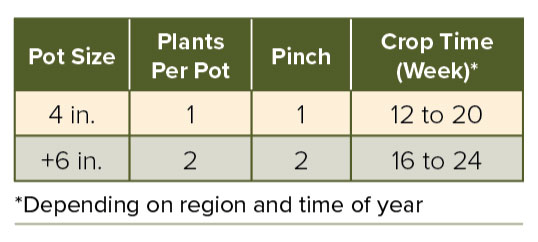
Several pot sizes can be used, from 3.5 in. up to 6 in., depending on plugs/pot and pinching. Following transplant, the crop can be laid down pot tight, spacing later to ensure plants are well branched and even when ready for sales.
Growing medium
The most important consideration is the air/water ratio. Avoid using heavy substrates. Dianthus, like most plants, like even moisture, but a medium that holds too much water can lead to crop delay and disease issues. The optimum pH growing media should be between 5.8 and 6.5. It’s recommended to start fertilization following transplant.
 Watering
During the first couple of weeks, it’s very important to maintain high humidity. The goal is to avoid extreme conditions that stress the plants. Frequent watering is recommended until the plants have rooted in the finished container. Once rooted, especially during the cooler growing in fall and winter, keep the crop on the dry side. Preferably, watering should take place in the morning to ensure it dries quickly to prevent disease.
It’s recommended to check EC level regularly to ensure water and fertilizer needs are balanced. Over-watering results in stem elongation, tall plants and soft growing creating conditions that can promote fungal disease. Be careful during flowering periods and make sure that foliage and flowers dry quickly. Drip and sub-irrigation are highly recommended to maintain the quality of the foliage and flowers.
Fertilizer
Following transplant for the first three to four weeks an N-P-K Mg, Ca and micronutrients 2:1:2 is recommended. Once rooted, switch to an N-P-K Mg, Ca and micronutrients 3:1:5 until eight to 12 days before shipping when you can water without fertilizer. In both cases, use 800 to 1,200 ppm fertilizer concentration, depending on water quality. Do not exceed an EC 2.5 mS. (As reference, an irrigation with a low EC level can be done every three irrigations.)
Pinching & disbudding
Pot carnation is very florigenic, so it’s relatively normal to find buds in rooted liners. Shoots will appear at an early stage, however, it’s recommended to pinch the main shoot four to six weeks after planting for an even growth. Make a hard and deep pinch (fourth to sixth internode, depending on the plant shoot’s compactness) to ensure good branching. Further pinching of secondary shoots can be done for larger pot sizes to ensure a rounded plant with more flowering. Early flowers disbudding might be necessary.
Temperature
The temperature is a key factor in growing speed. During the first four weeks maintain night temperatures between 53 to 59F (11 to 15C).
Beyond Week 5 you can choose your own adventure with one of the following:
- Cold growing (winter): Temperatures can drop to minimum 41 to 43F (5 to 6C) at night and around 57F (13C) during the day. Growing cycle will be longer. Cool temperatures and high light improve plant quality.
- Warm growing: Night 57 to 60F (13 to 15C); Day 64 to 68F (17 to 20C) for faster production
- Forced growing: A couple weeks before sales, increase night temperatures to 53 to 59F (11 to 15C) and day temperatures >60F (15C).
Light
Dianthus is a high light demand crop. Growth and flowering improve under long day conditions. High light conditions also have a growth regulating affect, keeping the plants more compact, robust and with improved branching (55.000 to 65.000 Lux). Under low light conditions induction light (3.500 to 4.000 Lux) for 15 to 25 days until mid-February is recommended for early flowering.
Height control
You can use “Cool Morning” technique at the beginning of the flowering period to keep the plants more compact and improve flower and leaf quality. From sunrise, drop the temperature to 40F (4C) for one to two hours. Depending on the growing conditions and pot size, it may be necessary to use PGRs, especially if the difference between day and night temperature is high (positive DIF). The most effective PGR is Bonzi (Paclobutrazol 0.4%) spray at 0.2% to 0.5%, depending on variety and growth stage.
Pests & disease
Scouting and possible preventative measures are suggested for the following pests and disease:
Pests: Spider mites, aphids, thrips
Disease: Alternaria, Rhizoctonia, Rust GT