8/31/2026
CitraNova Petchoa: Freshly Squeezed Color for Spring
Gary Vollmer, Ball FloraPlant

Ball FloraPlant’s introduction of CitraNova, its first petchoa series unveiled at the 2026 California Spring Trials, gives growers a fresh option in the increasingly popular petunia x calibrachoa hybrid category. Combining the best characteristics of both parents, CitraNova delivers the vibrant flower colors associated with calibrachoas while maintaining the larger blooms and vigorous root system typical of petunias.
Petchoa CitraNova Limone (background) and Lemon Zest.
The series was developed to provide exceptional flower power and reliable garden durability, particularly for premium containers, hanging baskets and mixed combinations.
The initial introductions in the series, Lemon Zest and Limone, feature rich yellow flower colors that stand out in the spring retail season. This is a brighter, deeper yellow than any petunia or petchoa on the market and the color retains its saturation even under higher heat and humidity conditions.
With its bold color, strong garden performance, cold tolerance and manageable production requirements, CitraNova Petchoa offers commercial greenhouse growers a compelling new premium annual for spring and summer sales. Whether marketed as a standalone feature plant or integrated into mixed combinations, the series can help you capitalize on consumer demand for vibrant, high-performing container plants while delivering the production reliability needed for successful retail programs.
For growers looking to produce a high-quality crop, successful results begin during propagation. CitraNova can be rooted in 50-, 72-, 84- or 105-cell trays and doesn’t require rooting hormone. Ball FloraPlant recommends an average mist period of six to nine days, with rooting completed in approximately three to four weeks.
One important management consideration is avoiding excessive mist, which can slow root development and increase disease risk. A preventative fungicide application at three to four weeks is recommended to maintain healthy propagation conditions. A pinch during propagation is advised to encourage branching and improve finished plant quality.
A strong finish
Once liners are established, growers can move plants into the finishing environment, where maintaining the proper balance of light, temperature, moisture and fertility will help maximize performance.
CitraNova performs best in a growing medium with a pH range of 5.4 to 5.8. During finishing, light levels should be maintained between 5,000 and 8,000 f.c. to promote compact growth and abundant flowering. Recommended day temperatures range from 59 to 76F (15 to 24C), while night temperatures should be maintained between 53 to 61F (12 to 16C). These moderate temperatures help support strong growth and high flower count while preserving the crop’s natural habit.
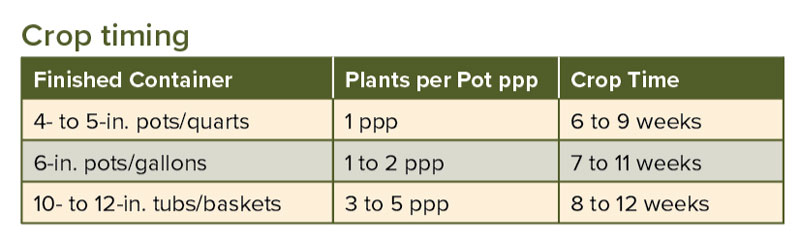 Nutrition should be maintained at 200 to 250 ppm nitrogen throughout finishing. Routinely monitor media pH, as elevated pH levels may lead to iron deficiency symptoms. Maintaining the recommended pH range and implementing a balanced fertility program will help ensure vibrant foliage and continued flowering through the production cycle.
For growth regulation, CitraNova’s requirements are generally modest, particularly when crops are grown under cool temperatures and high light. This will naturally reduce stretch. When additional control is needed early in production, a spray application of daminozide at 1,500 to 2,500 ppm can help manage plant habit. Later in the crop cycle, a paclobutrazol drench at 1 to 2 ppm may be used to control final plant height without delaying flowering or reducing flower size.
Depending on production goals, growers may finish the crop with zero to one pinch.
As with many flowering annuals, regular scouting remains essential. Growers should monitor for common greenhouse pests including whiteflies, thrips and leafminers. Disease concerns include Botrytis, root rot pathogens and Tobacco Mosaic Virus. Maintaining good air circulation, proper irrigation practices and a preventative integrated pest management program will help reduce production challenges. GT