8/31/2026
A Happy Accident
Jennifer Zurko
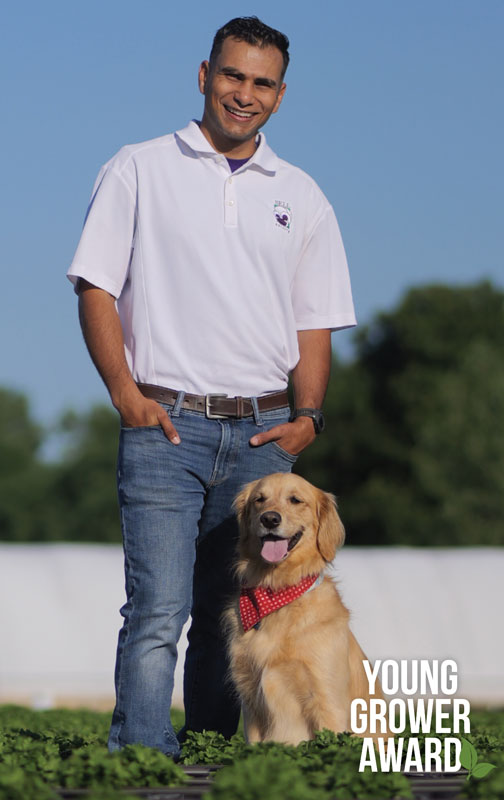
Michael Wijesinghe’s introduction to the world of horticulture began when he was young, but not in the common way we’ve always heard, growing up in a family business.
Mike (as he likes to be called) was first introduced to plants when he and his brother were little boys and they tugged their Radio Flyer wagon to the local garden center to buy flowers for their mom for Mother’s Day. They knew she liked to garden, so they thought getting her some plants would make the perfect gift.
But when Mike walked into that garden center, he got much more than just a gift for his mom. He got a friendly welcome from the staff who were patient and willing to help two young boys choose the best plants for their mom’s garden. It was a memorable experience—so much so, that when he turned 14, Mike went back to the same garden center to ask for a job.
This is what Mike pinpoints as the beginning of his career in horticulture. He said he fell into it by accident, but based on the upward trajectory of his career since then, it could be argued that the timing was serendipitous. He was meant to be here.
Horticulture happenstance
The garden center from Mike’s youth is Madden Family Farms, located in Princeton, New Jersey, where he grew up. He worked there throughout high school, cutting his teeth in the plant business, learning and doing just about everything, from sowing seeds to helping customers on the sales floor.
He enjoyed his time at Madden, but he didn’t think that he could really make a career out of horticulture. All of his peers were going to college to study more “serious” subjects, like accounting, so he thought he had to follow the same path of pursuing a major more along those lines. When he started at the University of Maryland, he decided to study computer engineering. With his strength as a natural problem-solver, he figured that field would be a good avenue to apply his skills. But after a year, he started missing being among plants, so he changed his major to horticulture.
And once he made the switch, he dove right in. Mike got involved with every horticulture-adjacent thing he could—at one point, serving as president of three different organizations at the same time in the College of Ag. One of them was a club centered on hydroponic growing that he helped create.
“I was really interested in hydroponics,” Mike recalled. “And I kind of melded the idea of computer engineering and horticulture into one because there was so much automation and innovation going on in the hydroponics space at the time.”
It offered Mike and his fellow club members opportunities to give presentations to different organizations, including an agricultural consortium that involved different stakeholders from around the state of Maryland. One of those people was Cole Mangum, vice president of Bell Nursery, one of the largest big box growers in the country.
Cole was impressed with Mike’s presentation, so afterwards he approached him and asked if he would be interested in interning at Bell, even though his interest at the time was more on the produce side than ornamentals.
“I basically pocketed his card, not really thinking much of it. And then a couple of months went by and I decided to look Bell Nursery up and I was just blown away by the scale,” said Mike. “This wasn’t the mom-and-pop greenhouse that I was working for when I was a teenager. This was a big greenhouse.
“Finding a company that had a position available as an intern I thought was a pretty good next step—at least to figure out what I wanted to do long-term.”
 Giving fate a little push
Mike’s internship at Bell his Junior year turned out to be pleasantly surprising—it wasn’t just watering and moving plants around. He worked with new genetics, trialing new introductions from the breeders with one of the buyers from Home Depot. He was able to experience how much innovation could be implemented during the production process and really enjoyed it.
And it stuck with him. Once the summer was over and he had to go back to school, Mike was still thinking about those plant trials. So when he began his last semester at the University of Maryland, Mike reached out to one of the managers at Bell and asked if he could help out with the trials again. Taking inventory, setting things up, planting—anything to be involved. So Bell hired Mike back on a part-time basis.
“I took only a few credits that spring, so it gave me the opportunity to work part time and learn a little bit more, and after that, thankfully, they offered me a full-time role to keep going with the trials,” said Mike.
It didn’t take long for other members of Bell’s management team to notice Mike. Tom Wheeler, Bell’s nursery director of growing operations, told Mike that they saw value in him and wanted to help him develop a formal career path.
Tom was one of the many people who nominated Mike for the Young Grower Award, writing that he was “immediately recognized as an exceptional talent with a true passion for growing. Early on, it was clear that Mike possessed both technical skill and leadership potential.”
Mike was put on Bell’s three-year development program where young professionals go through extensive training to help fast-track their careers within the company. After finishing out some more time at Bell’s corporate location in Burtonsville, Maryland, Mike transitioned to their facility in Culpeper, Virginia, where he spent a year for extended operational training. He then moved to Springfield, Ohio, where he currently serves as head grower of that facility, which handles finished and plug and liner production of perennials, plus 100,000 annual hanging baskets, 10 million seed plugs and a smattering of foliage plants.
“Instead of just throwing me to the wolves, [Tom] sent me around to basically learn from all of the different head growers at our sites with the end goal of coming out here to Ohio and becoming the head grower,” Mike said.
Leading, training, supporting
For the last five years, Mike has been at the Springfield location, working on improving systems and structuring processes that help his team be more productive and efficient. It’s not just about getting things done, but also supporting his staff.
“There’s so much that goes into growing and that is one of the reasons why I like it so much. There’s never a boring day,” said Mike. “There’s just so much going on between the different seasons, between the days of the week. I’ve tried to really structure things to be able to get everything done throughout the day, but also to make sure that my team feels heard, that I can go through and talk with them throughout the week and make sure they’re getting the support that they need.”
Part of being a leader is also dealing with new problems, like when the maintenance guy texted Mike out of the blue to tell him he wasn’t coming back to work. As you know, a greenhouse needs constant upkeep, especially during peak, and when you don’t have that, somebody has to pick up the slack. Instead of putting some of the responsibilities on one of his employees, Mike took on the job of maintenance along with being head grower for more than a year until they were able to fill the position.
It was a lot for one person, but having to handle maintenance also shed some new light on which areas needed improvement, including upgrading their irrigation system. It gave Mike a bigger picture of what his team needs beyond just the plants—they also need the right infrastructure to grow them properly.
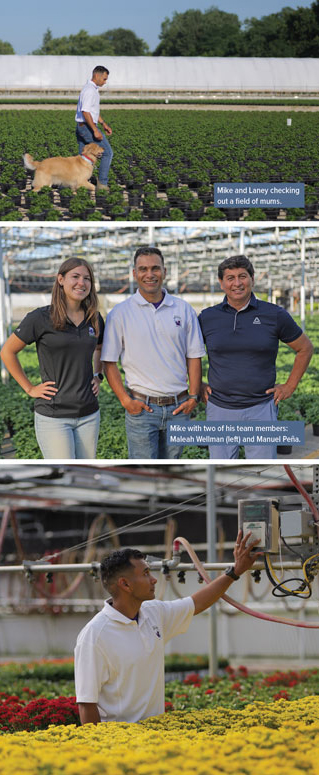
“I really think I have the best growing team in the entire country. They have such a high aptitude and they’re so interested in learning,” said Mike. “It makes my job so much more fulfilling having people that are eager to learn more and do better because that’s how I feel. I want to learn, I want to do better, and having people on my team that feel the same way, it makes coming to work really fun.”
Mike said he leads his team how he likes to be led and that he doesn’t delegate any task that he wouldn’t do himself.
“I really focus on training so that my team feels empowered to make their own decisions, to have the same experience that I had where people trusted me to make my own decisions,” Mike said. “And even if it means messing up, I tell my team it’s okay to make a mistake as long as we learn from it.”
This type of environment allows Mike’s skills as a problem-solver to shine, which he tries to project onto the members of his team.
“We always say plants don’t lie, so when you have a problem, you really have to diagnose what happened beforehand,” he explained. “Your team having the confidence to be able to come back and be truthful with you is really important to the problem-solving equation, to understand what really happened. But the other thing is not being afraid to try different things, not being afraid to ask for help.”
Mike always wants to provide his team with the best tools to do their jobs and produce the best crops, and one of the most obvious (and could be argued, one of the most important) tools is communication. If you’re a greenhouse professional, you know how much talking and explaining and listening you have to do on a daily basis. And to make sure that all of his team members were receiving the same level of communication, Mike learned to speak fluent Spanish so that everyone on the staff could receive the same messaging and direction. And it’s made a big difference.
“I found that it not only helped me be effective and efficient at communicating, but it also really brought my communication to the next level with my employees, where we’re not just talking about work, but how I can help them be better or what I can do to make sure they’re succeeding. That’s really built a level of trust and camaraderie among my team.”
Bell employs quite a few workers through the H-2A visa program, all from Mexico who may not know a lot of English. So the fact that Mike has made it a point to learn Spanish so he can communicate freely with them—not just on a professional level, but personally, as well—has earned their support and respect.
“We spend so much time together, especially in the spring, it makes it so much more enjoyable and personable. Not just for me, but I think for my employees as well, to have that personal touch,” said Mike. “We play soccer Tuesdays and Thursdays. And they’ll invite me to eat lunch with them sometimes. It makes work feel a lot more enjoyable because of that.”
Present-day providence
When Mike first started full-time at Bell, his goal was to become a head grower. That box is checked, so what’s next?
“Really, just trying to find a better way to do things and becoming more efficient. Finding ways for my team to become more autonomous,” he said. “I really want to be seen as a team player on all levels, but also as an innovator, who tries new things to see what works and what doesn’t. Thankfully, there’s a lot of support and I want to also be supportive of other folks, as well. We have a lot of different growers within Bell, so I really try to bring people together, ask questions, push other people to ask me questions. So, short term, I want to be the best head grower I can be.”
So it’s not just an accident, luck or serendipity that put Mike where he is today, but it’s his determination and desire to learn, improve and work through challenges that’s put him on a fast track to success. And, luckily, he hasn’t had to navigate that track alone: his wife, Hannah—a veterinary doctor—has been there through every step, transferring along with him from one growing location to another.
They met at the University of Maryland, and as a veterinary student and a Pennsylvania native, Hannah was used to moving around. So when Mike earned the head grower opportunity in Springfield, Ohio, Hannah found a place at a local veterinary practice and they’ve settled in.
At home, they love spending time with their Golden Retriever, Laney, who comes to work with Mike every day, and their three cats. But they take every chance they can to travel around the world, planning trips around culinary experiences, including to Bali, Greece and Mexico.
Mike doesn’t dwell on looking too far ahead into the future—there’s too much to do in the here and now! His focus is on what else he could be doing at Bell’s Springfield location to help his team continue to improve, and be as productive and innovative as they can be by trying new things and not being afraid to tackle the hard stuff.
Mike said he’s had many mentors in his life who he’s been able to learn from and who pushed him to be a better grower and leader. He wants to pass that on to his own team, and to be remembered for being supportive and providing them with those opportunities to constantly keep improving.
“Long term, I really just want to have a legacy of being somebody that people could look up to the way I’ve looked up to other people in the past,” said Mike. “I think there’s a lot more for me to learn and part of that comes with experience. So I’m just trying to learn as much as I can so that I can pass it on.” GT