8/31/2026
More Than Pots & Trays
Bill Lucas

If there was one theme that consistently emerged throughout conversations at Cultivate’26, it was this: Greenhouse and nursery operators are managing much more than crop production. Labor shortages, freight costs, retailer sustainability demands and evolving regulations mean every decision carries greater operational consequences.
Containers are still essential, but the role of today’s supplier extends well beyond manufacturing and product delivery. Growers want suppliers who understand how container decisions affect production schedules, labor efficiency, transportation costs and long-term planning.
Those conversations are pivotal examples of what Growscape now calls the Growscape Advantage, a framework built around five priorities growers consistently identify: dependable supply, practical product development, sustainability, a simpler buying experience and long-term operational partnerships.
Spring doesn’t wait
Anyone who’s managed production understands one reality: plants don’t wait. Mother’s Day doesn’t move because a shipment arrived a day late. Retail commitments are fixed. A missed truck can quickly turn into shifting daily production schedules, labor assignments and shipping plans.
Forecasting now centers on availability, production timing and contingency planning. Greenhouse operators want to know if inventory will be positioned early enough to absorb unexpected demand without disrupting production.
Ed Cooper, CEO of Growscape, compares seasonal inventory planning to keeping extra food in the freezer.
“You don’t expect company every night,” he said. “But you’re prepared when plans change. Inventory works the same way. Planning ahead gives growers options instead of forcing tough decisions during peak season.”
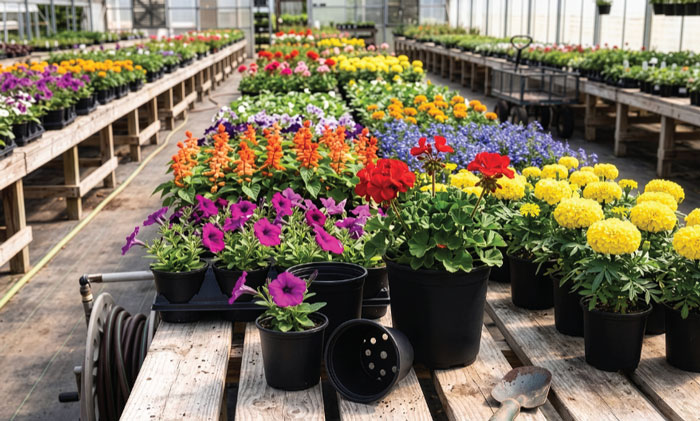 Growscape begins production planning well in advance so that customer orders are ready at least 30 days before requested delivery dates. Collaborating with customers on forecasting helps anticipate seasonal demand, while manufacturing, quality and customer teams work from the same plan before the busiest shipping periods begin.
Commercial greenhouse production demands containers that perform consistently from filling through shipping. ReTerra is being developed with those operational requirements in mind.
Most growers don’t think about the manufacturing, distribution and transportation planning behind an on-time shipment. That’s exactly the point—behind the scenes, Growscape supports its network with a 750,000-sq. ft. distribution center containing more than 60,000 pallet positions and 24 loading docks. The company’s recently expanded 1.2 million-sq. ft. Middlefield, Ohio, campus adds additional manufacturing capacity during seasonal demand. Additionally, the company’s global network of contract manufacturing partners, many with decades of experience, are available to deliver a wide assortment of products.
Products earn trust in the greenhouse
The horticultural industry has introduced plenty of products that looked promising, but didn’t hold up in commercial production. Those experiences have led growers to ask tougher operational questions.
Will it feed correctly through automation and hold up through production? Will crews need to handle it differently? Will freight performance change?
Innovation is most valuable when it solves a production problem. The Keystone Pot and Tray System grew from those practical challenges.
Transportation has become one of the fastest growing production costs for greenhouse operations. Moving more containers on fewer trucks creates savings that extend across the entire season. Keystone increases truckload capacity by up to 25% while increasing retail shelf capacity by up to 20%. Some growers have reported freight savings ranging from 15% to 25% while maintaining existing production practices.
The same development philosophy is guiding ReTerra, Growscape’s next-generation bioplastic growing container. Commercial field trials evaluate how the material performs during filling, spacing, handling, shipping and automation. Early results also reinforce that biodegradation isn’t one-size-fits-all. Material formulations continue to be refined around diverse growing environments and production timelines.
ReTerra generated significant interest during Cultivate’26, centered around automation compatibility, degradation rates, shelf life and customization.
“The questions around ReTerra were encouraging because growers immediately focused on performance,” said Tom Marting, Director of Sustainable Solutions at Growscape. “They wanted to know how it handles, ships and integrates into current production systems. Those are exactly what our field trials are designed to answer.”
 Sustainability has become part of production planning
Sustainability has become part of everyday business for commercial operations. Questions about recycled content, end-of-life options, regulatory compliance and retailer scorecards are now common. For many greenhouse operators, sustainability is another production variable that requires reliable information.
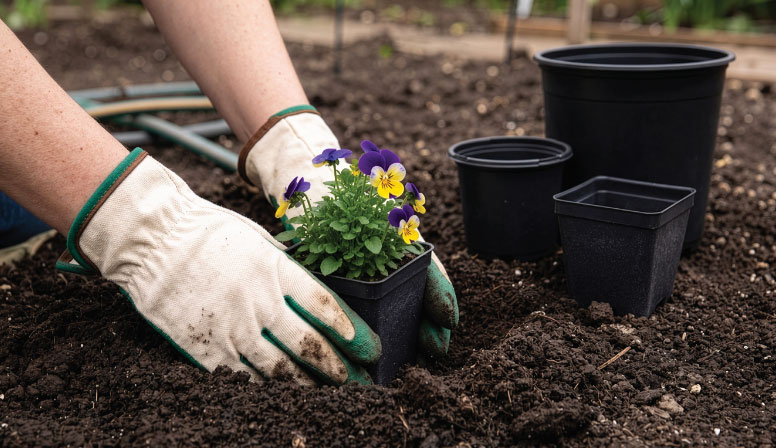
ReTerra bio-based growing containers are being evaluated through commercial field trials to measure performance from greenhouse to home garden, including handling, shipping, shelf life and post-planting degradation.
“Sustainability should be measurable, not just marketable,” said Ed. “Growers need practical answers backed by measurable results so they can answer customer questions with confidence.”
Growscape’s EarthSafe platform connects several sustainability programs: recycling, material innovation and compliance support.
ReSource provides access to a national recycling network covering plastics, corrugate, paper, glass, pallets and metal. More than 108,000 pounds of material have already been diverted from landfills, including 80,000 pounds of corrugate and 28,000 pounds of HDPE plastic, while coordinated freight scheduling helps reduce disposal costs, simplifying logistics. The result is a simpler, more cost-effective way for growers to manage recyclable materials.
ReAssure tracks Extended Producer Responsibility (EPR) legislation, as well as legislation requiring minimum Post Consumer Recycled (PCR) content in plastics, and supports compliance reporting across all six active states, helping growers stay informed of changing regulations. That means less time tracking regulations and more time focused on running operations.
ReTerra represents Growscape’s longer-term investment in bio-based plantable growing containers currently progressing through commercial validation, with field trials focused on greenhouse performance. The goal is to provide growers with a sustainable material option that fits existing production systems without sacrificing performance.
Together, the three programs address different operational challenges. The common thread gives growers practical options that fit real-world commercial production.
 Buying containers shouldn’t require extra labor
Purchasing departments are leaner than they were five years ago and buyers now manage multiple operational responsibilities. Every hour spent comparing products, tracking down pricing or confirming specifications takes time away from an already full workload.
To simplify purchasing, Growscape reduced its portfolio from roughly 21,000 SKUs to approximately 5,000, with many discontinued products mapped directly to replacement items with more transparent pricing to match.
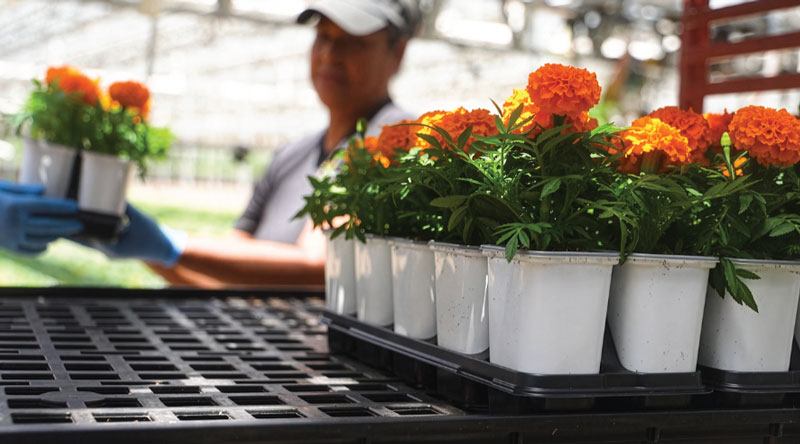
The Keystone Pot and Tray System improves shipping efficiency by increasing truckload capacity by up to 25%, helping growers reduce freight costs and move more product with every shipment.
A dedicated field sales team provides additional on-site consultation, while continued investments in digital ordering tools are designed to make ordering faster and product selection simpler.
Partnership starts before peak season
Operational changes rarely happen overnight. A greenhouse preparing for automation may need different container specifications months before installation begins. Landing a national retail account can require new packaging formats, revised production schedules and additional inventory planning.
The strongest supplier relationships are built through forecasting, production planning and regular communication that begin months before peak season, when there’s still time to make significant adjustments.
Every greenhouse has different priorities. Each decision affects forecasting, manufacturing schedules and container recommendations well before peak season arrives. That’s where supplier involvement has the greatest impact.
Growscape’s partnership model is designed around long-term collaboration with planning support that expands alongside customer growth.
“When suppliers understand where a business is headed, they’re in a much better position to help customers prepare for it,” said Ed.
Looking beyond the next order
No one expects the horticultural industry to become less demanding. Production windows will stay tight, regulations will expand and labor challenges aren’t going away. Those pressures make supplier relationships more important than ever.
The Growscape Advantage reflects five priorities growers consistently identify: dependable supply, proven products, practical sustainability, purchasing that respects their time and operational partnerships built around planning.
Containers are still an essential part of every greenhouse, but helping growers reduce complexity, improve efficiency and prepare for what’s to come is how we grow the future, together. GT
Bill Lucas is Chief Product & Marketing Officer at Growscape, where he leads product strategy, innovation and marketing across the company’s horticultural portfolio. He has more than 25 years of experience in product development, brand strategy and commercialization.