7/31/2026
A Potential Frontier in Root Development
Kristopher S. Criscione
At one point or another, nearly all nursery growers face a similar challenge: slow root development. In some cases, nursery stock can take well over a year just to reach saleable condition. More often than not, slowly developing roots can serve as a bottleneck in production. When saleability isn’t judged by shoot characteristics, such as height or stem caliper, container crops are typically deemed marketable based on how well roots have “filled” out the substrate.
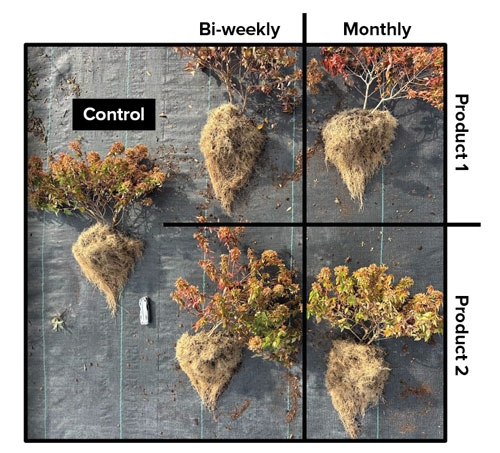
Figure 1. Little differences in abelia root growth across commercially available auxin-based products.
Ideally, we want roots to explore the entire container profile extending to the sides and bottom. But, in practice, that doesn’t always happen. Excessive irrigation or precipitation, too tall of a container, or simply plant genetics can all limit expansive root growth. Many traditional slower-rooting taxa (e.g., rhododendron, ilex, Buxus, hydrangea, tsuga, Juniperus, abelia) will achieve sufficient shoot growth, even though their root systems lag behind. While a large shoot paired with a weak root system is difficult to market, the opposite—a small shoot with a vigorous and fibrous root system—still remains highly marketable and often preferred.
Poor root quality or slow development can also have several production ramifications: increased shrink, reduced availability, extended production timelines and, ultimately, lower-quality plants. At the same time, most growers share the common goal of minimizing crops that have “birthdays” on the pad and turning them within a single production cycle. Therefore, finding ways to accelerate root development, shorten finishing times and improve overall crop quality is a major priority. Doing so not only improves efficiency, but also expands scheduling flexibility beyond traditional production timelines. The challenge remains that there are limited, practical techniques available for producers to improve root development.
The potential frontier
While container production has been the backbone of nursery systems for decades, little research has deeply dived into how producers can continuously improve or accelerate root development, especially in slower-rooting nursery stock. Many producers rely on plant growth regulators (PGRs) to control shoot architecture, enhance branching or even terminate flowering. But how often do we consider applying PGRs to established root systems to hasten root or augment development?
Traditionally, PGRs associated with root growth are used almost exclusively during propagation. Rooting powders or water-soluble solutions are applied to unrooted cuttings to stimulate adventitious root formation. The active ingredient in many of these products is auxin, a chemical that’s become a keystone of propagation practices across the horticulture industry. Auxin is well known for promoting lateral root initiation, particularly on difficult-to-root species. However, its use has largely been limited to early stage production and it’s seldom applied to established plants to encourage root-on-root development and shorten production timelines.
 This knowledge gap naturally led to a central research question: Can auxin or auxin-based products be used after propagation to accelerate lateral root development in established container crops? Exploring this question became a key research topic in the Criscione Lab at Virginia Tech University.
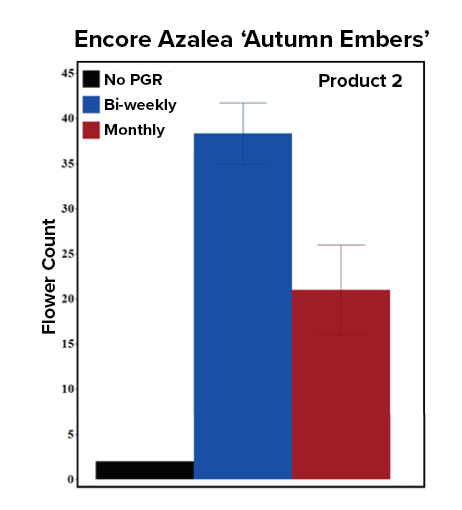
Figure 2. Increased flower development at Week 37 (112 days of experiment) using Product 2.
Past research
Initial trials were conducted in 2025 that investigated two commercially available, root-targeted PGRs on traditional slow-developing nursery stock, Abelia × grandiflora Kaleidoscope and Rhododendron Encore Autumn Embers grown in outdoor nursery research conditions.
Product 1 contained a cocktail of phytohormones: 0.010% cytokinin, 0.005% indole 3 butyric acid (IBA) and 0.004% gibberellic acid A3 (GA3), while Product 2 contained 0.850% IBA and 0.150% cytokinin. Both products were applied as substrate drenches every 14 days (bi-weekly) or 28 days (monthly), with plants receiving no PGR application serving as the control. The objective of this research was to identify if already developed and formulated products can be immediately adopted by nursery producers to quick-start root establishment and accelerate finishing times.
Results from this initial trial revealed that the phytohormone-based PGR applications did not negatively impact plant growth; though, there were also no root-related benefits associated. In abelia plants, we measured the root system morphological characteristics and we didn’t find any meaningful differences regarding total root lengths, fine versus coarse root proportions, average root diameter, etc. However, we did find unique differences regarding flower production, where azalea plants applied with Product 2 had significantly more bloom production than plants treated without any root-based PGRs during peak sale times (September).
After observing these effects, we thought perhaps outdoor conditions (i.e., overhead irrigation and reoccurring rain) may rapidly leach or dilute the product before the roots can absorb it. Additionally, since we were growing woody shrubs, perhaps greater concentrations were needed to elicit responses.
To explore this more deeply, we conducted a part II in the greenhouse, where irrigation can be better controlled. Using the same products, we applied drenches in four doses from 0-, 1-, 2- and 3-times the label rate. We grew Ilex crenata Bennett’s Compacta and Rhododendron Girard’s Fuchsia. Consistent with our first trial, no meaningful improvements in root growth were observed.
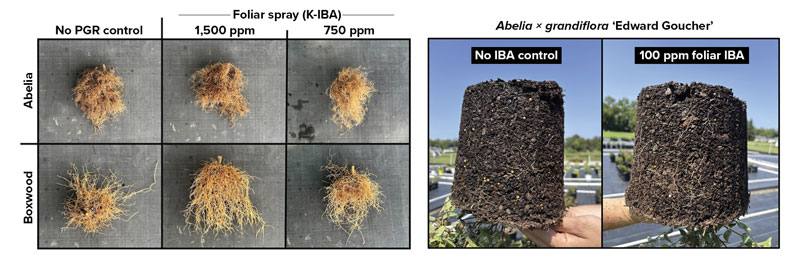
Figure 3 (left). Example of abelia and boxwood roots applied with foliar auxin application.
Figure 4 (right). Example of abelia roots applied with 100 ppm foliar auxin application, 63 days of growth.
Current research
We recognize that plant responses to auxin are highly species- and dose-dependent. Based on the results and insights gained from our two initial trials, we chose to return to a more fundamental approach and investigate the effects of isolated auxin (K-IBA). We’re currently conducting studies funded by the Horticulture Research Institute (HRI) and Virginia Nursery & Landscape Association Horticulture Research Foundation (VNLAHRF) studies.
Through the HRI-funded study, we’re exploring application style and comparing drench, foliar spray and sprench (foliar spray + light irrigation afterward) applications when implementing different doses of K-IBA and other commercially available products.
Since auxin is developed in the shoot apical meristem, and IBA is converted to IAA (its naturally active form) in the shoot, we hypothesize that a foliar application may improve uptake and translocation through the plant. We’re targeting slow-developing root systems identified by nursery producers (Abelia × grandiflora Kaleidoscope and Buxus sempervirens Dee Runk). We conducted a harvest halfway through the study (June 2026), and while it’s too early to draw conclusions, proof, as always, will be in the roots!
Through our VNLAHRF-funded study, we’re exploring a species-dose response. We have seven cultivars across six genera (mountain laurel, azalea, abelia, boxwood, holly and juniper) and are applying a water-soluble auxin as a foliar spray across 10 concentrations, ranging from 0.1 ppm to 5,000 ppm.
Future research
Little effort has been made to find practical and actionable solutions to rapidly or continuously stimulate roots that fill out the container and reduce times to market. While we’re still on the forefront of exploring if auxin can be used to stimulate roots-on-roots, there’s more research needed to confidently answer our research questions.
Auxin production and activity is tightly coordinated within the plant, and it’s possible we have genetic bottlenecks that limit the effects of exogenously applied auxin. Future research will explore “priming” internal plant phytohormones to possibly stimulate more pronounced responses to auxin. Moreover, we plan to explore slow-release technology of auxin, or another root-stimulating compound, for more efficient application techniques. Lastly, M.S. students in the Criscione Lab are exploring if stimulating fine root development using auxin or other bio-stimulants translates to improved retail shelf life. GT
Kristopher S. Criscione is a Nursery Extension Specialist for Virginia Polytechnic Institute and State University. His lab works to support growers within Virginia and across the country, developing more practical and efficient applications for the nursery industry. You can reach him at kscriscione@vt.edu.