7/31/2026
Homegrown Substrates: U.S. Peat Products and Producers
Dr. Brian E. Jackson
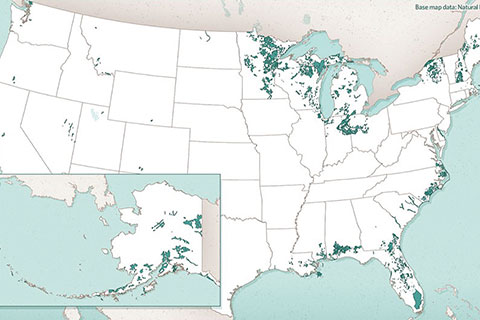
The production of horticultural crops relies on many inputs, both foreign and domestic—a long-standing reality for soilless substrates (growing media) over the past century. While many substrate products are sourced from our wonderful neighbors to the North and South, as well as overseas, there are many domestic sources of common substrate components used across the horticulture industry.
Figure 1: Map of U.S. peatlands.
Source: Jiren Xu et al., PEATMAP: Refining Estimates of Global Peatland Distribution Based on a Meta-analysis, 2018.
The goal of this article series is to highlight domestic sources and suppliers of some common (and novel) substrate products so that growers are aware of local options. No assertions will be given about our domestic products relative to their pros, cons, quality, consistency, etc. compared to similar imported products.
Recent events in the past decade have shifted the mindset of some U.S. growers and substrate companies to be more interested in sourcing domestic products when, and if, possible. Tightening supply chains of foreign goods, transport disruptions (i.e., during COVID-19), increased global competition for substrates, the threat and impact of tariffs, and fluctuating transportation (fuel) costs, to name a few, have all in some way influenced how we think about substrate sourcing and security in the future.
Peat in the U.S.
Peatlands in the U.S. occupy about 1.2% of the country’s land area (approximately 3.7 million square miles), which contain about 20% of the soil-stored carbon in the country, roughly the same amount of carbon as is sequestered annually by 60 billion acres of forests (Figure 1). However, only a small fraction of peatlands have been or are currently harvested for horticultural use.
Peatlands (of some type) are found in nearly all U.S. states with Alaska holding more than 50% of these undisturbed resources. Currently, commercial peat harvesting occurs in 11 to 12 states, with the leading producers being Florida, Michigan, Maine and Minnesota, which account for about 85% of total U.S. annual production.
Several states used to harvest peat, but no longer do (in appreciable volumes), including Georgia, which in the late 1970s was producing over 100,000 cubic yards of peat for the horticulture industry.
 Types of peat and peatlands
Peatlands (often called mires or moors) are wetlands where partially decomposed plant material (peat) accumulates over thousands of years due to waterlogged conditions that slow decomposition. Most peat deposits in the U.S. formed following the retreat of continental glaciers approximately 10,000 to 15,000 years ago. Bogs and fens are the two main types of peatlands, distinguished primarily by their water sources and nutrient levels.
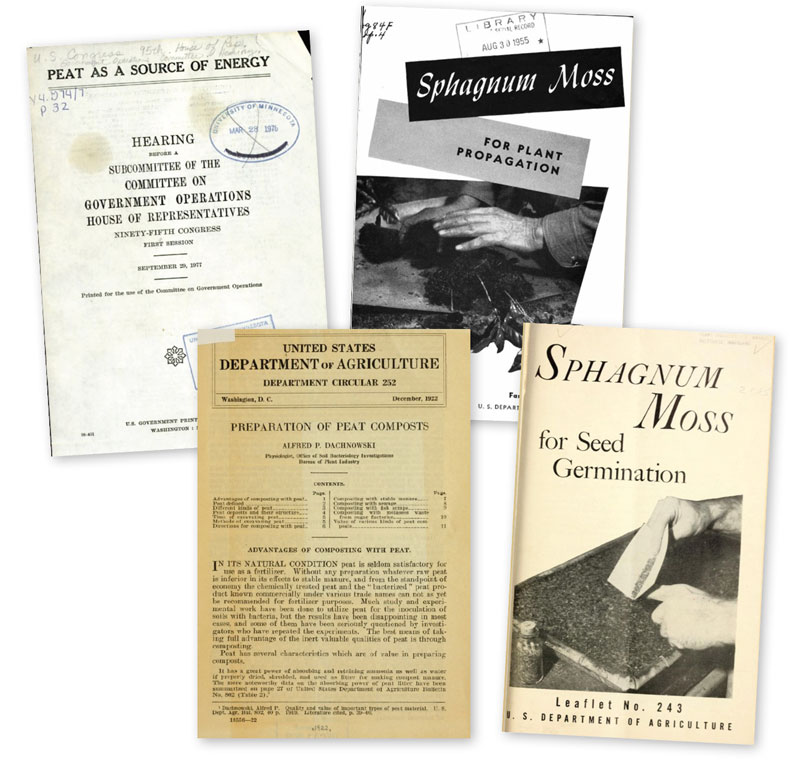
Figure 2: Once considered a possible fuel source, U.S.-harvested peat has been used exclusively in growing media for over a century.
Bogs receive water almost exclusively from rainfall, making them acidic and nutrient-poor. These conditions favor peat-forming mosses, especially sphagnum moss. In contrast, fens are supplied by groundwater and surface water in addition to rainfall, providing more nutrients and creating conditions that support a greater diversity of vegetation, including sedges, grasses, reeds and mosses.
Sphagnum peat is formed primarily from partially decomposed mosses of the genus Sphagnum. Sphagnum peat is typically light brown to blond in color when only slightly decomposed and typically has a pH between 3.0 and 4.5.
Hypnum peat is derived primarily from brown mosses, particularly species of Hypnum. It typically is darker in color, denser and more decomposed than sphagnum peat and exhibits a slightly higher pH, commonly ranging from 5.0 to 7.0, depending on growing site conditions.
Reed-sedge peat forms from the partially decomposed remains of sedges (Carex spp.), reeds (Phragmites spp.), rushes and other emergent wetland vegetation. Reed-sedge peat ranges in color from dark brown to black and generally has a higher bulk density, greater mineral and nutrient content, and a pH commonly between 4.5 and 7.5.
Humus, also referred to as humified peat or sapric peat, represents the most advanced stage of peat decomposition. At this stage, the original plant tissues have been extensively decomposed by microbial activity, leaving little or no recognizable plant structure. Humus is typically dark brown to nearly black, fine textured, has high cation exchange capacity and a variable pH range from 4.5 to 7.0.
 Primary uses
Peat has long been valued for its uses in horticulture (Figure 2). In addition to its predominate use in growing media, it’s also commonly used as an earthworm culture media, for golf course construction, as a soil improver, as an absorbent for oil spills and as a material in water filtration systems.
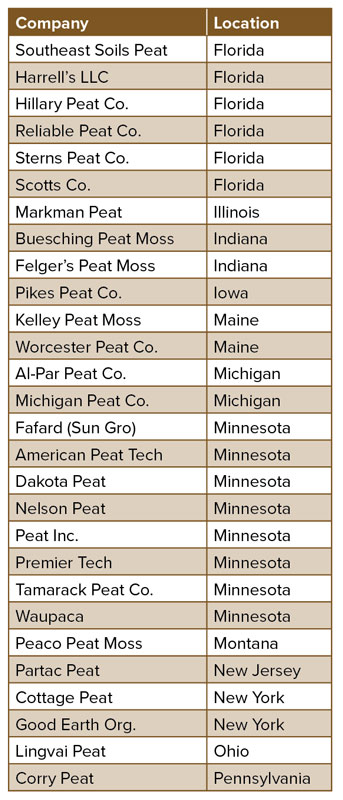
Figure 3: Some peat producers in the United States.
Historically, peat was investigated in the United States for a wide range of industrial and energy applications, including alcohol production, source of ammonia and nitrates, use in dry toilet systems “earth closets,” paper and cardboard manufacturing, livestock feed, and the production of peat coke and tar (via pyrolysis).
Interest in peat as a domestic fuel source increased during periods of energy shortages, particularly during World Wars I and II and again following the oil embargoes in the 1970s. Although studies concluded that peat could supplement domestic energy supplies for electricity and heating, high production costs and growing environmental concerns prevented widespread development. Earlier events in the U.S. spurred interest in burning peat, including in 1902 when coal miners in Pennsylvania went on strike, which led to coal shortages and an overall deficit in energy production.
Producers
According to the U.S. Geological Survey’s Mineral Commodity Summary for 2025, 330,000 metric tons of peat was harvested and processed by 26 companies spanning 11 states, with an estimated value of $11 million. For comparison purposes, in 1957 there were 76 companies across 20 states harvesting peat. Over the past two decades, harvest volumes have also fluctuated (324 to 628-plus metric tons) based on weather conditions and other market drivers, with reed-sedge peat being the predominant type harvested and sold in the U.S., accounting for 85%-plus (on average) of production followed by sphagnum.
Some of the current U.S. peat producers are listed in Figure 3. While not fully comprehensive, these suppliers represent the majority of peat products available on the market with most located near the Great Lakes and Florida. The intent on providing a list of suppliers is meant to serve as a domestic product resource guide for growers who may want or need to locate additional peat supply options. It’s important for growers (or other peat consumers) to know which type of peat (sphagnum, reed-sedge, etc.) they’re buying if and when they switch or diversify suppliers. Different peat types, as well as grades (particle sizes) and processing methods, can offer products with varying physical and chemical properties, which will alter plant production practices. GT
Brian E. Jackson is a Professor and Director of the Horticultural Substrates Laboratory at North Carolina State University. He can be reached at Brian_Jackson@ncsu.edu.