6/30/2026
Unpacking New Crops, Colors & Trends
Chris Beytes, Bill Calkins & Jennifer Zurko
Find our full YouTube Playlist from CAST ’26 HERE. And listen to our post-CAST podcast through Tech On Demand on Apple, Spotify or wherever you listen to your podcasts.
Whenever we return from California Spring Trials, dozens of people immediately ask, “So what did you see out there?” It’s a tough question to answer because we can go in a bunch of different directions. In our industry, trends really don’t go away, but they do shift in terms of importance at events like Spring Trials. Here are the ups and downs:
Ups:
- Begonia and dahlia breeders have been busy, and in both crops new dark-leaf varieties with bright blooms seemed to dominate the displays at CAST.
- Fresh new colors and patterns—orange petunias and vinca, black angelonias, water-color pattern blooms, and speckles/stars/hearts have been emerging at CAST for a few years now and 2026 seemed to take it to another level.
Downs:
- In years past, we’d always see new geraniums from five or more breeding companies, but they were definitely not focus items breeders chose to show the media.
- Coleus, like geraniums, we saw VERY few. All the new coleus seem to be positioned as sun plants (or sun and shade)—maybe there’s so much competition on the sun bench that coleus is getting squeezed out by big, new flowering plants? There are a lot of coleus on the market and they seem to sell well, but maybe there’s no longer the big growth we saw in the past, which tends to lead to big breeding programs.
A couple other observations:
- We heard attendance was excellent—up from last year, even.
- Where were some new stops and new companies exhibiting. Benary’s new home at Por La Mar Nursery was every bit as nice as their old home base in Watsonville, as was the entertainment and dining. The Polo Club stop was as big and hectic as we expected ... you could almost plan a full day here. We had to divide and conquer to get it all in in a half day.
- As for growing season, it must have been excellent, as we saw very few plants that needed apologies or explanations. Even the high heat the week prior to CAST didn’t seem to affect things too badly.
- But we felt like it was very conservative this year. Most of the introductions were upgrades or line extensions—like a new red with a better habit or a few new colors added to an already-large series with good industry uptake.
- There were more feature displays than usual featuring upgrades and color extensions. While we did see all-new series and new crop categories, they seemed few and far between. There’s a lot of uncertainty floating around us all these days and this impacts both how businesses operate and how shoppers consume.
Memorable Intros
 Sunflower Always Sunny Gold (PanAmerican Seed)
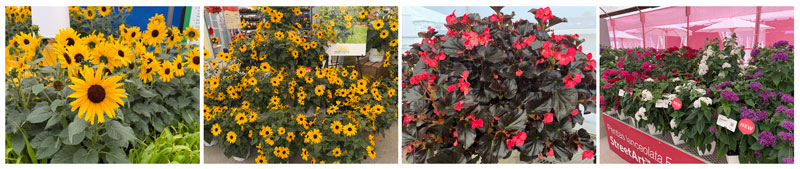
An F1 seed sunflower, Always Sunny Gold sports golden-yellow flowers with dark centers on tall, well-branched plants. They’re quite obviously going after the variety that established the category, Sunfinity from Syngenta. But what makes Always Sunny different? We’re told it lasts longer in the garden by a couple of weeks and produces more flowers overall. And it’s 100% pollen-free. For the grower, it’s ready to sell 10 to 14 days sooner, they say. There’s no plan to brand it with fancy pots, either. It looked great in the trial; you’ll just have to try it for yourself.
Sunflower Sunfinity Single Yellow (Syngenta)
Speaking of Sunfinity, Syngenta introduced the fourth member of the Sunfinity Sunflower lineup: Single Yellow. Nine years ago, Syngenta released Sunfinity Yellow Dark Center, a seed-raised sunflower for garden use. It was a gamechanger! Then they dropped a vegetative variety on us called Double Yellow, which had a fuller, better branched habit. Then, last year, we saw the second seed type—Yellow-Red Bicolor—at CAST and it was definitely one of the top intros of the year. Now, for 2027, we have Single Yellow. And it’s a vegetative one bringing the collection to four (two seed and two vegetative).
Begonia Whopper Rose Espresso (Benary)
Still a Ball Seed exclusive (like they have been from Day One), the newest Whopper, Rose Espresso, has the darkest—almost black—foliage we’ve seen in a landscape type, interspecific begonia.
Pentas Street Art (Benary)
One of the major introductions for Benary is a whole new series of pentas called Street Art. Displayed in a big municipal-sized planter, we thought the plant habit was impressive, especially when compared side by side with their more traditional pentas series, Graffiti. It would also make a great landscape plant and fill plenty of space with tons of color. The series launches with four colors: Red, White, Rose and ... drum roll, please ... BLUE! Seriously, the first blue pentas from seed. Admittedly, it’s more of a “horticultural blue,” (mauve), but it definitely created a nice red, white and blue combo planter.
E3 Easy Wave Midnight Marble (PanAmerican Seed)
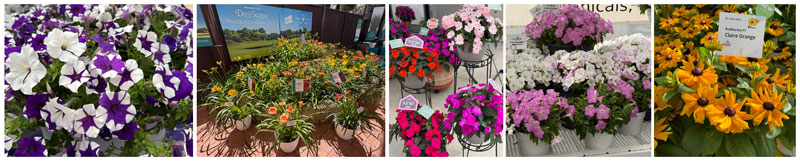
An E3 Easy Wave (the latest evolution in Wave breeding) called Midnight Marble doesn’t have a “sky” pattern like vegetative petunias, but a “consistently inconsistent” blue-and-white pattern. Like most petunias with this pattern type, the dominance of blue or white is dictated by light, temperature and even PGR timing. As we learned, the greater the DIF, the more white.
Daylily DayScape (Darwin Perennials)
Normally, we would save this for our perennials coverage in the August issue, but it’s too big of an introduction to wait. The new DayScape Hemerocallis, which is a new genus for Darwin, is a collection of nine daylilies bred by Greg Goff from Le Petit Jardin in Micanopy, Florida. Their key attribute? Rust resistance. That and long-lasting flowers. Oh, and they’re daylength neutral, early to flower, self-cleaning and continuous blooming. The nine colors are excellent. Darwin said they’re hardy from Zones 5a to 9b.
SunPatiens Petite (Sakata)
SunPatiens Petite is 20% smaller than the Compact types and positioned for 8- to 12-in. pots and NOT (we repeat .... NOT) for in-ground use. Petites have all the great characteristics as other SunPatiens and can be grown just about the same way, but they’re quite small and might not perform the way gardeners have come to expect SunPatiens to perform, growing big and filling tons of space. The new series launches with five colors—Scarlet Red, Orange, Rose, Purple and Blush Pink.
Petunia Firefly Twilight, Moonlight, Nightlight (Rooted in Solutions)
They’ve developed three collections of bioluminescent Firefly-type plants: The Twilight Collection (upright, compact, mounding); the Moonlight Collection (big, vigorous, good for hanging baskets); and the Nightlight Collection (glows even brighter, for home and gift use. And, yes, even indoors, they say).
Rudbeckia Claire Orange (American Takii)
Takii said that Claire is the first male-sterile seed rudbeckia on the market. Sterile means the flowers last a long time; plus, no pollen on the orange flowers with dark centers. Garden performance-wise, it’s an AAS winner, meaning it performs well just about everywhere, with an abundance of flowers all season long. Growers don’t have to pinch it or apply PGRs. Oh, pro tip: For the best uniformity, grow it under 14-hour days.
New Annuals Series
Petchoa CitraNova (Ball FloraPlant)
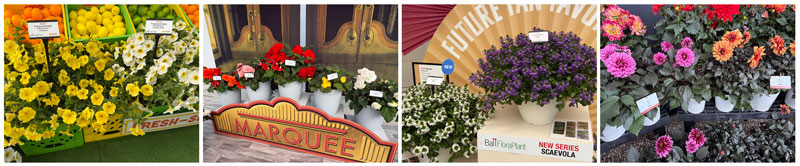
Ball FloraPlant’s first foray into petchoa includes two varieties under the CitraNova name—Lemon Zest and Limone. Limone is deep yellow and Lemon Zest is white with a yellow center. Petchoas are known for being super durable and tolerant of a range of environmental conditions, and these look like solid starts to a future series.
Begonia Marquee Collection (PanAmerican Seed)
Begonia Marquee is a collection of five impressive tuberous begonias with massive flowers. Those of you who’ve been around will remember the AmeriHybrids from Golden State Bulb Company. PanAm acquired the seed, sorted through the best of the best and introduced four of them: Ruffled Yellow, Ruffled Red, Ruffled Coral Salmon and Lace Pink; and from their own breeding, Ruffled White. Excellent for grower-retailers and local growers because these are too big and delicate to ship very far.
Scaevola Blazin’ (Ball FloraPlant)
Named for its fast speed in propagation—a week faster than the competition and a week earlier to finish, the plants are big, but mounded, with a tight cover of large flowers. It looks good enough to grow as mono baskets. Blazen has the requisite Blue and White; Pink is in the works. There’s also a subseries called Blazen Compact that’s about 30% smaller and with smaller flowers. It starts with Blue.
Dahlia Labella Grande Chocolate (Beekenkamp)
The Grande Chocolate subseries under the LaBella umbrella starts with four colors—Rose, Apricot, Amber and Red— and all have deep, deep bronzy-green foliage. It should do well; Chocolate Rose was chosen as the favorite plant in Beekenkamp’s trial garden during last year’s Flower Trials and it also won an award at the Horticultural Trades Association Plant Show in England.
 Calibrachoa Oasis (Beekenkamp)
The first calibrachoa introduced by Beekenkamp, Oasis is a standard, versatile type for 4- to 10-in. pots, launching with six colors.
Gerbera Melodiva (HilverdaFlorist)
This Dutch company specializes in gerbera and proved it by introducing both a new series and some good colors. Melodiva is the new seed series, bred for smaller pots (4 to 4.5 in.) and excellent uniformity in crop timing (90% in bloom at the same time) and uniformity in flower stem length. Naturally compact, it requires no PGRs. Interestingly, HilverdaFlorist chose to introduce Melodiva here in North America first, rather than at the Flower Trials in Europe in June because we’re a strong market for them.
Jamesbrittenia Jammin’ (Kientzler)
Traditionally, Jamesbrittenia have had delicate root systems, making them picky to grow. Kientzler has been breeding for grower-friendliness. Just keep them on the dry side and you should be fine. Jammin’ starts with five colors.
Petunia Showtime (Kientzler)
These are small-flowered petunias (like calibrachoa-bloom small!) that look cute and tidy, but perform like petunias in pretty much any application—from small 4-in. pots to baskets to patio pots and even in the landscape. The four colors are Lilac Punch, White, Orchid Flash and Pink Punch.
Torenia Tropics (Kientzler)
Torenia is usually a small pack-type seed-raised bedding plant if you even find it at retail. Perhaps that can change if growers start picking up new genetics and vegetative types like Kientzler’s Tropics series. It launches with four colors—Silver, Amethyst, Rose and Lilac—and the plants are pretty substantial in terms of branching, and they don’t even require a pinch. From what we heard, even though torenia is a shade plant, the Tropics can be produced in higher light situations.
Other Notable New & A+ Additions
Impatiens Solarscape XL Red Glow (PanAmerican Seed)
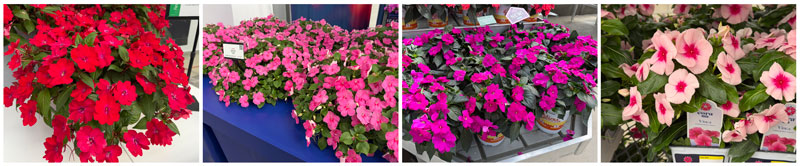
This is the fifth season of PanAm’s interspecific impatiens series and Red Glow is the third in their XL sub-series. It’s good for sun and shade, and can be grown in everything from packs to gallons. It also re-bounds well from stress—the buds and flowers don’t drop off.
Impatiens Beacon Pink (PanAmerican Seed)
Their Impatiens Downy Mildew-resistant series gets an important new color, Pink, bringing the series to 11 colors and eight mixes.
SunPatiens Compact Bright Purple, Compact Scarlet Orange (Sakata)
Sakata has been upgrading some existing SunPatiens colors. They don’t tend to call them improvements; instead, they develop fully improved genetics and drop the old one. Such as Compact Bright Purple, replacing Compact Purple, and Compact Scarlet Orange, replacing Compact Orange. Both have been upgraded for large, vibrant flowers, enhanced wilt resistance, better branching (and hence more flowers) and darker green foliage.
Vinca Cora XDR Blush Splash (Syngenta)
With high resistance to aerial Phytophthora, Cora XDR has been around for many years and is still an active breeding program, with Blush Splash introduced for 2027. They described it as light peach with a strawberry center.
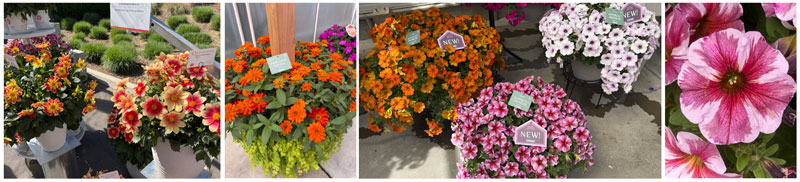 Dahlia Summer Bees Red Star, Salmon Bicolor (Dümmen Orange)
Two new ones join the series of huge, daisy-flowered dahlias: Salmon Bicolor (which was our favorite) and Red Star (a semi-double flower form, two-toned red and yellow).
Zinnia Profusion Double Fire Improved (Sakata)
An improvement worth mentioning is in their multi-award-wining Profusion Zinnia series, where Fire Improved will be replacing Fire, bringing bigger, better flowers.
Petunia SuperCal Premium Purple Ice, Premium Pink Star (Sakata)
Sakata has been breeding and developing petchoa (petunia and calibrachoa crosses) for 15 or 20 years and until recently were the only ones in the petchoa game with SuperCal. In fact, they have standard SuperCal and a more compact series called SuperCal Premium and between the two series, there are more than 25 colors, with two more premiums added for 2027—Purple Ice and Pink Star. Purple Ice is a silver/white with purple throat. Pink Star, however, is a really unique color that looked almost watercolor painted with a bunch of soft pink tones. We all really liked that one.
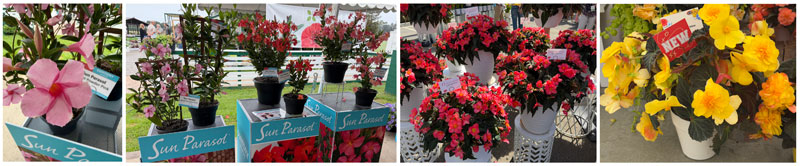
Mandevilla Sun Parasol Giant Powder Pink (Suntory)
A true mandevilla, Giant Powder Pink has the characteristic large leaves, large blooms and big climbing habit. The blooms are deep pink and grabbed our attention from 10 ft. away.
Dipladenia Sun Parasol XP Maui Sunset, FiredUp Magic Pink (Suntory)
Two more upright dipladenia types in the Sun Parasol assortment are XP Maui Sunset and FiredUp Magic Pink. We were told that Maui Sunset will most likely move from the XP collection into the upright FiredUp assortment next year after product managers see more of the habit and characteristics in trials. Maui Sunset blooms are super tropical and orangey-red with coral undertones. Magic Pink blooms sort of transition from peach to a coral pink as temps warm up.
Begonia I’conia Valencia Pink (Dümmen Orange)
Valencia Pink is unique enough in habit to be a stand-alone—bigger than their compact Bacio collection and more upright than their trailing Miss collection. As for the color? Well, they call it “sunset,” which works when you note the yellow-and-orange center that goes along with the scarlet-pink outer petals.
Begonia iCandy XL Deep Yellow (Syngenta)
They’ve added their first “XL” iCandy ... as you can guess, it means extra vigorous. The color is Deep Yellow, with bright yellow flowers (in doubles, semi-doubles and a few singles) and dark foliage, for a nice contrast. Grow it in gallons or baskets.
 Petunia Sweetunia Violet Vortex (Dümmen Orange)
A new petunia in the Sweetunia series for baskets and bigger pots that we thought had a cool name … Violet Vortex. It’s purple and white with what looks like an unstable color pattern in a cool tie-dye sort of way.
Begonia DragonWing White Bronze Leaf (PanAmerican Seed)
DragonWing is the OG of interspecific begonias and new this year is White Bronze Leaf with very dark foliage and pure white flowers.
Petunia Surfinia Heavenly Peach Horizon, Heavenly Blue Violet (Suntory)
As with many series of petunias, sub-series have been carved out over the years and in Surfinia when you see “Heavenly” this indicates the most grower-friendly of the program (controlled growth, mounding habit, uniform). New colors for 2027 are Heavenly Peach Horizon and Heavenly Blue Violet. Blue Violet is just as the name describes, but with dark veins, and Peach Horizon is a first in this color range from Surfinia and actually looks like it’ll be a cool color for fall combos paired with dark-foliage plants. It also holds the peach color in the heat of summer.
Petunia Amazonas Pink Macaw, Midnight Finch, Violet Parakeet (Danziger)
These are Danziger’s weird and wild colors on plants that behave well in production. The series launched a couple years ago with Plum Cockatoo, with crazy purple-ish flowers with green edges and now expands by three more. Pink Macaw (sort of an upgrade to Plum Cockatoo), Midnight Finch (much more purple with the green edges) and Violet Parakeet (more white than the others).
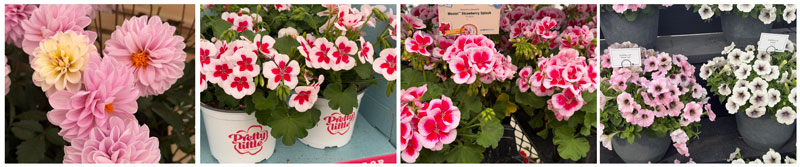 Dahlia Coffee Shop Lavender Latte (Syngenta)
The signage they had read, “Dark-roast foliage, double-shot blooms.” Clever! It’s a nice lavender-pink double bloom that starts out a bit tan in the center ... almost like a latte with lots of milk. We’re told it’s the first in the Coffee Shop series.
Geranium Pretty Little White Splash (Syngenta)
Their Pretty Little series, which are compact interspecific geraniums designed for small pots, gets White Splash, which joins Pink Splash. “Splash” defines the bold red star in the center of the flower.
Geranium Moxie Strawberry Splash (Syngenta)
The somewhat larger Moxie interspecific series gets Strawberry Splash, which has a bold red center surrounded by pale pink.
Petunia Capella Rose Ink, Inked (Danziger)
Inked is a silvery-white petunia with dark purple cobweb-looking veins (like a fine-line tattoo) and Rose Ink is similar with a dark center in pink shades. Capellas are Danziger’s series for quarts that don’t need PGRs.
 Lantana Hot Blooded Mega Red (Syngenta)
It’s 25% bigger than the original Hot Blooded red lantana, but with the same vibrant color.
Petunia NewBee (Ball FloraPlant)
NewBee is a cold-tolerant alternative to the very popular Bee’s Knees. They told us it’s an excellent choice for early season programs and has a bit more spreading vigor than its counterpart.
Gerbera Patio Masai Mara, Garvinea Sweet Pastry (HilverdaFlorist)
A couple of other new gerberas from HilverdaFlorist are Masai Mara in the Patio Gerbera collection, which are big plants with big flowers. And Garvinea Sweet Pastry, a garden type with pretty light pink flowers with dark eyes (pinks usually have green eyes).
Marigold Lanna Lace (PanAmerican Seed)
African Marigold Lanna Lace is a vanilla-colored marigold that replaces—yes, Vanilla, which was introduced many years ago, but which had serious production issues. Lanna is the name of the place it was bred in Thailand.
Viola Colormax, Pansy Spring Grandio, Pansy Grandio, Pansy Majestic Giants II (Sakata)
Proof that Sakata is still breeding in pansies and violas, Colormax Violas get Yellow With Blotch; the medium-flowered Grandios get Spring Grandio Deep Purple and Yellow With Blotch; and Grandio Blue With White Shades. And the venerable Majestic Giants II series gets a Clear Scarlet.
 Pansy Delta Speedy, Select (Syngenta)
Two new Delta Speedy colors: Violet Face and Marina (plus Yellow with Blotch Improved). Speedy aren’t named for earliness; they’re named for being tolerant of short days, so you can grow them for winter production. And in the Select series—which are a bit too vigorous to fit in the Delta series, but have unique colors—we get Select Orange with Purple Wing (perfect for any sports team with purple and orange colors) and Select Pink with Blotch.
Calibrachoa MiniFamous (Selecta One)
For the first time that we can remember, two distinctly different companies merged together in a spring trials display to convey an overarching message—in this case, it was that between BFP and Selecta, your calibrachoa needs are covered. On the Selecta side was the MiniFamous series, with new intros in Uno (medium, compact) and Neo (more mounding). Neo adds Amethyst Flash and Uno adds Purple Strike, which is very cool with yellow streaks and stars through the purple flowers.
Calibrachoa Lia, Eyeconic, Ombre (Danziger)
Danziger’s new Lia Mega Yellow has rich yellow blooms and large flowers (for a calibrachoa). Eyeconic (their collection with eyes) gets Amber, a yellow with a burgundy eye. And Ombre, their collection of interesting multi-colored blooms, gets Tyler Glam with flowers that go from yellow to rose to pink, like a sunset.
 Begonia BIG Soft Pink Bronze Leaf (Benary)
The large semperflorens series gets the first Soft Pink color in their begonias.
Begonia Wookie Pink Splash, White Splash (Benary)
One with a crazy name: Wookie, which is a hairy creature from “Star Wars.” Wookie Begonia is a hairy hybrid begonia. Well, not hairy, but pubescent. There’s some speculation (and testing) to see if it discourages deer. Stay tuned! Wookie starts with White Splash and Pink Splash.
Osteospermum Besties (Danziger)
This year, there are three new colors: Brilliant (Bronze), Playful (Bicolor Purple) and Vivid (Violet). These osteos are positioned for quarts up to gallons and don’t require cooling to flower.
Vinca Blockbuster (Syngenta)
In the Blockbuster series (for any growers who don’t have a need for the disease resistance of Cora), Syngenta is adding four new unique colors—Blackberry Crush, Raspberry Crush, Blueberry Crush and Papaya Crush.
Coleus Crimson Magic; TerraScape Cosmic Confetti, All That Lime Twist (Kientzler)
Crimson Magic has yellow-toned foliage that won’t burn up in sun like most yellow coleus that need shade. As a bonus, this one has dark red stems that add a cool dimension. Cosmic Confetti has large speckled green-and-cream leaves and is significant in size. It’s in their TerraScape Upright series. Also in the TerraScape collection, but the Mounding sub-series, are two more coleus. All That Lime Twist is chartreuse green and looks like a nice patio pot habit, while All That Cinnamon Pop is more of a red-toned variety with the same nice mounding habit.
Dianthus Divinity (Hem)
A newer range that’s more genetically compact than their Diana series, but still has the same quality and flower size, is Divinity. These require no PGRs and new in the series for 2027 are Radiant Raspberry Red and Radiant Scarlet Frost, both with bicolor blooms with white fringed edges.
Combo Programs
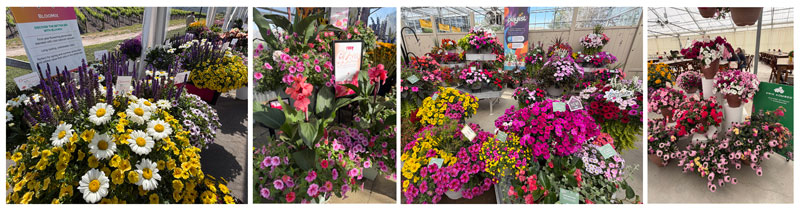
Garden Party Shade Princess, BlooMix (Dümmen Orange)
A handful of shade combos called Shade Princess are new to the Garden Party program and include big Magnum New Guinea Impatiens and Dümmen’s huge Nanouk Tradescantia. The combos were named Grace, Charlotte, Kelsey and Madeline. Also new in Dümmen combos are eight additions to their annual/perennial mix program named BlooMix, with each including two perennials and one annual (pictured). The combos include the classic thriller (like a leucanthemum), filler (maybe a salvia) and a calibrachoa spiller. One of the most popular mixes has lavender as a filler, meaning the combo has fragrance.
The Glow Collection (American Takii)
There were a huge range of combination planters, something we hadn’t seen at Takii very much in the past. All of the combos were sorted into five collections all under The Glow Collection banner. Three of the collections—Golden Glow, Rosy Glow and Moon Glow—fit a “premium” category for larger 14-in. and bigger combos featuring a thriller plant and two fillers. The other two collections—Soft Glow and Bold Glow—fit more of a value price point. Utilizing some of Takii’s best and most established products, these combos were very intentionally created (based on performance, grower success and color) and should appeal to just about any shopper.
Playlist (Sakata)
They’re up to more than 40 mixes, including 11 added this year. With Sakata’s range of genetics, there are plenty of ingredients to work with, but the trick (as always) is keeping the combos grower-friendly, and able to be ordered and produced with minimal hassle.
Kwik Kombos, Patio Playbook (Syngenta)
Both programs are constantly evolving as new genetics are introduced and mixes trialed and added. One of the over-arching trends or big ideas we’ve picked up over the course of Spring Trials is that, although we’ve seen combo programs and recipes for many years, there’s still as much of a need (possibly even greater) for more. GT