6/30/2026
Managing Powdery Mildew on Succulents
Dr. Charles Krasnow
Succulents are an important category of ornamentals with a high retail value and strong consumer interest. The crop is drought resistant, relatively low maintenance and has a long postharvest life, adding to its appeal as a houseplant. Succulents grow well in dry conditions, with natural habitats in rocky, low-nutrient soils. Stems and leaves are adapted for water storage with a thick waxy cuticle that limits desiccation. Many species even have closed stomata during the day to further minimize water loss.
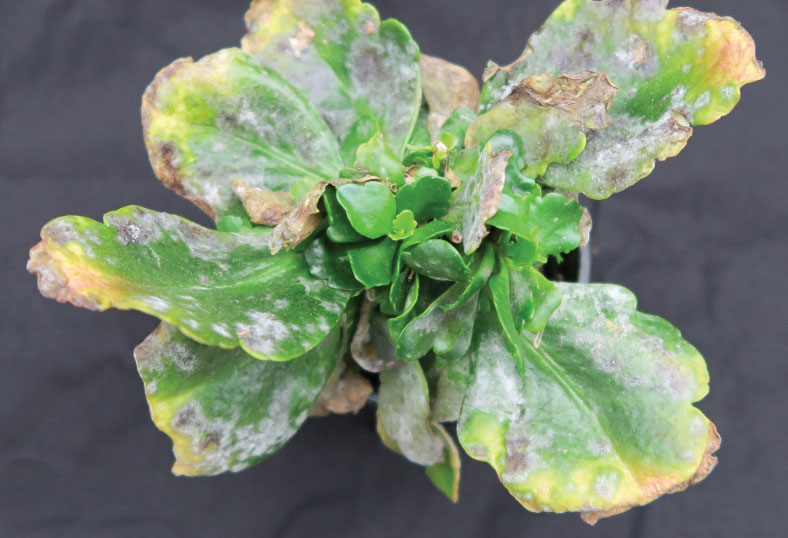
Left: Kalanchoe is noted among succulent crops as being highly susceptible to powdery mildew infection.
Commercially grown succulents include plants in the genera kalanchoe, echeveria, crassula, aloe, dudleya and sedum. New hybrids have increased the demand for these plants annually. Kalanchoe alone has over 100 species, grown both as a greenhouse flower and a potted nursery crop. The florist kalanchoe, K. blossfeldiana, is the primary greenhouse-grown succulent and has an upright habit and broad umbel flowers. It’s prized for its longevity in indoor environments, adding color and visual appeal to gardens and dish plantings.
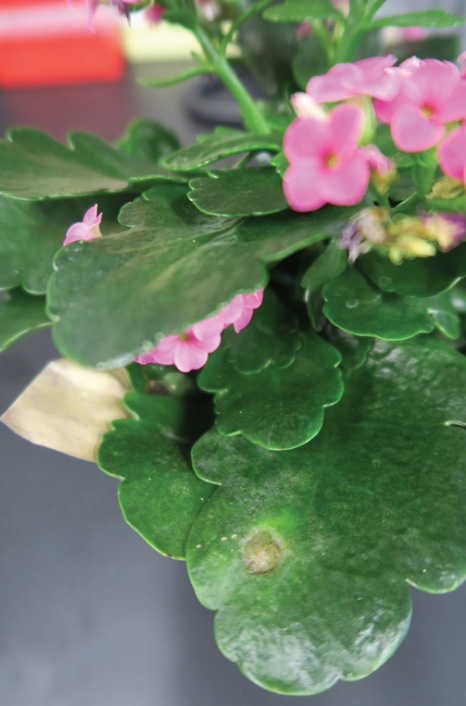
Right: Powdery mildew can cause scab-like lesions on the upper side of the leaves.
 There are a number of diseases that affect succulents during greenhouse production, including bacterial soft rot (Erwinia), Fusarium crown rot, gray mold, Stemphylium leaf spot and powdery mildew (Erysiphe sedi). Kalanchoe and echeveria are noted among succulent crops as being highly susceptible to powdery mildew infection (Figure 1). Infection usually develops when relative humidity is greater than 95%, with an optimum temperature of 68F (20C). Epidemics of powdery mildew are most likely to occur in the spring and fall, coinciding with favorable growing conditions. Kalanchoe requires long nights to flower and these conditions can enhance disease. Infected stock plants can also be a source of the pathogen on terminal cuttings.
 The main powdery mildew species found in the greenhouse infect numerous additional crops, including African violet, begonia, dahlia hybrids, gerbera, poinsettia, potted sunflower, petunia and zinnia. An exception is the powdery mildew of Hydrangea macrophylla that doesn’t infect succulents.
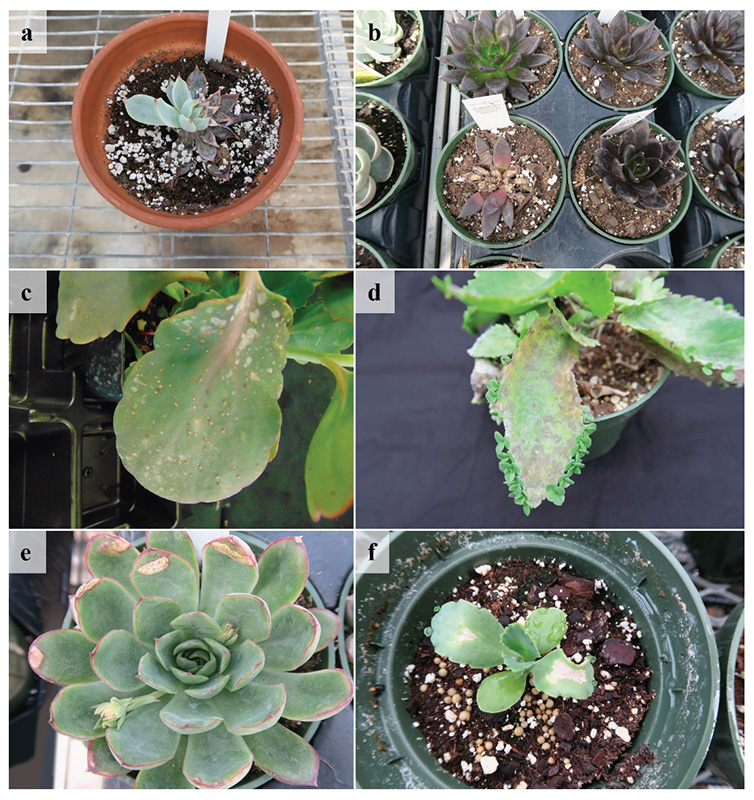
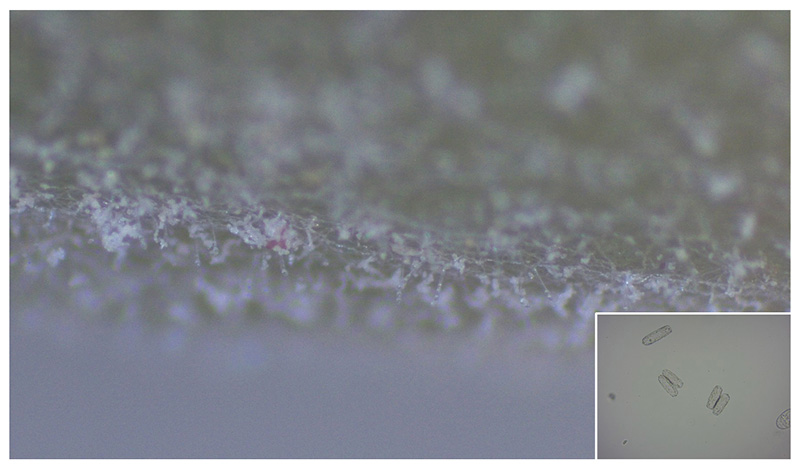
Powdery mildew is one of the most widely recognized pathogens. On most crops, a whitish powdery layer develops on the upper and lower side of the leaf (Figure 4). Eventually, leaves turn brown, wither and fall off. Similar symptoms are observed on succulents, however, the pathogen can also be pernicious, forming scab-like lesions on the upper side of the leaves (Figure 2). Even with the aid of a dissecting microscope, sporulation is difficult to observe. Sunscald, oedema and Stemphylium leaf spot can appear similar to powdery mildew infection (Figure 3). Scouting upper and lower leaf surfaces improves the chances of catching this pathogen early.
 Cultivar resistance is an important disease management strategy for many ornamentals. In a study in North Carolina, there was variation in kalanchoe susceptibility to powdery mildew. The cultivars Gelbe Melody, Korall, Cavalier and Red Empress were resistant, while Kardinal, Exotic, Orchid and Vulcan were highly susceptible. Newer cultivars have yet to be tested for resistance, although differences have been observed in greenhouse production.
Right: Sunscald, oedema and Stemphylium leaf spot can appear similar to powdery mildew infection on succulents.
Cultural management strategies, such as increased air movement can help reduce disease levels, however, powdery mildew doesn’t need free moisture to infect as do other pathogens. General sanitation and removing debris from the greenhouse floor will also reduce the spread of the pathogen.
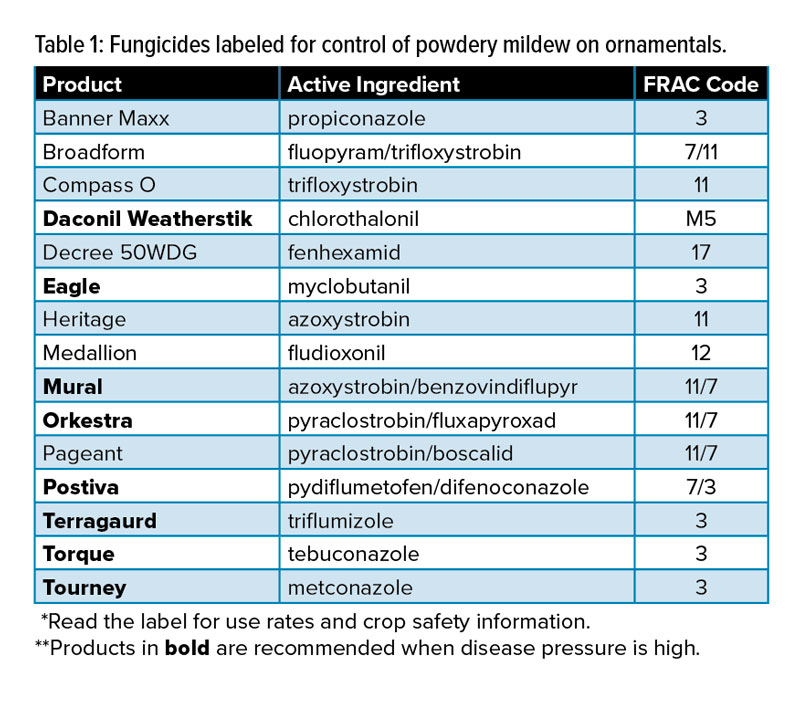
A robust fungicide program is needed to limit powdery mildew incidence in the greenhouse. Fungicides and biocontrols that provide control of the pathogen are shown in Table 1. Many of these products have been used successfully; however, under certain conditions, such as high humidity and light intensity, plants may be prone to phytotoxicity.
 Growers have commented on the lack of reliable pesticide information for the succulent crop. In tests on florist kalanchoe, thiophanate-methyl applied at two times the labeled rate caused scabby lesions on the plants. Necrosis on flowers was also observed on some cultivars. Testing a new fungicide on a small number of plants before widespread adoption is recommended to reduce the risk of phytotoxicity on the whole crop.
Left: Powdery mildew appears as a whitish powdery layer that develop on the upper and lower side of the leaf.
Only use surfactants that have been shown to be safe. Avoid tank mixing fungicides and insecticides, which can increase the risk of phytotoxicity. GT
Charles Krasnow, Ph.D., works for the Greenhouse and Nursery Extension for the University of Connecticut.