3/31/2026
Managing Resilience
Ilyin Costello & Jennifer Zurko
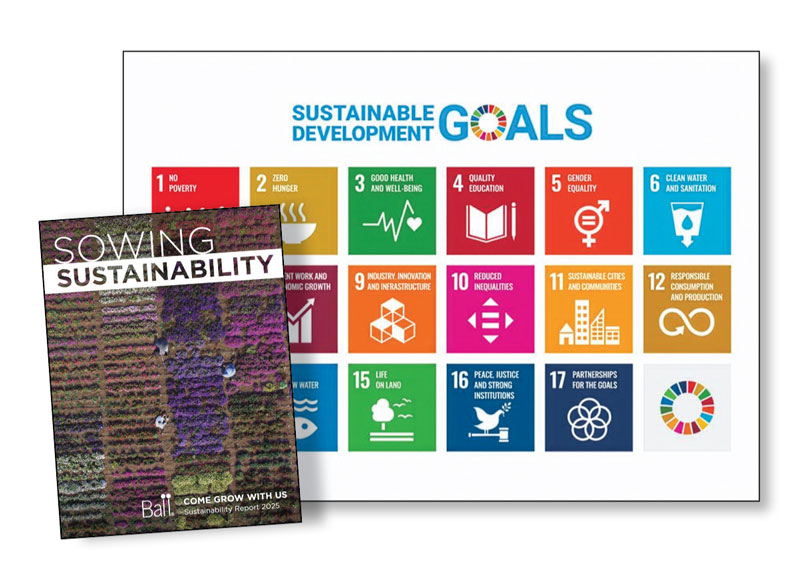
When it comes to environmental stewardship, the word often used is “sustainability”—but does that term still properly communicate a company’s goal of being a healthier business?
That was the question for Seth Reed, Head Sustainability Manager for Ball Horticultural Company, who said it was important to have an open dialogue about this topic, as “sustainability” has become a bit ambiguous.
Ball Horticultural Company’s “Sowing Sustainability” report marks the beginning of opening up conversations regarding global programs, initiatives and goals that focus on “Products, People & Planet.”
Seth put it this way: “Sustainability means a lot of different things to a lot of different people. It can be difficult to find common ground to find progress as a company.”
Many people who care about green issues find themselves on a very wide spectrum, and because of these disparities, it’s not unusual to feel powerless to try and help solve these issues. So how can people who care about the environment and want to make a positive impact talk about sustainability without turning people off? For starters, we can bring people in by removing the stigma of certain buzzwords and bringing the conversation to their level.
Resilience rather than sustainability
In the context of environmentalism, the word sustainability comes from the thought that we want to work toward preserving our planet and putting into practice objectives that could stop negative progression—and maybe even reverse some of the harmful effects. The sustainability team at Ball uses the term sustainability, but Seth said he also likes the word “resilience.”
Resilient thinking empowers your company to withstand or adjust quickly to harmful conditions. Every business wants to be resilient, and as Seth put it, all of the sustainability practices we put in place are related and all lead to forming a more resilient company.
With a new mindset for sustainability, Seth explained what it means to “manage” it. Seth and Susannah Ball, along with the sustainability team, are tasked with finding ways to increase Ball Horticultural Company’s resilience to environmental factors. And in order to do that, they’ve been furthering their education in the sustainability field. Seth recently earned a certificate in Business Sustainability Management from the Cambridge Institute for Sustainability Leadership.
Products, People & Planet
The sustainability team have taken the tack of dividing Ball Horticultural Company’s goals into three categories. The company’s first-ever sustainability report, called “Sowing Sustainability,” tackles environmental issues, providing readers with facts and solutions. The 2025 report marks the beginning of Ball opening up conversations regarding global programs, initiatives and goals that focus on “Products, People & Planet.”
Seth said they took a lot of inspiration from the United Nations’ 17 Sustainable Development Goals. They range from specific climate action on land and water to more people-focused goals like addressing poverty and initiating job growth. Seth explained that they wanted to do more than reduce the company’s carbon footprint—they also wanted to make sure they were focusing on their people, as well.
Ball’s specific sustainability goals are:
- 100% of employees earning a living wage by 2025
- 50% reduction of corporate carbon footprint by 2030
- Zero discharge of hazardous pollutants and chemicals by 2025
“To help us achieve these goals, we’re tapping into the creativity and passion of our Ball employees around the world,” said Susannah. “With this roadmap in-hand, Ball is evolving to a more formalized approach to sustainability disclosure and laying a foundation for future reporting in alignment with international standards and requirements.”
The Sowing Sustainability report shows Ball’s progress toward these goals, which Seth said is continuous. Leadership at Ball believes that making these efforts and investing in these three categories will have a big impact on the environment, community and people.
Getting everyone’s buy-in
Looking back at 2025 and seeing where Ball’s sustainability efforts took them—while also looking ahead at the future—Seth said that he and Susannah aren’t alone in this initiative. The company has formed 22 different “Green Teams” to ensure that employees at their locations across the globe are involved, creating and meeting their own sustainability goals.
“So while Susannah and I are spearheading and communicating, the effort is in the people,” said Seth. “We’re trying to get everyone’s buy-in, giving them an opportunity to participate.”
The Ball Sustainability team wants to build a community of green-minded individuals who can learn from each other—the true value of the sustainability report is to get the whole industry involved. Seth said that he invites readers to approach the report with an eager and open mind, and if they like an idea or practice that’s included, they can feel free to try it for themselves.
This is the true ethos of how the Ball Sustainability team operates: real people having real conversations with real solutions. Seth and Susannah’s roles are just the start, as it takes many company-wide conversations to foster the resilience they’re striving for. GT
Watch Bill Calkins’ conversation with Susannah and Seth about what it really means to “do better” when it comes to sustainability in horticulture.
Ilyin Costello was an intern at Ball Horticultural Company this past summer and is currently finishing up his last year as an Agriculture Economics student at Purdue University.