1/30/2026
It’s Not Just the Active Ingredient
Broch Martindale
In ornamental production, the best pesticide application is often the one that goes unnoticed. There’s no leaf burn, no distortion, no growth delay — just healthy, market-ready plants moving through the greenhouse or nursery on schedule. When that happens, growers tend to credit the active ingredient. But, in many cases, the real reason for success lies deeper—in the formulation itself.
For ornamental growers managing hundreds or thousands of species and cultivars, formulation science plays a critical role in whether a spray quietly does its job or creates an unexpected problem. While the active ingredient determines what pests or diseases are controlled, the formulation determines how safely and consistently that chemistry behaves on highly diverse ornamental crops.
Beyond the active ingredient
Most discussions around crop protection begin with a simple question: “What’s the active ingredient?” It’s a logical place to start. After all, the active ingredient defines the mode of action, the target pest or pathogen, and the resistance management strategy. But once that active ingredient leaves the jug and enters the spray tank, it’s the formulation that controls what happens next.
A formulated product is a carefully engineered system. Along with the active ingredient, it contains carriers, solvents, emulsifiers, surfactants, dispersants, buffers and stabilizers. These components influence how the product mixes in water, how it stays suspended or emulsified, how it spreads across leaf surfaces, how quickly it penetrates plant tissue, and how long it remains active.
In ornamental crops, where visual quality defines value, those details matter. A formulation that penetrates too aggressively can cause phytotoxicity, especially under warm, humid conditions or when plants are actively growing. One that doesn’t spread evenly may compromise disease or insect control. The challenge is achieving the right balance and that balance is driven by formulation technology.
 Why ornamentals raise the stakes
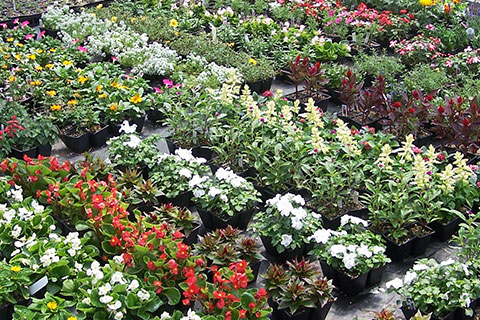
Unlike agronomic crops, ornamentals are anything but uniform. Leaf thickness, wax content, cuticle structure and surface texture vary widely from one species to the next—and even between cultivars. Some crops have thick, waxy leaves designed to shed water. Others have thin, tender foliage that readily absorb what lands on it. Hairy or textured leaves add another layer of complexity.
Add greenhouse and nursery conditions to the mix—high humidity, fluctuating temperatures, intense light and frequent irrigation—and it becomes clear why ornamentals demand a higher level of formulation precision. A product that performs safely in turf or field crops may behave very differently on a bench of young petunias or newly flushed woody ornamentals.
That’s why formulation decisions are often more important in ornamentals than in any other segment of crop production.
Understanding formulation types and their impact
Not all formulations deliver active ingredients to plants in the same way. Emulsifiable concentrates, for example, rely on solvents to dissolve the active ingredient. While effective, solvent-heavy formulations can increase penetration through leaf cuticles, which may raise the risk of crop injury under stressful conditions. Suspension concentrates and flowables, on the other hand, suspend fine particles of the active ingredient in water, often reducing solvent exposure and providing more controlled uptake.
Systemic products add another layer of complexity. Systemic activity depends not only on the chemistry of the active ingredient, but also on how the formulation facilitates movement into and through plant tissue. Translaminar or systemic uptake can be highly beneficial—but only when carefully managed.
Understanding these differences helps explain why two products with the same active ingredient can produce very different results in ornamental crops.
Same chemistry, different experience
One of the clearest examples of formulation’s role in crop safety can be seen in spinosyn insecticides. Growers are familiar with this chemistry for its effectiveness against thrips, caterpillars and other difficult pests. But long-term success in ornamentals hasn’t come from the active ingredient alone—it’s come from how that chemistry has been formulated.
Conserve SC insecticide, which contains spinosad, has earned widespread trust in ornamental production over decades of use. Its reputation for crop safety is tied directly to formulation choices designed to balance coverage and uptake across a wide range of ornamental species. Conserve demonstrates that when formulation is developed specifically for ornamentals, powerful insect control doesn’t have to come at the expense of plant health.
XXpire insecticide, a next-generation spinosyn containing spinetoram and sulfoxaflor, builds on that foundation. Its formulation reflects continued investment in improving performance against tougher insect populations, while maintaining the safety margins ornamental growers require. The result is broader, more consistent control delivered through a formulation engineered to respect the sensitivity of ornamental foliage.
In both cases, formulation technology is what allows growers to confidently use spinosyn chemistry across diverse crops and conditions.
Fungicides and the balance between protection and appearance
Fungicides present a unique challenge in ornamental production. Disease control is essential, but even subtle crop response can reduce marketability. Here again, formulation makes the difference.
Floxcor fungicide, a fluoxastrobin-based fungicide, illustrates how modern formulation design can support effective disease management, while protecting crop appearance. The formulation is engineered to spread evenly across leaf surfaces, providing consistent coverage and residual activity without driving excessive uptake into plant tissue. For ornamental growers, that balance translates into reliable disease suppression with minimal risk to leaf quality.
Systemic fungicides highlight another aspect of formulation science.
Eagle 20EW fungicide, which contains myclobutanil, offers translocation within the plant to protect new growth. Its formulation supports that movement, emphasizing the importance of proper application timing and avoiding unnecessary tank mix additions. When used as intended, the formulation enables effective disease control, while maintaining crop safety across a broad range of ornamental species.
The role of adjuvants and when less is more
One of the most common sources of ornamental phytotoxicity isn’t the product itself— it’s what’s added to it. Many modern branded products already include optimized surfactant and wetting systems designed specifically for their formulation. Adding additional adjuvants “just to be safe” can disrupt that balance, increasing penetration beyond safe thresholds and elevating crop risk.
For ornamental growers, restraint is often the better approach. Trusting the formulation science built into branded products can reduce unnecessary complexity and help preserve the safety margins those formulations were designed to provide.
Why branded chemistry matters
Generic products may list the same active ingredient, but they may not represent the same level of formulation investment. Developing a formulation that performs consistently across ornamental crops requires extensive research, screening and refinement. It also requires testing under real-world greenhouse and nursery conditions—not just controlled trials.
Branded products like Conserve SC, XXpire, Floxcor fungicide and Eagle 20EW reflect years of investment in formulation technology and ornamental crop evaluation. That investment continues after launch, through ongoing research, technical support and stewardship. For growers, that translates into confidence—not just in what the product controls, but in how safely it can be used.
In ornamental production, where a single spray can affect weeks or months of work, that confidence has real value.
Selecting the safest option
Choosing a pesticide for ornamentals isn’t simply a matter of matching an active ingredient to a pest or disease. It’s a decision about risk management. Products formulated with ornamentals in mind offer broader tolerance, greater flexibility across conditions and a higher likelihood of consistent performance.
Growers who prioritize formulation science are better positioned to protect crop quality, maintain production schedules and reduce costly surprises. In many cases, the safest choice is the product backed by the most research, the most testing and the most experience in ornamental systems.
Proven partners in ornamental production
Companies that invest in formulation technology don’t just supply chemistry—they become partners in production success. Through products like Conserve SC, XXpire, Floxcor fungicide and Eagle 20EW, they bring science, experience and reliability to one of the most demanding segments of agriculture.
For ornamental growers, that partnership helps ensure that when a spray is applied, it does exactly what it’s supposed to do and nothing more.
The take-home message
Active ingredients may define what a product controls, but formulations define how safely that control is delivered. In ornamental production, where diversity is unmatched and quality is everything, formulation science is a critical piece of the crop protection puzzle.
Understanding what’s in the bottle—and why—empowers growers to make smarter decisions, manage risk more effectively and protect the value of every crop they grow. Because in ornamentals, success isn’t just about controlling pests and diseases; it’s about doing so consistently and safely—one well-formulated application at a time. GT
™ ® Trademarks of Corteva Agriscience and its affiliated companies. © 2026 Corteva. Floxcor is not for sale or use in Nassau and Suffolk counties, New York. State restrictions on the sale and use of Floxcor and Eagle® 20EW apply. Consult the label before purchase or use for full details. XXpire® is not registered for sale or use in all states. Contact your state pesticide regulatory agency to determine if a product is registered for sale or use in your state. Always read and follow label directions.
Broch Martindale is National Nursery & Greenhouse Strategic Account Manager for Corteva.