1/30/2026
Does the Cold Bug You?
Paul Pilon

When it comes to managing greenhouse pests, it’s too easy to become complacent during the winter months. This can be easy to do since insects and mites aren’t warm blooded and aren’t active when the temperatures are cold. However, this complacency can become costly, as many growers often underestimate their pest levels going into the winter and/or how quickly pests become present as winter turns to spring.
Empty greenhouses
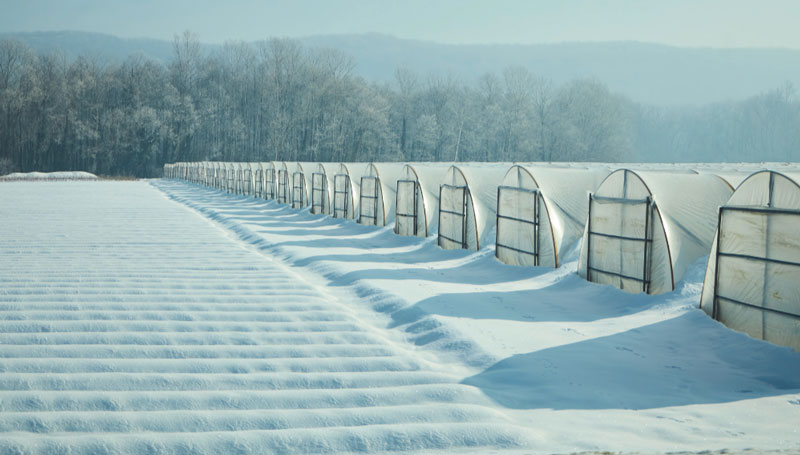
Most growers have empty greenhouses going into the winter with plans of planting into them sometime during the late winter or early spring. Many growers are unaware or take for granted the number of pests that can survive in empty facilities. When this occurs, low pest populations can gradually increase and become problematic when the heat gets turned on and new crops get planted into them.
Properly cleaning and disinfecting these facilities while they’re empty can greatly reduce, if not eliminate, pests that have taken them for their winter residences. I encourage growers to not just go through the motions of cleaning and thinking they’ve done enough—sweeping and hosing down the floors is not enough. To prevent future pest (and disease) problems, it’s important to properly clean and disinfect the facilities.
 Before I get to the procedures I suggest, I’d first like to answer a question I’m frequently asked, “When is the best time to clean empty greenhouses?” There are three timeframes growers commonly ask me about: before winter begins, during the winter or just before filling the houses. To answer this question, consider that most insecticides and miticides control pests that are active and progressing through their life stages. Therefore, the temperatures need to be warm enough (typically above 55F/13C) for the pests to be active. Applying cleaners, disinfectants or control products when it’s too cold is going through the motions, but will likely not get the results that can be obtained when the temperatures are warmer.
I prefer to clean and disinfect greenhouses just prior to planting crops into them. If the houses are under 50F (10C), I would turn on the heat for a few days prior to cleaning them to awaken the pests from their winter slumber and allow the control products to work more effectively.
Paul’s preferred cleaning protocol
- Remove all weeds. These harbor more weeds, diseases and viruses than you can imagine.
- Sweep the floors and remove all debris.
- Wet the surfaces (floors and walls) then apply a cleaning agent such as Strip-It PRO. Pre-wetting the surfaces is essential to allow the cleaners to clean better. Use the labeled rates and other instructions on the product’s label.
- Allow the cleaner to set for 10 minutes. Rinsing too early will reduce the efficacy of the cleaner. Conversely, leaving the cleaning solution on for too long can have some adverse side effects, as well.
- Rinse the solution with a hose, sprayer or power washer to remove the cleaner and debris.
- Applying the disinfectant KleenGrow to the surfaces using the labeled rates after they’ve been cleaned and rinsed (this application can be applied after the surfaces have dried) is a great practice and will last for approximately 30 days following the application.
- Cleaning and disinfecting are great practices to implement between major crop cycles or growing seasons. The products I mentioned aren’t labeled for controlling pests, but I’ve anecdotally observed a reduction of numerous pests following these procedures.
Overwintered crops
Many growers are caught off guard very early in the growing season when they discover insects or mites feeding on crops that have been overwintered. It’s almost as if they’re thinking winter would be a reset and the presence of previous pests would magically disappear. Unfortunately, that’s not how it works. There are often low populations, dormant life stages and even eggs of various pests that overwinter and survive on plants, debris and weeds during the winter months.
Surprisingly, these insects not only survive during the winter months, but when the temperatures warm up they become active and begin feeding and moving through their life stages. Most pests—including twospotted spider mites and Western flower thrips—will become active when the temperatures are 50F or higher. Certain pests—such as aphids, various species of caterpillars and slugs/snails —can be active at even lower temperatures (41F/5C).
When considering if control measures are necessary under cool temperatures, keep in mind that many insecticides and miticides are only effective when they come into direct contact with the pest. Additionally, systemic pesticides only move up the plant while the plants are actively growing. Control strategies are relatively ineffective under cool growing conditions because the temperatures are too cool to promote uptake of systemic products, and contact pesticides often fail since the pests aren’t very active, limiting the likelihood of them coming into contact with these products.
During this transitional time of the year, it’s best to apply insecticides and miticides during the warmest time of the day when the pests are most active, increasing the likelihood they’ll come into direct contact with the active ingredients of these products. I’ve found the application of horticultural oils—such as EpiShield O or Ultra-Pure Oil—or insecticidal soaps like Kopa to be excellent low-cost options for managing pests under cool growing conditions. Coverage is very important with these products as they won’t work unless there’s good contact with the targeted pests.
I cannot emphasize enough the importance of starting the season with properly cleaned and disinfected growing facilities. Be sure to monitor any carryover crops for pests as the temperatures begin to warm up. This will allow you to react quickly if control measures are necessary. Don’t wait for a small problem to become a big one. With this mindset you don’t have to allow cool temperatures to bug you. GT
Paul Pilon is editor-at-large of the Perennial Pulse e-newsletter and Director of Growing at Opel Growers in Hudsonville, Michigan. He can be reached at paul@opelgrowers.com.