4/25/2013
The Climbing Strawberry that Didn’t
Chris Beytes
A 160-year-old company has gone through plenty of ups and downs. Rose and plant specialist Conard-Pyle has seen a civil war, two world wars, the Great Depression and everything in between since Alfred Conard first formed Conard & Brother in 1855 in Pennsylvania. But interestingly, the company’s highest and lowest points came within about 15 years of each other.
The high point: 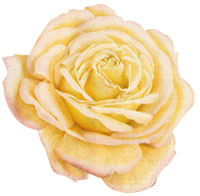 Peace
Peace
U.S. rose experts Conard-Pyle had long been tapping into breeders from around the world for the best genetics and Robert Pyle had fostered a relationship with a young French breeding phenom by the name of Francis Meilland. Francis would send Robert new varieties on a regular basis for testing and possible introduction.
Then World War II struck Europe and Germany invaded France. There was one last plane leaving the city of Lyon and legend has it that in a diplomatic pouch on that airplane was some budwood from a rose that Frances had named Madame A. Meilland, in honor of his mother.
The rose arrived at Conard-Pyle, where it was put into propagation and field testing. Said Steve Hutton, current owner and third-generation president of the company, who recounted the history, “It was very clear that this was a rose unlike any that anyone had seen—a very special rose.”
But it needed a special name befitting its status. Family lore isn’t clear on whether or not Robert Pyle came up with the name “Peace” (Wikipedia credits Field Marshal Alan Brooke, a key to the liberation of France, and after whom Francis wanted to rename the rose for the trade. Alan reportedly declined the honor, saying that his name would soon be forgotten and that the name Peace would be much more suitable and enduring.)
Regardless, Robert Pyle recognized it as the perfect name for the perfect rose for the time, and the new trade name “Peace” was announced by Conard-Pyle in April of 1945. It was presented to League of Nation delegates in San Francisco later that year and won All-America Rose Selections in 1946.
“It was a very impressive public relations event surrounding a very impressive rose, at a time when the world needed something to help maintain the optimism that came at the end of the war,” says Steve.
 The low point: Sonjana
Conard-Pyle rode high on the success of Peace (chances are good there was one in every post-war garden in America), as well as the other rose varieties they sold. A key reason: testing. Says Steve, “One of the things we pride ourselves on when it comes to introducing new plants is rigorous, thorough testing, whether it’s a rose or a woody plant or perennial.”
Only one variety slipped out without such rigorous testing and that was a strawberry called Sonjana (pronounced son-yana). It came from a breeder in Germany who touted it as a climbing strawberry, and for reasons Steve didn’t know (he was just nine or 10 when it was introduced), it was rushed to market without any in-house trialing. “Instead, we took the breeder’s word for this being a revolutionary, one-of-a-kind, never-before-seen climbing, ever-bearing strawberry. Which we promptly put on the cover of all our mail-order catalogs for fall and spring.” He says the catalog picture itself looked faked—“the equivalent of a poor Photoshop job,” he recalls.
As it turns out, Sonjana didn’t climb. Yes, according to information available today from the American Pomological Society, it “produces vigorous runners which may be espaliered or trained on a support,” and hence, it’s termed a climber. But that’s not how it was promoted, and apparently, customers were quite unhappy, which was very hard on his grandfather, Sydney, who was president at the time.
“I don’t think we were indicted for mail-order fraud, but it came pretty close,” Steve says. “[My grandfather] was a very upstanding, ethical, upright kind of guy. He took ethics and business practices extremely seriously, and [to him] this became a source of deep shame.” Steve recalls that his uncle and father were less serious and more fun-loving … but they and everyone else in the family knew not to joke about or even mention “Sonjana” at any family gathering.
The lesson learned?
“This one instance may be the basis for all our paranoia about ‘test, test, test’,” says Steve. “You should do what you say you do, keep doing it, and don’t go off the script, even if there’s some apparently compelling reason to do so.”
As for making it up to dissatisfied customers, “I think we gave away a lot of free roses,” Steve says, adding, “A strawberry didn’t appear in the catalog after that. We couldn’t even have them for dessert for a long time.”
GT