7/26/2012
More From the Road
Jennifer Zurko
Photography by Chris Beytes, Jennifer Zurko & Ellen C. Wells
The California Spring Trials have evolved during the last 15 years from a handful of breeders presenting new seed annuals in packs to a smattering of suppliers up and down the coast showing a multitude of plant types. We used to be able to cover it in one issue, but like the event itself, that’s changed. So this month, we’re rounding up our coverage with mums and poinsettias— which continue their same leisurely pace of introducing new cultivars—along with perennials and potted plants—categories that seem to be picking up steam a bit.
Pick of the Perennials
Perennials is a classic category, to be sure, but the number of new perennial introductions from the traditional trial hosts has increased over the past decade or so, and this year was no exception.
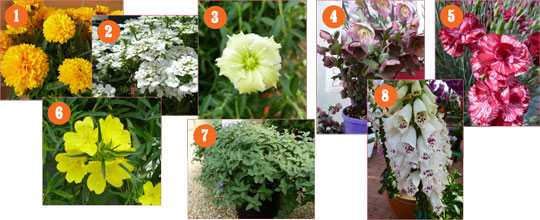 1. Coreopsis Solana Golden Sphere (Danziger)
 There are four different flower types in this series: double, semi-double, single and trumpet. The new Golden Sphere has fully double blooms that are early to flower on a plant that grows compact and mounded. Hardy to USDA Zone 5.
Perennials from Pacific Plug & Liner They had loads of new perennials on display at PP&L, including
2.Iberis Masterpiece, which was first introduced in 2010, but was taken off the market shortly after because some growers were experiencing uneven growth with the product, said GM Hank Burkowski. For 2013, PP&L is bringing out a new-and-improved Masterpiece with a better, more upright habit. And to complement the white blooms of Masterpiece, they’ve introduced Iberis Pink Ice, which they say is the first deep pink perennial iberis available for commercial growers.
Other notable varieties from PP&L are:
3. Areneria Lemon Ice is a sport of Avalanche, which allowed them to develop this color breakthrough. The tiny yellow flowers grow atop a compact plant that stays that way—no ranginess for this variety. And it’s drought tolerant, so it’s ideal for rock gardens and as a groundcover. Hardy to USDA Zone 4.
4. Helleborus Penny’s Pink is a first-year flowering hybrid bred in the Netherlands. A vigorous grower, it has pretty pink blooms that have a unique dome shape, opening up as the plant matures. Hardy in USDA Zones 4-9.
Each year, PP&L conducts a specific crop trial. This year it was dianthus. Their new
5.Dianthus Cosmics series was a standout in their extensive dianthus trial with its tall, upright stems. The two colors, Red Swirl and Pink Swirl, feature fully double, bicolor blooms that are fragrant. Hardy in USDA Zones 6-9.
6. Oenothera African Sun (Jaldety) It looks delicate, but it’s a tough plant. It’s good for a variety of uses because of its long flowering window and drought tolerance. (Jaldety was showing it in a beautiful ball-shaped hanging basket.) Hardy to USDA Zones 4-9.
7. Nepeta Junior Walker (Conard-Pyle) Well known for their Knock Out family of roses, Conard-Pyle is now entering the world of perennials. They started their breeding program about three years ago and this year unveiled a line of perennials at Spring Trials. A child of the popular Nepeta Walker’s Low, aptly named Junior Walker is more compact than its parent but maintains the non-reseeding characteristic. The medium-green foliage contrasts nicely with the lavender flowers, which remain in bloom from May to September. Hardy in USDA Zones 5-9.
 Perennials from Kieft Seed
 This division of Ball Horticultural Company focuses on perennials from seed. The
8.Digitalis Dalmatian series includes three colors—Crème (pictured), Peach and Rose—that are first-year flowering and the fastest to grow on the market (15 to 17 weeks from sowing, they say). All three are uniform in plant height and have great retail appeal. Hardy in USDA Zones 5-9.
A newly crowned All-America Selections winner, the blooms of
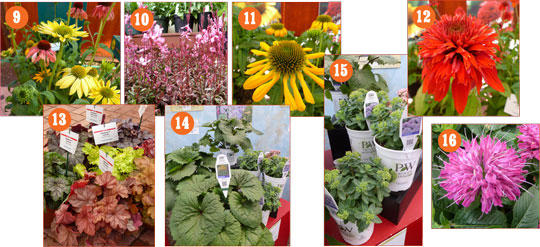
9. Echinacea ‘Cheyenne Spirit’ feature a multitude of colors—up to seven shades on one plant. It’s a low-maintenance variety that’s drought tolerant. Hardy in USDA Zones 4-9.
Perennials from GreenFuse Botanicals GreenFuse introduced a new perennials program this year called First Light—meaning none of them need vernalization and they’re all early to flower. A few standouts include: Veronica Vernique Dark Blue (2 to 3 weeks earlier than others on the market, says Steve Jones);
10.Gaura Bantam Pink (stays compact with no PGRs); and Dianthus Constant Beauty Pink (blooms all four seasons in California). >>>
Perennials from Darwin Perennials From the vegetative side of Ball’s perennial breeding comes two new echinacea additions.
11. Sombrero Lemon Yellow is a single-flowered variety that features a sturdy, compact habit.
12. Double Scoop Cranberry has fully double flowers and is well branched like the others in the series. Both are extremely hardy—to USDA Zone 4.
A Darwin Perennial’s variety that really caught our eye was the
13. Heuchera Carnival series. GM Mike Klopmeyer was recommending them as a cost-effective mixed container input for both perennial and annual growers. Temperature doesn’t affect the foliage color in any of the seven varieties and they’re affordable—about $1 per plant including royalty. Hardy in USDA Zones 4-9.
Perennials from Proven Winners/Walters Gardens For the second year, Walters Gardens showed their new introductions in partnership with Proven Winners.
14. Ligularia Bottle Rocket is more compact and proportional than Little Rocket. It can tolerate the shade and wet conditions, plus it’s more heat tolerant than other varieties. Yellow flower spikes grow above dense foliage. Hardy in USDA Zones 4-9.
Bred from the popular Autumn Joy,
15. Sedum Pure Joy has blue-green foliage that stays compact (about 10 to 12 in. in height). Lavender-pink flowers cover the plant in late summer until early fall and it’s extremely hardy—USDA Zones 3-9.
We put these two monarda varieties in the “fun names” category last month.
16. Pardon My Pink and
Pardon My Purple (pictured) are petite monardas that work well in borders and combo containers. The blooms are actually pretty big for such a small plant—2.5 to 3 in.—and flower from mid-summer to early fall. Hardy in USDA Zones 4-9, but they said they may even be hardier.
Drumming Up More Mums
Breeders are focused on making it even easier to produce these popular pot and garden plants.
 Syngenta
 Syngenta’s Mark Smith said that the pot mum business has been steady and is increasing because there are more novelties coming to the market. Some of the new Yoder pot mums from Syngenta fall into that category, like:
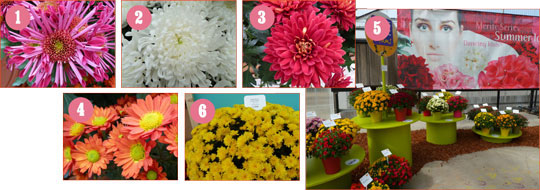
1.Purple Springs (a unique spoon-tipped anemone);
2.Vancouver White (a clear white decorative);
3.China Doll (red with gold undertones); and
4.Sabine Bronze (a Fleurette that’s the ideal color for fall sales).
5. Fides Oro Last year, Fides showed an experimental mum series called Mystic; this year, Mystic officially comes to market. The series features 27 colors and is going after the Belgian mum market: a mounded plant habit and flexible stems for easy shipping. But they want to have larger flowers on their varieties. The series includes some very nice colors, such as Daybreak Appleblossom and Eventide Coral. And as for those names, they’ve divided their mums into five different timing groups: Daybreak (very early), Sunbeam (early), Meridian (mid-season), Eventide (late) and Afterglow (very late). Cutting production will be done in Santa Paula, California.
GroLink GroLink had special displays for attendees that showed their best-selling varieties, as well as a grouping called “Black Stars,” which are varieties ideal for blackclothing. Some new mums from GroLink are: Staviski Yellow (late season);
6.Conella Yellow (early); and Lava Red (mid-season).
Last year, GroLink started offering mum netting, which helps hold stems together for less breakage in the field, during shipping and at retail. This year, the netting is green instead of white (so it blends in better). Bernard Chodyla said that it costs between 5 and 10 cents per plant for the netting. In addition, he’s invented a machine that makes it easy for you to quickly cut netting squares from a roll (since the manufacturer won’t offer it pre-cut). The machine only costs $500 from GroLink, and it lets you cut about 5,000 squares per hour. Beytes took a stab at operating it (literally!). Check out our YouTube video of him in action at
http://tinyurl.com/grolink.
Kick It Up With Combos
Combination programs continue to be a talking point for many breeders— even from some suppliers that you wouldn’t expect.
 Kwik Kombos (Syngenta)
 This year, Syngenta has added nine new mixes and one improvement to their Kwik Kombos line, including two lantana-only combos—like
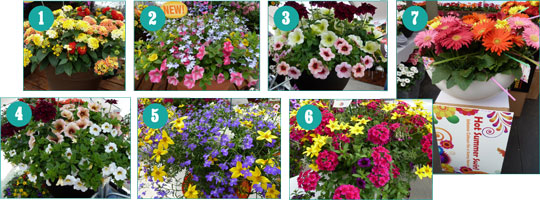
1.Bandana Lemon Squeeze—and one angelonia-only mix. Also pictured is new
2.Pink Lemonade, featuring Petunia Whispers Star Rose, Calibrachoa Callie Yellow Improved and Lobelia Techno Heat Light Blue.
Confetti (Dümmen) This patented program now includes eight new mixes along with a fall program that will feature combos in festive autumn colors. A few new notables mixes—for the colors and the names—are
3.Crunch & Munch and
4.Mochaccino Melt.
Trixi 2.0 (Selecta) The focus when developing these mixes is balance, said Ball’s Monique Hakkert. When they’re in the process of choosing varieties for each combo, they have to be plants that will complement each other in every way—not just pretty colors. This year, Selecta added five new mixes to the Trixi 2.0 program, including
5.Out of the Blue and
6.Crazy for Crayons.
7. Flori mixes (Florist Holland) The Flori series of gerbera have been around for a while, but Florist has created a program that includes the best varieties in seasonal mixes. They’re starting with six different combos of pot gerbera, including Jack Frost’s Icy Touch, Hot Summer Swirl (pictured), Barbecue on Fire and Cupido’s Kisses.
Pretty in Pots
Even if the weekly potted plant market is now the realm of just a handful of large growers, breeders haven’t forgotten that the holiday, seasonal and houseplant markets are still an important part of many growers’ offerings.
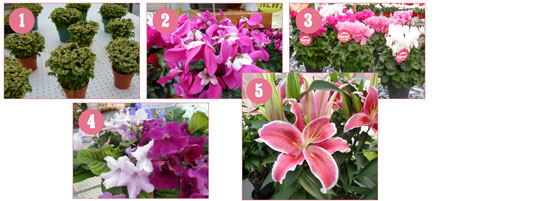 1. Selaginella Frost Ferns (Greenex)
 The white edges on the foliage of Frost Ferns had us reaching out to touch this interesting plant. The folks at Greenex said that this plant is a vigorous grower and is quicker than others on the market. They also suggested that Frost Ferns would make a good component plant in mixed containers for the holidays, such as in conjunction with poinsettias, for instance.
2. Cyclamen Fleur en Vogue series (Syngenta) This plant is unique for its downward-facing, umbrella-like blooms. Ideal for premium 6-in. pot programs, Fleur en Vogue starts with two colors: White and Purple (pictured).
3. Cyclamen Mammoth series (Schoenenveld) Jeroen Star said that bigger sells better in the U.S. market, and that’s what this Dutch cyclamen breeder is banking on with this aptly named cyclamen. The series is starting off with eight colors that are for 6-in. pots or larger. The large blooms and foliage allow the plant to last longer and maintain a nice, clean habit.
4. Streptocarpus Cape Cool series (Floranova) For an economical yet colorful potted plant option, this series works because it’s from seed, making it less prone to diseases than vegetative varieties. All four colors of Cape Cool are available as pelleted seed with 90% germination. These plants make a nice addition to a cool-season mixed container, too.
5. Lily Starlight Express (Flamingo Holland) Stargazer is an old-time lily that many potted plant growers and consumers are familiar with; this new variety improves upon Stargazer by being more compact but with larger flowers. Bulb production takes place in both the northern and southern hemispheres, for year-round availability.
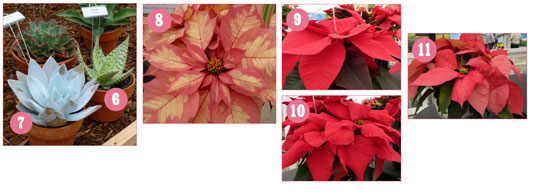 Succulents from Plug Connection
 One of the two new introductions to their Tessera collection of succulents is
6.Aloe Delta Lights, which is a hybrid aloe that’s versatile enough for 6-in. to gallon containers. It also features a striking zigzag pattern on its foliage. The other one is
7.Echeveria White Shadow that starts out purple as a young plant and then turns to a dusty white.
Poinsettias from the Ecke Ranch December 12 is National Poinsettia Day and, of course, this poinsettia supplier will be celebrating. To whet our appetite, they showed us a few of their new varieties. With a similar pattern to Ice Punch,
8.Sparkling Punch is a bit lighter in color. Popular? Heck, yeah: they’re already sold out for 2012!
9.Premier Red is a compact variety that’s good for high-density programs.
A later sport of Advent, mid-season
10.Tikal Red is said to be “the benchmark” for post-harvest longevity.
11.Monet Early is pink with red flecks and, as the name implies, is early enough to be ready before Thanksgiving.
GT