Lots of changes since the BFG bankruptcy—here are some more
When the big distributor BFG Supply filed for Chapter 11 bankruptcy protection back in August, it created three holes, or vacuums, gaps—however you want to picture it: 1) It left growers and retailers scrambling to find new suppliers for key products; 2) it left competing distributors scrambling to pick up customers, employees and assets from the remains of BFG; and 3) it left several BFG divisions seeking new owners.
I’ve been reporting on former BFG sales reps finding new homes; this time I’ve got news on numbers 2 and 3. First up—assets of the old company:
Griffin Greenhouse Supplies, headquartered in Tewksbury, Massachusetts, has taken over five former BFG distribution centers—Grand Rapids and Kalamazoo, Michigan; St. Paul, Minnesota; Denver, Colorado; and Fife, Washington, effective immediately. The deal includes all the inventory, assets, receivables and intellectual property.
Said the press release, “The transaction expands Griffin’s distribution footprint and enhances its ability to provide products and services to wholesale growers, retailers and more customers across key horticultural markets.”
Griffin plans to retain the teams currently operating the facilities. Said Andrew Barry, a managing director at Griffin Greenhouse Supplies, “Our focus now is on integrating these facilities effectively and connecting them with Griffin’s existing network, products and service capabilities. We have developed a clear roadmap for bringing our systems, data and procedures together, and we are confident in our ability to execute that plan …We value the people who know these facilities and their customers best. Their firsthand knowledge will be instrumental as we bring these operations and team members into the Griffin family.”
According to their website map, this now gives Griffin 18 locations (including HQ) in 14 states.
Founded in 1947, Griffin is a third-generation, family-owned business … and we all love our family-owned businesses!

No. 3: Divisions looking for new owners
Greenhouse glazing, shade and components company Green-Tek, which was owned by BFG for just four years when the bankruptcy hit, has found a new owner in American Plant Products & Services, an Oklahoma City wholesaler specializing in greenhouse, equipment and supplies. APP&S was founded in 1974 by Rodd Moesel and his wife, Dona.
Earl Craker, GM and national sales manager of Green-Tek, wrote to me to say, “Under new ownership with Rodd and Dona Moesel, we are once more a family-owned small business, and we look forward to servicing our customers in the manner many of you are accustomed to. We are ready to continue to supply you with the same product lines we have offered in the past.”
Greenhouse Megastore gets the same family business treatment: It's been acquired—or should I say re-acquired—by Ben and Dave George, sons of David L. George, the founder of Greenhouse Megastore (which was originally called International Greenhouse Company). The family sold the business to BFG in 2021. Ben and David were employed by BFG—Ben since the acquisition and David since 2024.
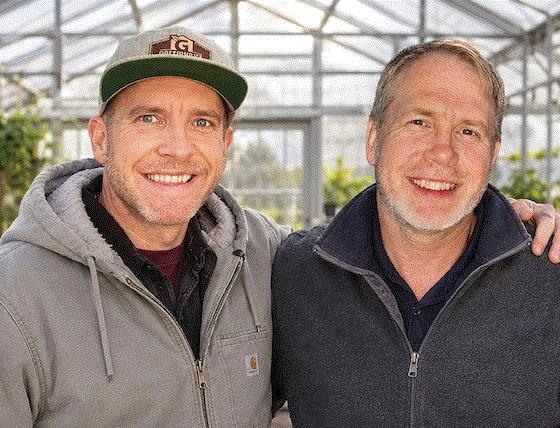
Ben and Dave are now at the helm of the family business.
“For our family, this is more than buying a business. It’s coming home to something my father started more than 30 years ago,” said Ben, CEO and president of GMS. “Our roots here run deep. We’re proud to carry that legacy forward, reconnect with our customers and vendors, and build the future alongside our employees.”
The business will continue operating under the Greenhouse Megastore name.
“We’re approaching this next chapter with financial discipline and a long-term commitment,” said David. “Our focus is on building a healthy business that can reliably serve its customers, honor its commitments and invest in its people.”

In memoriam: Alex Dewar
Apopka nursery and greenhouse pioneer Alex Dewar, founder of Dewar Nurseries, has passed away. He was 94.
A smart guy, Alex earned degrees in both chemistry and horticulture from the University of Florida. Somehow, chemistry missed out and horticulture got him, although he combined his love of science and plants by breeding aglaonema before founding his own nursery in 1963.
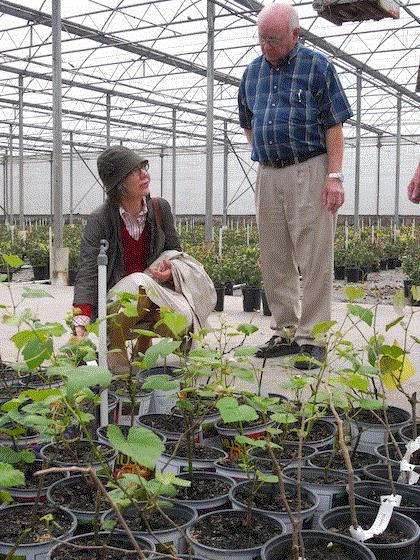
Here is Alex with Anna Ball in 2010, describing Dewar’s then-new edibles program. This was the only time I had the pleasure of meeting him. He would have been 78 or so and yet was still active in the business.
A company Facebook post said that in those early days he would personally travel to supermarket chains to sell his plants and build the relationships that would lay the foundation for Dewar Nurseries. Alex started with a pickup truck and 10 employees. His son, Bill, joined the business in 1982, and now the family business has five locations, 500 employees, 75 semis and is one of the nation’s largest growers of roses, fruit plants and seasonal flowers. Oh, and the third generation, granddaughters Kimberly and Patricia, are taking the business to the next level with the boutique lifestyle brand Elizabeth & Alexandra and e-commerce brand Sun Grove Gardens.

Selecta One, Ellepot partner on new propagation method
I’ve written about Selecta One’s new RCS 2.0 several times in this newsletter after seeing both the soft launch and the official launch at IPM Essen—it’s a new technique for eliminating rooting media from rooted cuttings. This allows for shipping to places that don’t allow media to come in from offshore—the U.S., for example. And it eliminates plastic trays and saves space in boxes, greatly reducing shipping costs.
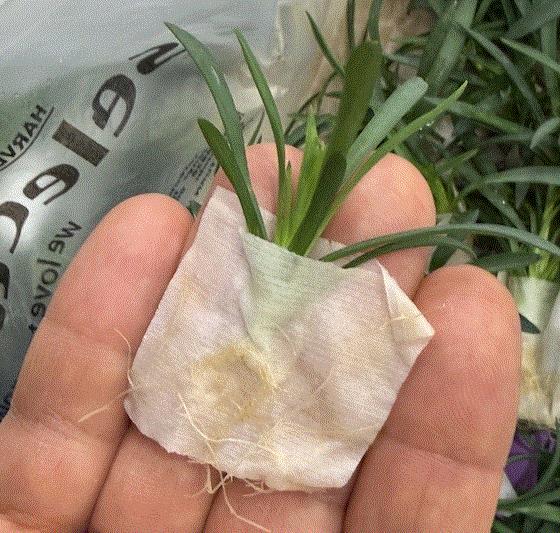
The RCS 2.0 can be planted by hand or (eventually) by transplanter.
To make RCS 2.0 happen globally, Selecta One has entered into a long-term strategic partnership with Ellepot, the Danish experts in biodegradable paper propagation tools. Ellepot will manufacture the little paper pockets that make the system work.
Developed by Selecta One and first shown to growers in 2025, RCS 2.0 (BTW, RCS means Rooted Cutting System) uses a strip of paper, folded in half and embossed with little pockets, into which workers will stick cuttings. They’re then rooted, then shipped to growers for planting. The benefit? Three thousand rooted cuttings can fit in a carton that would normally only hold about 200 rooted liners. There’s less waste, less packaging material and it’s substrate-free—important in Europe where peat is slowly but surely being outlawed.
The downside is that it isn't yet approved by every department of agriculture for importation. For instance, in North America, USDA has approved the paper pockets, but they have not yet approved any genera to be imported in it. I’m told approval is in the works and should come before the peak of the 2028 cutting-shipping season. Interestingly, Canada’s CFIA (Canadian Food Inspection Agency), which usually follows USDA’s lead, has approved five genera for importation from Kenya to three growers in Canada for testing.
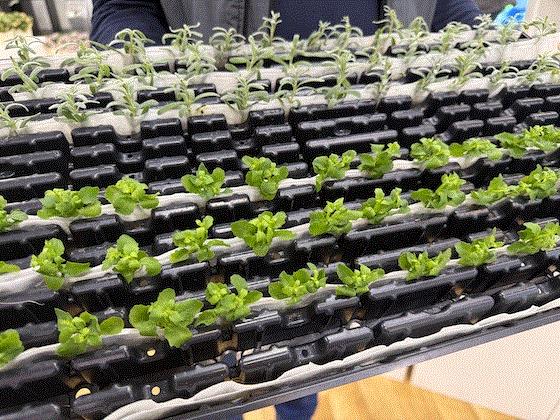
The tray that supports the paper pocket strips for sticking and rooting. They don't ship in this; they ship loose.
Ellepot is the obvious partner for this project. They’ve been making paper pots for more than 30 years and their technology is used in more than 130 countries to make more than 10 billion Ellepots annually. Between their in-house development and manufacturing and their international sales and service network, they’ll be a good provider of materials, production technology and implementation support.
Lest you think this is just about ornamental cuttings, Ellepot has relationships across forestry, vegetable and fruit production, greatly expanding the opportunities for RCS 2.0. They'll have worldwide exclusivity for commercializing RCS 2.0 in non-ornamental markets.
And, lastly, you don’t have to be an offshore rooting station to use RCS 2.0. Any grower can use the system for in-house use or to sell rooted cuttings. Just contact Ellepot.
Lastly #2, a transplanter is in the works for mechanizing the planting of the paper pockets. Stay tuned for more on that as I sniff out the details.

Another CEA failure
And this time it’s what we might call a “traditional” hydroponic lettuce greenhouse. Perhaps it was the location that caused the problem.
The business is (was) North Country Growers in Berlin, New Hampshire, an 8-acre hydroponic greenhouse sitting on 168 acres of land. The business ceased operations back in March when its bank cut off its line of credit. Now it’s up for sale in a foreclosure auction.
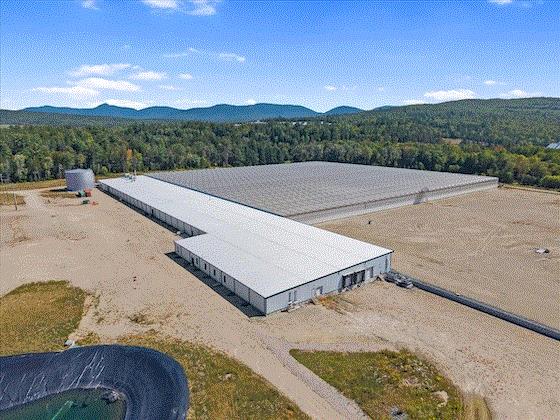 North Country Growers had a lovely view of the Mahoosuc Range to the east.
North Country’s brief history began in 2017 when the founder was granted a $25 million USDA Rural Development loan to construct two 10-acre greenhouses. That founder was Richard Rosen (now deceased), who's said to have had a background in greenhouses, specifically Harry Quint Greenhouses near Boston. He earned master’s degrees in both Forest Science and Applied Physics from Harvard and spent a career in energy, environmental technology and more before developing North Country Growers, which he hoped would bring year-round employment to the area. Mr. Rosen passed away in September at the age of 87.
Like all hydroponic projects, this one touted sustainable local production, but numerous delays (I am sure the pandemic didn't help) meant they didn't begin operations until May 2024. I can find no word on how production and sales were going for the two years they were in operation, but a glance at a map indicates the “rural development” part of the loan was spot on—Berlin is the northernmost city in New Hampshire, with a population of just 9,500. There are no more than a million or so people within a two-hour drive. Plus, the region has established competition in the form of BrightFarms (formerly lēf) in Loudon, New Hampshire, and Little Leaf Farms in Devens, Massachusetts, which are closer to the coastal population areas and Boston. The province of Quebec, a couple hours north, has half a dozen lettuce growers.
So if you want a really nice, barely used greenhouse that’s just 20 miles from Mount Washington as the crow flies, I know where you can find one.

Regarding Plantmania, the newest traveling houseplant market
Speaking of houseplants (well, there were some houseplants in the previous item), there’s another plant-geek event taking place around the country besides PlantCon—which I attended in Orlando last year and wrote about a few weeks ago regarding their upcoming Dallas and Atlanta events. It’s called Plantmania Expo and they just held one here in Orlando! Alas, I was out of town that weekend and missed it—drat!
Like PlantCon, Plantmania Expo describes itself as an “indoor, market-style expo with vendors from across the world selling common, rare and exotic houseplants.” From what I can tell, it launched in July 2025 in Daphne, Alabama, with a woman named Jeanie Baas of the plant store Plants Unlimited (also in Daphne) the founder.
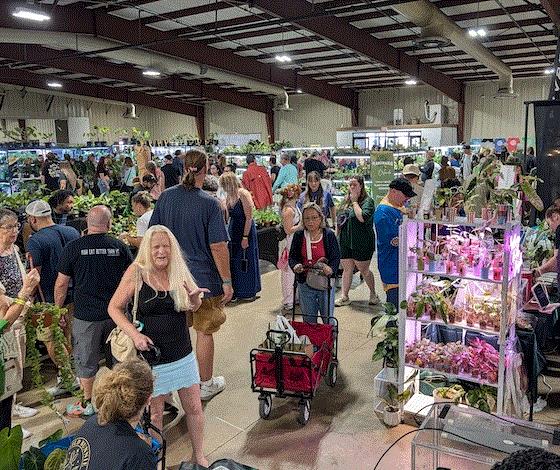
Plantmania Expo Orlando—it was a scene, man! Photo: Hailie Watley, Blue Moon Tropicals.
My friend Justin Hancock from Costa Farms made the four-hour trip from Homestead to Orlando for the event, and having seen my recent comments about PlantCon’s lack of success in Florida perhaps being due to all the plant outlets in the state, felt compelled to weigh in thusly:
“Your quote about Florida being so flush with nurseries and garden centers didn’t come to pass a couple of weekends ago when an event called Plantmania was in Orlando! Costa Farms attended as a first-time sponsor and I have to say we were blown away—attendance was double what the organizers planned and enthusiasm with consumers was through the roof. A lot of folks I’ve talked to in the industry haven’t heard of this one, but it was totally worth spending a glorious weekend (I'd almost forgotten what it was like to be outside when the temperature was below 75F!) in a windowless metal building talking to plant enthusiasts.”
So Justin thought the show was awesome. But did I know anyone in Central Florida who exhibited? Then I remembered Hailie Whatley, founder of Blue Moon Tropicals in Eustis, a cool producer of all sorts of fun and unusual houseplants who exhibits at a half a dozen or more plant and garden shows a year. In fact, I recalled her mentioning Plantmania to me some time back. So I shot her an email.
Good thing I did—turns out she’s the reason there IS a Plantmania Orlando! She’d been working with the show organizers for nearly a year and was the presenting sponsor of this inaugural event.
Replied Hailie, “Plantmania approached me to do their Raleigh show and I responded with, 'Let me know when you book Orlando,' and that’s where the talks began.”
Hailie said she first told them why she felt PlantCon didn’t succeed in Florida, touching on the inappropriate venue, inadequate marketing and high cost for vendors and attendees. She suggested the more budget-friendly Central Florida Fairgrounds as a venue.
“I think a few things really aligned for this show’s success outside of affordability (free parking was a huge draw) and one of those was a time of year nestled in between the competition of spring shows and the tight-wallets of the holidays,” she continued. “They adamantly avoided influencer and content creator involvement for promotion—a strategy opposite of PlantCon—and it was interesting to see the results of that. It was reported that over 7,000 attendees supported the show that weekend and we had our best weekend ever because of it. The biggest complaint I heard was too many people in a small building and our booth never slowed down because of it. At the end of the show, I was proud to see that fellow vendors had an exhausted but pleased look on their faces, and their tables were bare.”
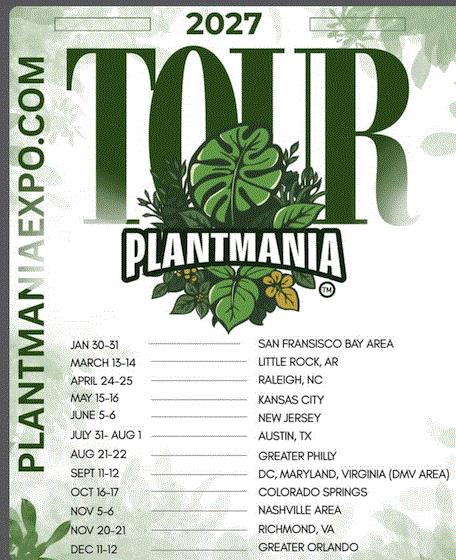
As you can see, Plantmania Expo’s 2027 tour schedule lists a dozen of the two-day markets in as many states: California, Arkansas, North Carolina, Missouri, New Jersey, Texas, Pennsylvania, Washington D.C., Colorado, Tennessee, Virginia and back here to Orlando next December.
If you’re near one, check it out and maybe even participate. And then let me know what you think it means for the houseplant market.

For Midwest poinsettia trials, it’s Cresco or bust!
With the news that N.G. Heimos … excuse me, Hoffmann Heimos … er, American Farms—Midwest will not be holding its annual poinsettia trial this year, there's still the good news that Plantpeddler’s Poinsettia Variety Day continues on! The annual event is slated for Thursday, December 3, at the Plantpeddler Young Plant facility in small-but-industrious Cresco, Iowa.
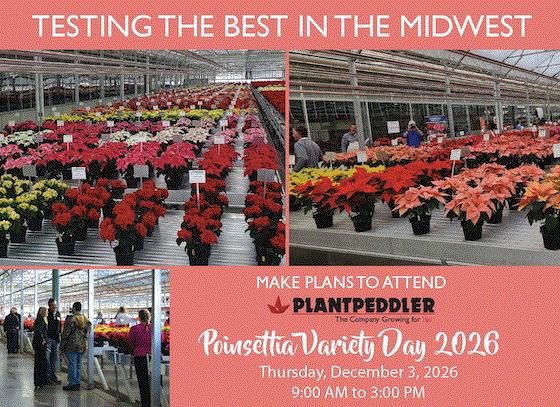
Plantpeddler's is a true grower’s trial, with more than 200 varieties displayed by color, response time and vigor. You’ll see genetics from all major poinsettia breeders side by side—Beekenkamp, Dümmen Orange, Graff, InBlume, Lazzeri, Rinehart Poinsettias, Selecta and Suntory. Representatives from each company will be on hand throughout the day to answer your most burning questions.
As always, the event is complimentary, with a sponsor-supported lunch. And if you arrive the evening before, you’re invited to a pizza party at Atomic Pizza starting at 6:00 p.m.
You can learn more and RSVP HERE.
Pizza? And poinsettias? Count us in!

Learn biological controls at UConn
If you’ve got a day and you aren’t too far away, sign up for the Biological Control Conference for Ornamental Growers to be held November 12 at UConn’s Ag Experiment Station in New Haven. That’s a Thursday and it’s just $80. For that you get a day of education, five pesticide credits and lunch!
Topics at the day-long program include:
- Microbial Biopesticide Applications
- What Your Pests and Beneficials Are Telling You
- Brown Lacewing and Crazee Mite—Meet the Two New Predators
- Know Your Pests and Beneficials
- Growers’ IPM Hacks
There’ll also be a hands-on activity to help you evaluate whether or not you're getting even distribution of microbial products and a Q&A session.
The all-star speaker lineup includes Julie Graesch from BioWorks, consultant Suzanne “Buglady” Wainwright-Evans, Carol Glenister from IPM Laboratories and a panel of experienced growers from Prides Corner Farms, White Flower Farm and Yale’s Marsh Botanical Gardens.
Sounds like a humdinger! But don't just show up on the morning of the event, as walk-ins cannot be accommodated. Instead, click HERE to register by November 5.

Finally …
Today I have three “Finally …” pieces all about Dutch horticulture and agriculture … just to keep you apprised of what’s going on across the pond:
Finally I …
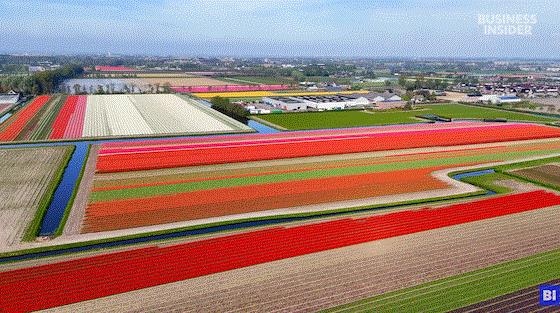
Here’s a fascinating Business Insider VIDEO explaining how the Netherlands has become the world’s second-largest agriculture exporter despite being only about the size of Maryland, thanks in large part to World War II and “the winter of hunger.” The video covers greenhouse vegetables, but also goes into dairy and beef cattle, which are facing challenges with ammonia and nitrogen emissions and how Dutch researchers hope to solve those problems.
I’ve been to the Netherlands scores of times and I still am amazed at how sophisticated Dutch agriculture is.
Finally II …
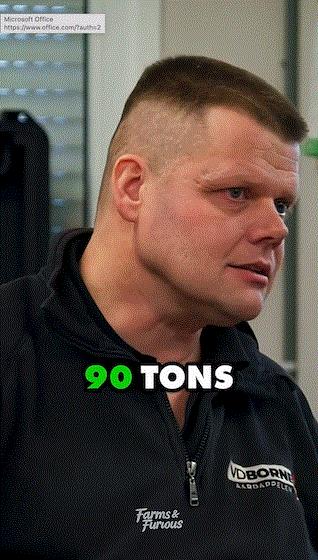
One of my favorite current TV shows is "Clarkson’s Farm" on Amazon Prime, which follows the exploits of British motoring celebrity Jeremy Clarkson as he runs his 1,000-acre Diddley Squat farm in West Oxfordshire with the help of a wide range of experts (and characters). With all he's learned, Jeremy has truly become a powerful spokesman for the British farmer.
In this YouTube Short, you hear third-generation Dutch potato farmer Jacob van den Borne explain to Jeremy and his young farm manager Kaleb the “NASA-level” precision with which he farms his family’s 500 hectares for minimum input cost and maximum yield. Astounding. And for the lowly potato!
Finally III ...
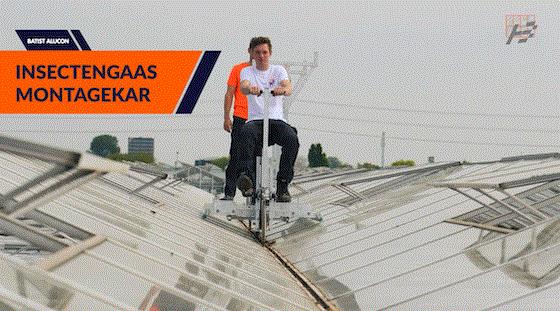
Not nearly as sophisticated as the potato-grower's soil conductivity sensors … but it sure is heel slim (very clever)! These fellows are inspecting greenhouse insect screening using a “gutter bike” designed by Batist Alucon. The company offers various ways to more safely walk the roof of a glass greenhouse for maintenance and repairs.
Watch the short YouTube video HERE.
Feel free to email me at beytes@growertalks.com if you have ideas, comments or questions.
See you next time!

Chris Beytes
Editor-in-Chief
GrowerTalks & Green Profit
This e-mail received by 34,254 loyal readers!
Thanks to my loyal sponsors, who help me reach the 31,506 readers of Acres Online in more than 60 countries. Want to be one of them (a sponsor, that is)? Give Kim Brown a shout and she will tell you about our many advertising opportunities.