Nominations Are Now Open for the CEAs
by Jen P.
I am thrilled to announce we are launching our third annual CEAs—Cultivating Excellence Awards in conjunction with Indoor Ag-Con and award sponsor Premier Tech, with winners to be announced at the Gala Luncheon at Indoor Ag-Con March 24 at the Westgate in Las Vegas. The nomination forms are open now. Don’t delay, the deadline is November 20. But wait, what the heck are the CEAs again? Let me refresh your memory!
The past three years we’ve partnered with Indoor Ag-Con to offer up awards that highlight the best in growing operations and product innovation, and last year we began the Trailblazer Award to recognize the people who paved the way early on. Here’s a full description of each award:
The Operational Excellence Award recognizes a commercial CEA grower that consistently delivers quality products while distinguishing itself through innovation in production, technology, marketing and overall strategy. Judges will evaluate candidates based on their achievements in growing market share, sustaining product quality and developing practices that set them apart in a competitive landscape. Finalists will receive an All-Access Pass to Indoor Ag-Con and be invited to attend the awards luncheon. The winner will be honored with their very own Inside Grower cover story! Last year’s winner was BrightFarms.
The Product Innovation Award highlights the newest and most innovative products that solve critical industry challenges and drive customer value. Open to all industry manufacturers and suppliers, this award will celebrate products that demonstrate the forward-thinking, problem-solving spirit of the CEA industry. Last year’s winner was Jiffy Gel from Jiffy Group.
The Trailblazer Award honors one individual who has a profound impact on CEA during their time in the industry—someone who explores the unexplored, asks the questions no one else has, and pushes research and CEA application into new arenas. The inaugural honor went to retired University of Arizona Biosystems Engineering Professor and founding director of the Controlled Environment Agriculture Center (CEAC) Dr. Gene Giacomelli, a longtime researcher, educator and industry supporter. Do you have a recommendation for a Trailblazer? Email me at jpolanz@ballpublishing.com.
Join us at Indoor Ag-Con March 24-25 at the Westgate in Las Vegas, where we will hold the CEAs Gala Luncheon on March 24 and announce our winners! Register today at indoor.ag. Special thanks to our awards sponsor, Premier Tech!


Griffin Buys BFG Warehouses & More
Griffin Greenhouse Supplies was named the stalking horse bidder for BFG Supply’s assets after BFG filed for Chapter 11 in August. That put Griffin in an ideal position to pick up the bulk of BFG’s remaining warehouses, inventory and other assets.
Besides my Halloween costume this year, what is a “stalking horse bidder”? Think of it as a financial horse race, with Griffin as the one to beat. Griffin made the opening offer, which set the floor price and terms for the bankruptcy sale. Other companies could then jump in at auction, but they had to top Griffin’s bid. If someone did, Griffin would typically collect a break-up fee for its trouble. If no one did, Griffin would win.
Griffin’s focus was on BFG’s facilities in Grand Rapids and Kalamazoo, Michigan; St. Paul, Minnesota; Denver; and Fife, Washington. The company has also been on a hiring spree, with plans to add more than 90 new team members.
As for how the race ended, nobody else showed up to run. The auction was cancelled when no competing bids came in, and the court approved Griffin’s $27.4 million purchase. Griffin has now closed the deal and taken over all five locations, with plans to keep the teams already working there and full integration targeted for November 9. For growers who bought from BFG, that should mean familiar faces with a new name on the invoice.

Little Leaf Commercial
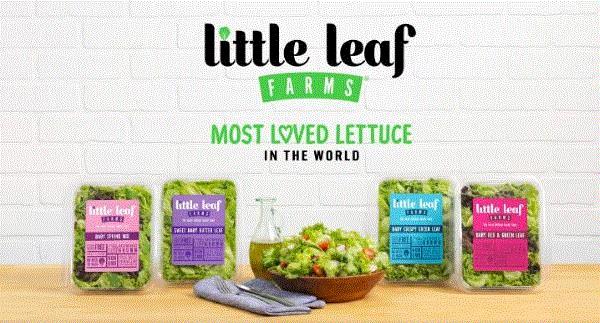
A mainstream 30-second commercial for greenhouse lettuce was not something I expected to watch this year, and it’s no surprise who it’s coming from. Little Leaf Farms has started advertising its lettuce as “the most loved lettuce in the world.”
The ad’s main selling points are that this pesticide-free lettuce is grown in a greenhouse with clean water, followed by its crisp, crunchy texture and longer shelf life. In other words: health, taste and less spoilage. Having been part of the CEA industry for a while, I’m probably too far inside the bubble to know whether that message resonates with the general public, but it’s the message I’ve been taught.
The timing certainly helps. With this year’s cyclospora outbreak tied to field-grown lettuce still fresh in shoppers’ minds, “grown in a greenhouse with clean water” may land better now than it would have a year ago. Whether it works or not, a CEA brand buying national TV time is a sign the category is growing up, and if it teaches shoppers to look for greenhouse-grown on the label, the whole industry benefits.

At the Global Produce & Floral Show
Excerpts from the Global Produce & Floral Show by Chris B.
A week and a half ago, I did the 20-minute drive to the Orange County (Florida) Convention Center twice to cover the big Global Produce & Floral Show (GPFS), put on by the International Fresh Produce Association. And “big” is the operative word—20,000-plus folks visiting more than 1,000 exhibitors and snacking on an estimated 47 tons of tomatoes, potatoes, avocados, lettuce leaves, tangerine slices, mushrooms and sauce-coated shrimp, washed down with more than 30,000 gallons of beet juice, blueberry smoothies and acai energy shots. (I made up those numbers, but you get the picture—you healthy-snack your way around the show).
I was there primarily on behalf of our Inside Grower CEA magazine and newsletter, seeking out products and trends from the greenhouse veggie and vertical farm segment. Which was well-represented by the big players like Cox Farms (Mucci and BrightFarms), Mastronardi (at the Sunset booth), Village Fresh (formely Village Farms), Windset Farms (celebrating their 30th anniversary) and a few I hadn’t heard of, such as Local Bounti and Topline Farms.
Hot topics of the sessions I attended are what you’d expect: tariffs, diesel and the cost of logistics and food safety—specifically the Food Safety Modernization Act (FSMA 204), which goes into effect July 20, 2028 and is designed to make it faster to trace certain foods through the supply chain when there’s a contamination problem. Last July’s cyclospora outbreak really put the spotlight on that one.
Speaking of which: According to what I learned in several sessions, while cyclospora came from one producer, Taylor Farms, on one crop, shredded iceberg lettuce from Mexico, it negatively impacted sales of at least 70 categories of produce for several months last summer. In other words, food safety is not a “There-but-for-the-grace-of-God-go-I” proposition. Businesses are rebounding, however; and greenhouse lettuce producers told me they’re seeing increased interest in their products thanks to their (presumably) more dependable sanitation conditions.
Trends from the trade show floor
A quick scout of the Fresh Idea Showcase in front of the entrance to the show told us where to head first in the massive 1000-exhibitor trade show hall. Like the packaging area, where we found Crawford Packaging’s new SmartPeak tray combined with its Linerless Label. Sustainable, they are all cardboard with no plastic and come preprinted on rolls designed for Ravenwood’s machines. This will wrap tomatoes or other fruit/veggies in an attractive, sustainable, recyclable pack. Naturally, they come in various sizes.
In stand-up, resealable pouch technology, StePac has introduced the new Xgo PAZ pouch, which features extremely tiny laser perforations that create a “modified atmosphere” within the pouch, optimizing humidity without excess moisture, thereby extending shelf life at retail and in the home. Of course, you have to close the zipper for it to work …
Heading into the main fruit and vegetable area, at Oishii, the fancy vertically farmed strawberry company, we find they are reducing plastic while increasing freshness through a new paperboard tray (from Aptar) topped with a heat-sealed film that is micro-perforated to inhibit mold growth. It’s said to cut plastic use by 80% over conventional clamshells.
Three trends in tomatoes
“Ultra-premium” is what the folks at Sunset call Mastronardi’s “Fresh & Sweet Tomato Branch”—a micro-tomato cluster in a clever and eye-catching triangle package quite obviously aimed at a higher-level audience. The packaging even suggests charcuterie boards as one use (along with salads and snacking). I ran the term “ultra-premium” past other tomato producers but nobody else is putting that grade out there yet.
The name game. There are lots of cherry tomatoes on the market, but once packaged they all look alike. How do you stand out? And how do you get younger consumers/kids to try them? Give ‘em a clever name! Village Fresh does it well, with “Good Day Sunshine,” “Cherry no. 9” and Cabernet Estate Reserve,” among many others. But Nature Fresh Farms takes us on a psychological ride with “Lil’ chills,” “Dramas” and “Sweet Thrills.” Meanwhile, Dippin’ Stix has licensed four iconic DC Comics’ superheroes to help sell more sliced apples, carrots and accompanying dips.
Heirlooms. Probably fitting into the “ultra-premium” category would be heirloom tomatoes … or more likely “hylooms”—hybrid heirlooms—because it’s unlikely any grower would be able to squeeze dependable production from a true heirloom variety. We spotted Village Fresh, Windset Farms and Wholesum offering them in two-packs; Wholesum’s are organic. At $4.99 for two at stores like Whole Foods, it’s a good return. Village Fresh has gone to a paper pack instead of a clamshell for their Exquisite Heirlooms.

BioSafe Common Mistakes
Tech on Demand host Bill Calkins recently sat down with Eric Smith on his weekly podcast. Eric is the national sales manager for BioSafe Systems’ horticulture division, and the two talk about how sanitation, crop protection and water treatment all fit into a comprehensive IPM strategy. Eric has been at this a while. He was featured in Inside Grower a few years back talking about keeping hydroponic irrigation systems clean, with a simple motto: start clean and stay clean.
The conversation focuses on greenhouses and building a solid protection program, especially the common mistakes, like rinsing too soon or only sanitizing between crop cycles. It’s a good reminder that growers really have three tools to work with: spraying the crop, treating the water and disinfecting hard surfaces. Water treatment gets a lot of attention, but as Eric pointed out in that earlier piece, it only gets you so far if benches, gutters, rafts, and irrigation lines aren’t on a regular cleaning schedule. If you’re growing leafy greens and would rather not spray the crop, the other two tools matter that much more.
You may already know many of BioSafe’s products, including peroxide-based sanitizers like ZeroTol and SaniDate, which break down into water and oxygen, as well as a wide range of pesticides, cleaners and even beneficial microbes.
Bill’s newsletters are worth checking out as well.

Springworks Farms Greenhouse Sells
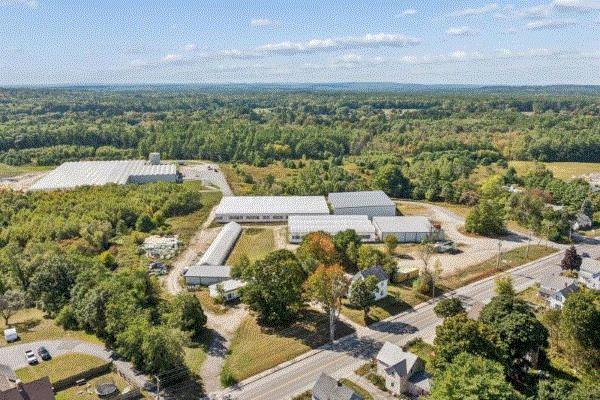
If you’ve been keeping an eye on the Northeast greenhouse market, the former Springworks Farm in Lisbon, Maine, just changed hands. Springworks was one of the bigger aquaponic operations in New England, growing lettuce and tilapia, and was Hannaford’s exclusive lettuce supplier for several years before closing down. The property went to a lender-ordered auction on October 23 and sold for $1.1 million to a private local investor.
That’s a lot of greenhouse for the money. The sale included 168 acres, about 117,000 square feet of greenhouse growing space, roughly 56,000 square feet of headhouse buildings for propagation, packing, cold storage and offices, plus all the related equipment. The facility grew over the years from a single 6,000 square foot hoop house in 2014. The newest addition, built in 2024, is a beautiful 73,600 square foot glass greenhouse with a Hoogendoorn system. Based on the pictures, the whole place looked well taken care of, and I’d love to see it running again.
Learn more about the property here.



Dr. Jake Holley
Editor-at-Large
Inside Grower
This email received by 39,982 loyal readers!
Interested in advertising in Inside Grower? Contact Paul Black or Kim Brown and they'll show you how easy, effective and affordable it is.