October Farm Update
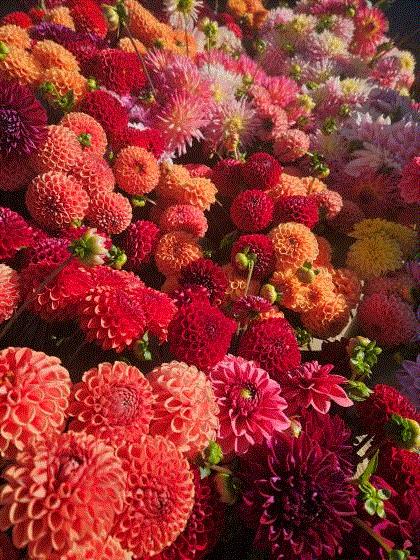
Tater and I are relishing in the dahlias this week. It's amazing we still have them in the field.
Welcome to October!
October is a jubilee of familiar emotions including (but not limited to) exhaustion, anticipation, and the realization that another growing season is rapidly coming to an end. Tater and I are relieved, but the first frost is bittersweet.
So far, October has been keeping us on our toes! We enjoyed a couple of beautiful 80F days this week that made it feel more like the middle of summer. Our dahlias, celosia, cosmos and other field-grown flowers have been soaking up the sunshine, giving us an extra week of beautiful fall harvests. We're anticipating our first killing freeze on Saturday morning, which means that by Monday we'll be trading our harvest snips and knives for a potato digger and spading forks. It's always a bittersweet transition, but there's also something satisfying about closing out one season and preparing for the next.
And now we can finally shift our full attention to spring 2027. Tater and Team Forget Me Not are planting anemones and ranunculus. There's always something amusing about planting crops for Valentine's Day while you're still harvesting dahlias for fall weddings. When we talk to our florist friends about what’s going on on the farm, they are always amazed how we have one foot in summer and the other in winter.
We also have a lot of behind-the-scenes work on tap as we continue preparing for the next chapter of Forget Me Not Farms. Tater and I have three additional gothic greenhouses coming in November and we've been spending considerable time preparing for their arrival. Expanding our farm is exciting, but it's also a reminder that growth requires considerably more than additional square footage.
As we approach the end of our busiest season, I'm also thinking more intentionally about what sustainability means for our farm. Not just sustainability in terms of growing Michigan’s best flowers, but sustainability for the people who make the business possible (including Tater). A farm can have beautiful flowers, loyal customers and tremendous growth potential, but if the people operating it are consistently exhausted, something eventually has to give.
This is particularly important as we look toward our new expansion. Our goal isn't just to grow more flowers. It's to build a farm with better systems. Tater and I are in the thick of figuring this out ... which is easier said than done, especially when you're accustomed to wearing nearly every hat in the business, but it's becoming increasingly clear that it's a necessary part of Forget Me Not’s next chapter. If anyone has any feedback, I would love to HEAR FROM YOU!
There will be plenty of lessons from this season to carry forward, and undoubtedly a few things we'll approach differently next year. In between digging dahlias and sowing sweet peas, Tater and I will take some notes. For now, we're enjoying the last colorful week of the fall. We are appreciating every additional harvest and doing our best to prepare for what comes next. In flower farming, the finish line of one season usually marks the starting line of another.
In this edition of Bloom Beat, we’re talking farm utilities and assessing consumer confidence. With all that being said let’s talk shop!

Before You Build: Know Your Greenhouse's Electrical Capacity
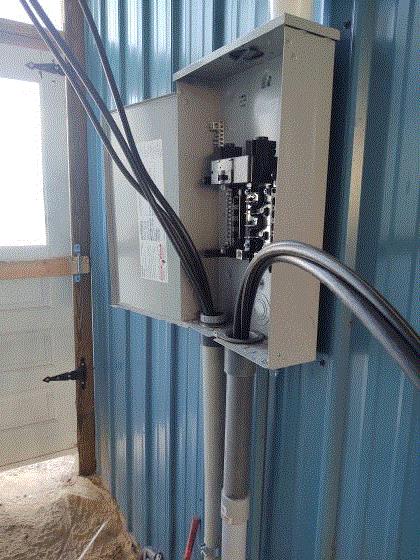
There's a lot more to understanding your electrical load at your farm than just looking at the panels.
As we continue preparing for our new greenhouse space, one of the biggest behind-the-scenes projects has been evaluating our existing utility infrastructure. Believe me, this is more important than you think. Adding covered growing space is exciting—but before you can start growing in those new structures, you need to answer a surprisingly important question: Can your existing electrical and natural gas services actually support them?
This is especially critical for farms in northern climates. If your gas service is undersized for the demands of your farm, you risk inadequate gas pressure when multiple heaters are running at full capacity. This can result in heater failures and costly damage. That's why evaluating your utility capacity before expanding is an essential part of protecting your investment.
Tater’s new greenhouse expansion meant installing a new natural gas line and working with our electrical provider to upgrade our transformer. It's one of those aspects of greenhouse expansion that doesn't receive nearly as much attention as greenhouse design or production schedules. But it can have a significant impact on both your construction budget and your timeline.—especially depending on whether you are pulling a 1-in. or a 2-in. gas line!
Step one: You need to start by understanding your existing electrical capacity. Before adding new HAF fans, heaters and pumps you need to determine the size and type of electrical service currently supplying your farm. Electrical service is described by its voltage, amperage and whether it is single-phase or three-phase.
A good starting point is identifying the amperage rating of your main electrical service. This is typically documented on your service equipment. You can also contact your power provider to confirm your existing service. Remember that the rating of an individual subpanel isn't necessarily the rating of your entire electrical service.
University of Missouri Extension has a helpful introduction to understanding electrical loads and circuit protection. While some of the examples reflect older electrical systems, the underlying principles are useful for understanding why agricultural buildings may require electrical upgrades as equipment demands increase.
For a basic single-phase electrical system, you can estimate apparent power capacity by multiplying voltage by amperage:
Volts × Amps = Volt-Amps (VA)
For example, a 200-amp service operating at 240 volts has a nominal apparent-power rating of 48,000 VA, or 48 kVA.
This doesn't mean you have 48 kVA of usable power available for additional equipment. Existing demand, load needed to start a motor and electrical codes all affect how much additional equipment your service can handle. Three-phase systems also require a different calculation.
Once you understand your existing service, the next step is to create an inventory of the equipment you plan to operate. Your electrical company may ask about this when assessing your need to upgrade service. Also include the equipment for your new setup, too.
University of Maryland Extension provides a great explanation of how to evaluate electrical loads. Tater and I found the equipment inventory worksheet especially helpful. Begin by recording the quantity, voltage, amperage, wattage and anticipated operating hours of each piece of equipment. For greenhouses, be sure to include your HAF fans, ventilation systems/motors, inflation blowers, irrigation pumps, supplemental lighting, and your heaters.
For example, a single-phase fan drawing 2 amps at 120 volts represents approximately 240 volt-amps of electrical load. If you plan to operate 20 identical fans simultaneously, their combined load would be approximately 4,800 VA. Electrical demand is the amount of power equipment required at a given moment, while electrical consumption is the total electricity used over time. It’s important to know the difference, especially when you’re planning for all items needing power at the same time.
Penn State Extension has a great article explaining how farms can use their electrical bills to evaluate peak demand and better understand the relationship between equipment operation and utility costs.
For our next phase we developed a detailed equipment inventory of current and future needs for the farm within the next five years. Creating this inventory gave us a much clearer picture of the additional electrical demand our expansion would create and provided a useful starting point for conversations with our electrical provider, Consumers Energy.
One important thing to note is that electrical equipment doesn't always operate at its stated running load. Motors can draw significantly more current when starting (similar to your tractor) and multiple pieces of equipment may operate simultaneously during periods of peak demand. These factors need to be accounted for when determining the actual capacity required.
It’s important to start talking to your service provider early on—they have proven to be invaluable when we started this process at Forget Me Not.

Before You Build: Don't Overlook Your Heating Capacity
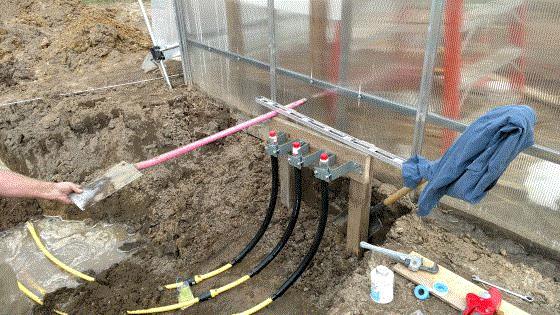 Installing new utility lines is one of the least glamorous parts of new construction,
but it's what makes winter farming possible.
Heating is another major consideration, particularly for farms in northern climates like ours. Trust me, this is a big one and you want to make sure you’re not overextending your service or pounds of pressure, because during a prolonged cold snap this is where things can (and will) fail.
So how do you start to assess your needs? To start, natural gas demand is commonly calculated using British thermal units per hour (BTU/hr), which describe the rate at which heating equipment consumes energy.
Start by identifying the BTU rating of every heater you currently operate and any additional heaters you plan to install. Be careful to distinguish between input and output ratings, because the input rating represents the amount of fuel the appliance consumes.
For example, six greenhouse heaters rated at 50,000 BTU/hr input each would create a combined maximum connected heating demand of 300,000 BTU/hr if all six were operating at the same time. But understanding your heating requirements is more than just adding up heater ratings.
This University of Florida IFAS Extension ARTICLE is a great foundation for estimating greenhouse heating needs. Greenhouse heat loss is influenced by a multitude of factors such as dimensions, type of poly, desired base temperature, and outdoor winter conditions. These calculations are especially important when choosing heaters for a new structure.
Once you've determined your anticipated heating demand, the next step is to understand how that translates into natural gas consumption. This Mississippi State University ARTICLE explains that natural gas contains approximately 1,000–1,200 BTUs per cubic foot depending on the composition. Using 1,000 BTUs per cubic foot as a preliminary planning estimate, a heating system requiring 300,000 BTU/hr would consume approximately 300 cubic feet of natural gas per hour when operating at full input.
BTU/hr ÷ BTU per cubic foot = Cubic feet per hour (CFH)
Start evaluating your existing infrastructure by identifying the model and capacity rating of your gas meter, reviewing the input ratings of all connected gas appliances (heaters and water heaters), and determining the additional demand associated with your new expansion. Meter identification information may be visible on the exterior of the equipment. When in doubt, talk to your gas provider.
Your meter's rated capacity doesn't necessarily tell the whole story. Natural gas delivery also depends on service-line capacity, delivery pressure, regulators, and the size and configuration of downstream piping. (Spoiler alert: If you change the gas pressure to your meter, all your regulators need to be changed.).
For our expansion, evaluating the heating requirements of our additional greenhouse space meant paying for a new gas line. Tater and I decided to pull a larger 2-in. line to allow for future expansion; it’s important to budget this into your project. Even if your existing meter appears large enough, your gas provider will need to confirm whether the overall distribution system can support your anticipated load.

Understanding Consumer Confidence
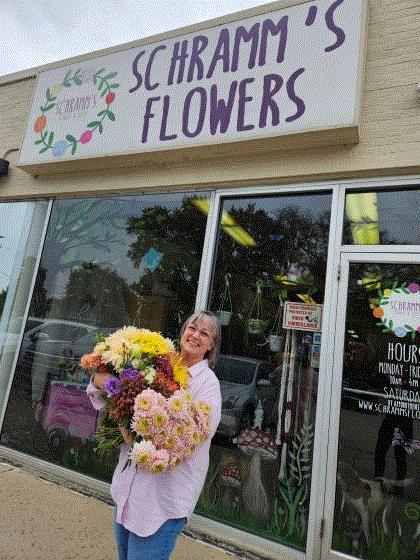
Tater and I cherish our relationships with all of our customers and we're prepared
to ride the waves with them if needed.
As we prepare for our new greenhouses expansion, Tater and Team Forget Me Not have been busy planning for what we hope will be a beautiful spring growing season. We ordered an incredible assortment of anemones, ranunculus and butterfly ranunculus last March, with the expectation that demand for locally grown flowers will remain strong next spring. It's an exciting investment in the future of our farm, but it also requires a considerable amount of faith in a market we can't entirely predict. A wise old grower once told me, “There is no loyalty in the flower business.” And I imagine it’s even less so when mortgage rates and gas prices are through the roof. Tater and I are placing our bets on what consumers will want—and more importantly, what they'll be willing to spend their hard-earned money on—long before we start cutting the first flowers.
With rising gasoline prices, persistent inflation and increasing costs of living, Tater and I have found ourselves wondering, "Will the demand actually be there next spring?" Flowers are a beautiful part of people's lives, but for many consumers, they're also a discretionary purchase. When household budgets become strained, items that aren't considered essential may be among the first expenses to be reconsidered. But I still believe flowers are an “affordable luxury,” and while people may not go on a five-day cruise, they will hopefully still buy a weekly bouquet from their favorite florist.
Fortunately, there are several economic indicators that growers and other small-business owners can follow to better understand how consumers are feeling about their financial futures.
One of the most widely followed indicators of consumer confidence comes from the University of Michigan's Surveys of Consumers. Conducted regularly since the 1940s, these surveys evaluate how Americans feel about their personal finances and the broader economy and their willingness to make major purchases.
The university publishes three primary indexes: the Index of Consumer Sentiment, the Current Economic Conditions Index, and the Index of Consumer Expectations. Together, these measures provide insight into how households view their financial circumstances today and what they anticipate in the months ahead.
The preliminary October 2026 results offer some interesting insights. The Index of Consumer Sentiment declined to 46.3, from 48.1 in September. The Current Economic Conditions Index fell more sharply, from 50.9 to 44.7, while the Index of Consumer Expectations increased slightly from 46.3 to 47.3. Consumers' expectations for inflation over the coming year also increased to 4.7%, compared with 4.6% in September.
These figures suggest that while consumers are increasingly dissatisfied with their current financial circumstances, their expectations for the future haven't deteriorated at the same pace. It's also worth noting that consumer sentiment indexes aren't percentages of people who feel optimistic or pessimistic, they're standardized measures intended to track changes in attitudes over time. A single month's reading doesn't necessarily tell us whether consumers will stop purchasing flowers, but observing trends over several months can provide valuable insight.
Another useful resource is The Conference Board's Consumer Confidence Index. Similar to the University of Michigan's survey, this monthly report examines consumers' perceptions of current business and employment conditions, as well as their expectations for income, employment and economic conditions over the following six months.
For businesses making seasonal purchasing decisions, the Expectations Index can be particularly useful because it focuses on how consumers anticipate their financial circumstances may change in the near future.
The Federal Reserve Bank of New York's Survey of Consumer Expectations offers yet another perspective. This research tracks expectations surrounding inflation, household income, employment, debt and spending. The New York Fed's September 2026 Survey of Consumer Expectations reported that median expected household spending growth over the next year increased to 5.5%. However, higher anticipated spending doesn't automatically translate into stronger demand. Households may expect to spend more simply because prices are increasing, rather than because they intend to purchase more goods and services. That's an important distinction to understand. Rising consumer spending in dollar terms doesn't necessarily mean consumers are purchasing more products.
So what does that mean for flower farmers? While national consumer confidence surveys provide useful information about the broader economy, they don't necessarily tell us how the floral market will perform. Flowers occupy an interesting position in consumer spending: they're purchased for celebrations, weddings, holidays, sympathy arrangements, home décor and everyday enjoyment. Some of these purchases are tied to important life events, while others are more discretionary.
For growers selling primarily to florists (like us), it's important to remember that our customers are also responding to the spending habits of their customers. A florist may remain optimistic about the upcoming wedding season while simultaneously noticing that everyday retail customers are becoming more price-conscious. This is why I believe it's important to evaluate consumer confidence alongside information from your own business. Start by reviewing sales from previous seasons. Are your customers purchasing the same quantities as last year? Are average order values increasing or decreasing? Are certain products or price points performing better than others? Are customers placing orders further in advance or are they waiting until the last minute?
It may also be worthwhile to examine your customer mix. If your farm is supplying wedding designers, grocery stores and everyday retail florists, each may experience changes in consumer spending differently across their enterprise. Understanding which customers generate your revenue, and how sensitive those customers may be to economic conditions, can help inform production planning.
One of the greatest challenges of flower farming is the amount of time between making an investment and seeing a return. By the time our ranunculus and anemones bloom next spring, the economy may look considerably different than it does today (hopefully for the better).
We can't predict consumer spending with certainty, but we can make more informed decisions by combining national economic indicators with historical sales data, customer feedback and realistic production budgets. As growers, we're used to managing uncertainty. We can't control the weather! Market demand is another important variable to monitor. So while Tater and I remain cautiously optimistic about the beautiful flowers we're preparing to grow next spring, we'll also be keeping an eye on consumer confidence and listening closely to what our customers are telling us. Successful flower farming isn't just about knowing what to grow. It's about understanding who we're growing it for, what they're willing to purchase, and how to position our businesses to thrive even when the economic outlook is uncertain.


Until next time!
Lindsay Daschner (and Tater)
Editor-at-Large—Bloom Beat
Owner—Forget-Me-Not Farms
This email was received by 6,148 of your fellow fresh-cut flower growers!
If you're interested in advertising in Bloom Beat, contact Kim Brown and she will hook you up!