APHIS deregulates chrysanthemum white rust
The USDA’s Animal & Plant Health Inspection Service (APHIS) is deregulating chrysanthemum white rust (CWR), a fungal disease caused by Puccinia horiana, and removing its designation as a quarantine pest. HERE is the full ruling.
This is big news for anyone producing mums—whether cuttings or finished plants. It means that CWR is no longer a death sentence for your crop—no more shipment holds, quarantines or destruction requirements, which have long been a challenge for mum growers due to federal restrictions.
But thanks to industry requests dating back years, APHIS accepted comments on deregulating CWR and they've concluded that because the disease is already established in the U.S. and that growers can manage the disease using available fungicides and other practices, the current eradication-based approach is no longer technically or economically justified.
This is a two-part story: That was part 1. Part 2 is that APHIS will now allow mums (Chrysanthemum spp., Leucanthemella serotina and Nipponanthemum nipponicum) to be imported into the continental U.S. as cuttings and in vitro plantlet from 20 countries, including Belgium, Bolivia, Brazil, Colombia, Costa Rica, El Salvador, Ethiopia, Germany, Guatemala, Kenya, Mexico, the Netherlands, Nicaragua, Panama, Spain, Tanzania, Tunisia, Uganda, the United Kingdom and Vietnam.
Up until now, all (or at least the vast majority) of mum cuttings distributed in the U.S. have originated in Florida or California. It’s worked just fine, as far as I know. But now, producers can—if they want to—produce their cuttings offshore in one of those listed countries and ship them here, no questions asked (other than following all the usual phytosanitary requirements, of course).
The new rule takes effect December 9, 2026.

Mums (continued)
The question is, will any of the main mum breeder/producers—Syngenta, Dümmen Orange, Gediflora, Royal Van Zanten and Floritec (the last two produce the mums for the Ball mums program)—opt to go offshore? We'll have to hear from them about that. But for now Jim Kennedy of Ball Seed tells me that he hears most are at least exploring the idea—Dümmen Orange is considering one of their farms in Guatemala, Gediflora may go to Brazil, Royal Van Zanten and Floritec might use their farm in Uganda (and are also exploring Latin America). Syngenta, the market leader in the category, intends to stay in Alva, Florida. Said Jim:
“[Deregulation] creates another option for production. It doesn’t require one to move offshore; it just gives another option. Syngenta, the market-share leader, intends to stay in Florida. I think that does say something about the strength of the domestic supply chain.”
Jim said to not expect any changes in 2027; if anyone does decide to begin producing offshore, they may start sending sample shipments in 2028.
I asked our resident Hortistician Dr. Marvin N. Miller for some mum statistics and he graciously obliged (these are 2025 stats):
Units Dollar value
Potted mums 9.33 million $42.09 million
Garden mums 58.01 million $258.39 million
Cut mums 811,000 bunches $1.445 million
Explained Marvin: “Garden mums are where it’s at when it comes to mum cutting numbers. I was shocked to realize we no longer have 10 million pot mum pots produced domestically per year.
“Mum cutting prices vary by breeder and, in several cases, by the genetics within a breeder. Garden mum cutting prices tend to list between $0.35 to $0.45 apiece (URC). Pot mum cutting prices tend to run $0.42 to $0.52 apiece (URC). These prices include royalty. Freight is about three cents a cutting or more apiece, where the ‘or more’ can include a substantial freight surcharge right now; freight is on top of the URC pricing. Rooted liners are, of course, higher.
“The trend lines do not appear to be rising, especially once you realize the USDA respondent numbers have been rising in recent years.”
 What better way to illustrate a piece on mums than an aerial view of the 36th annual Barberton (Ohio) Mum Fest! Photo courtesy of Cliff Franks and Buckeye Drones.
Marvin said he doesn't see a big price savings from moving mum cutting production offshore.
“What moving offshore might do is ease the labor availability issue right now, but labor at our offshore facilities, especially when all of the benefits of medical care at the farm, childcare at the farm, meals at the farm, etc., plus transportation to and from the farm are included is really not that much of a savings. (You can ask the Colombian cut flower producers about that! They’ve just absorbed huge double-digit percentages of minimum wage increases within the last year.) Add to this the freight (have you bought a plane ticket lately?) and tariffs and you might be paying more for an imported cutting today than for one produced domestically."
I think it goes back to what Jim Kennedy said: Options. One Florida hurricane or California earthquake could really ruin supply for a time. Then again, that’s been the case for decades and the mum industry has done alright. And we’ve also gotten to a point (especially during and just after the pandemic) when we seemed to be wishing for a return of a domestic supply chain.
Any mum growers or producers or breeders want to weigh in on the pros, cons, benefits and downsides of onshore vs. offshore? Do so HERE.

In memoriam: Bob Barnitz
This news saddens me, but I know he had a good and long life: Robert W. “Bob” Barnitz, patriarch of Bob’s Market & Greenhouses of Mason, West Virginia, passed away October 5 surrounded by his family. He was 94.
Bob was born in 1932 in Letart Falls, Ohio, the youngest of eight children. After high school and one year at Ohio State University, Bob joined the Air Force, where he served during the Korean War. His service took him around the world, including time spent in Japan and Guam.
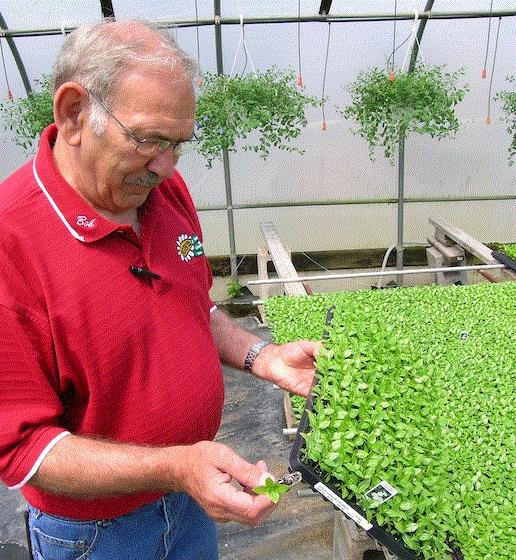
Bob in 2004, showing off his excellent plug crop.
In 1970, Bob and his wife, Corena (who passed in 2021), founded Bob's Market & Greenhouses, Inc., which became a well-known grower and retailer in the Southeast. His five sons—Bobby, Rick, Scott, Jeff and John—all have CDL licenses and any one of them (or Bob) might show up with your delivery.
In the 1980s, with prompting from his sons, the family began growing bedding plant plugs for their own use. The plugs were so good, Ball Seed convinced them to become a plug supplier. Bob may not have had a hort degree, but he developed a knowledge of seeds and plugs that would rival anyone and that turned Bob’s into a renowned plug supplier for Ball Seed, serving the likes of Bell Nursery. Today, Bob and Corena’s sons run the business, as do the third generation—they have 15 grandchildren—and there are 24 great-grandchildren to follow in his footsteps.

My memories of Bob
What a gracious man! Look up “salt of the earth” in the dictionary and you’ll find Bob’s picture. I first wrote about Bob’s in the August 1996 GrowerTalks for a story I titled “Is the Mid-Sized Grower Dead?” (the answer, of course, was no). But my first visit was 2004, when I spent a day with Bob, first in the greenhouse and then visiting his two local retail nurseries, where I saw first-hand his care for the crops AND the customers. And I think the customers loved him just as much as he did them.
When I heard the news of Bob’s passing, I reached out to his sons Bobby and Scott to offer condolences and to gather information for this obituary. Bobby had this to say about his father:
“Yes, he was ‘one of a kind,’ for sure. His love of family and his thoughts on how you make a business successful will always live on. His thoughts on providing quality, integrity, service and treating your employees like family will be his legacy.”
Added Scott, “He was as genuine as they came! He was the guy that would put in 80 hours a week and say that he didn’t have a job because he loved what he did so much. We are counting our blessings for having him as long as we did and for the blessing of getting to work (or have a career) with him.”
Then he added this—which made me feel good:
“Thank you for all the visits and interactions you had with him and us, as he always enjoyed sharing his knowledge and thoughts of our industry with you. He always believed we had a very special industry with a camaraderie between growers to share information freely without reservation, as he was grateful for that in the early years of the business. He was always willing to share with anyone what we did and how we did it.”
That’s the truth. Bob kept nothing secret. And during my last visit to Bob’s, in 2023, traveling with Bill Calkins, tech specialist Nick Flax and videographer Osvaldo Cuevas to shoot some technical videos amongst their plugs, sowing lines, seed storage and the like, there were no secrets at all—we had the run of the place. Bob’s kids and grandkids share his philosophy, meaning the business—and the industry—is in good hands.

At Ball for Fall 2026
My Midwest reporter, Jen Zurko, was onsite at Ball HQ for the latest event in The Gardens At Ball. Here’s her report on “Ball for Fall 2026”:
On Friday, October 2, Ball Seed held its second annual Ball for Fall event featuring comparison mum trials and education. The event was held over two days last year, but this year, they decided to hold it over one day.
I was worried that the weather wouldn’t cooperate since it was raining cats and dogs for two days straight right before, but October 2 ending up with beautiful, sunny fall weather.
Jessie McMillin, Ball Seed’s product manager for mums, said that they had about 200 people registered for the event to see the more than 200 mum varieties out in the gardens. There were also comparison trials of other fall favorites, including pansies and ornamental kale.
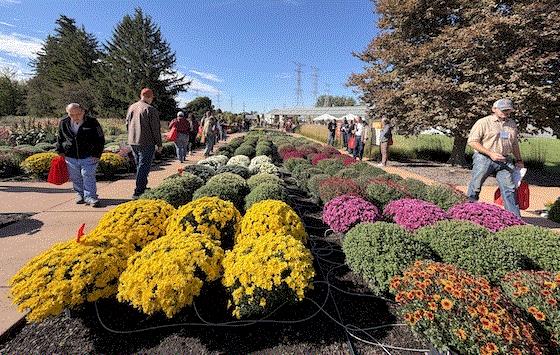
During her welcome intro, Jessie ran down the details and care regime that Gardens Horticulturist Landon Gibbs and his team applied during the grow-out: 1 plant per pot; stuck Week 21, transplanted Week 24; no pinching and no PGRs were used. “So it’s a true trial,” said Jessie.
In the beginning, they used 20-10-20 fertilizer at 250 to 300 ppm. Then about three-fourths of the way through in July they switched to 14-0-14 at 250 to 300 ppm all the way until the plants started showing color.
Unfortunately, some varieties were showing some lodging after two full days of rain. (Then again, it is a trial!)
There were also two education sessions offered: Marcus Jansen presented on “Plants for the Fall Landscape,” and Dr. Nathan Jahnke did a tech talk on “Sick of Sick Mums?”
Here are five varieties that were highlighted at the event:
Sweet Potato Pie Bronze
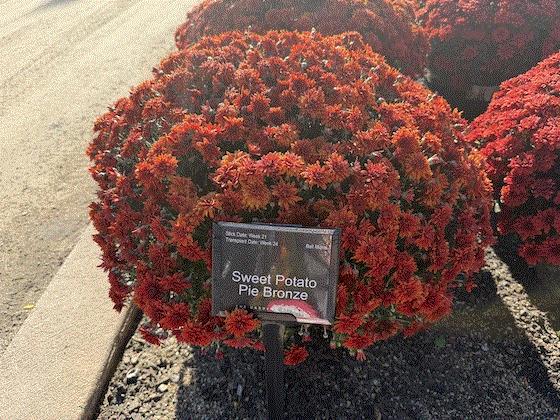
Mid-season blooming mum with warm bronze flowers covering a rounded, European-style shaped plant.
Ember Stripe Yellow
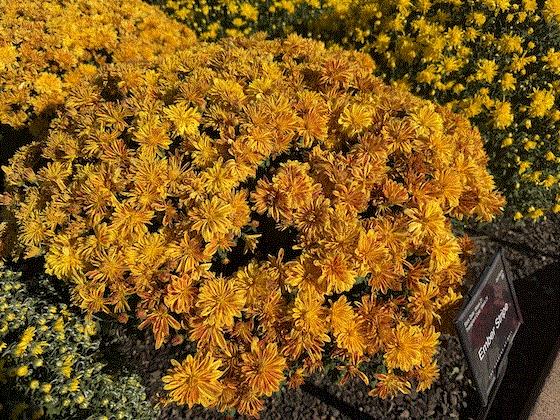
This mid-season specialty mum features red stripes down the center of each yellow petal, maturing to a solid bright yellow. Ball says the stripe development is best when Ember is grown outdoors in full sun.
Mesa Purple
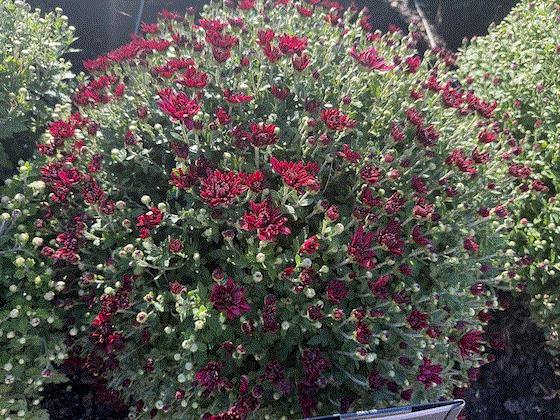
This is a late variety, so it wasn’t showing its full glory yet. Ball says it’s a reliable, medium-vigor selection for high impact.
Howdy Yellow
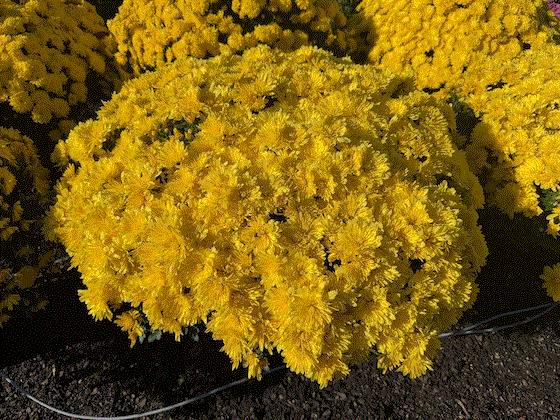
An early season mum with bright yellow blooms that holds its color all season.
Axios Family
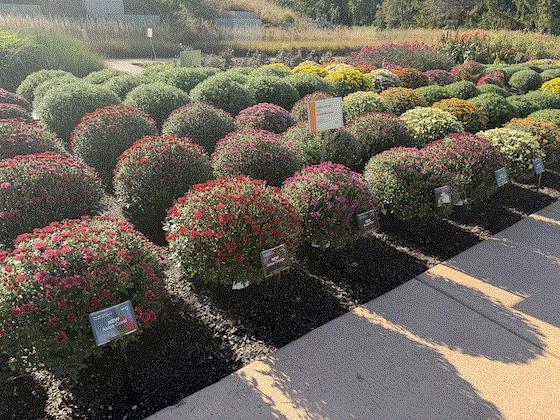
Introduced last year, Axios ia still a primary focus for Ball's mum program, said Jessie. Strong and reliable, all seven cultivars in this mid-season family have medium vigor and lots of blooms. A true family, so you can mix and match colors.
Ball Tropicals catalog available

Something from Ball besides mums would be tropicals, which you can learn more about in the new Ball Tropicals catalog now available online. It features loads of finished tropical patio plants and foliage items, some exclusive to Ball, like ThaiSpice Curcuma.
There are Tradewinds Hibiscus, ferns, displadenia—all sorts of Florida tropicals from Florida Tuxedo Plants of Miami, Island Tropical Foliage, Railroad Nursery, Rucks Citrus Nursery, Classic Caladiums, Heart of Florida Greenhouses and more. All can be booked through WebTrack or with your Ball sales rep.
View and download the new Ball Tropicals catalog HERE.
Update on Emerald Coast
Last time, I told you that Emerald Coast Growers had sold a majority share to Green Street Growth, a private equity firm. Only, I didn’t call them that, I called them “venture capital.”
That was incorrect. Green Street Growth is a private equity investor.
Not that calling them a venture capitalist was an insult or anything—it’s just a different category of investor. “Venture capital” is reserved for start-ups and young companies—new ventures. Whereas private equity generally invests in established businesses with a solid track record—like Emerald Coast.
Now we ALL know the difference between the two.
Also, when I went to press last time I hadn't heard back from either the Babikows on the “Why sell?” question or the Green Street folks on the “Why horticulture?” question. Since then, I’ve received emailed answers from both.
From Paul Babikow: “The family didn’t take this partnership decision lightly. One of the challenges for a business, even one that has spent 35 years steadily growing, is finding the capital and resources to make bolder expansion moves. We know the industry and are proud of the team we’ve built. What we sought in a partner was someone willing to trust that knowledge and this team enough to invest in the future and learn what makes this industry so special.”
From Ryan Coon and James Deng, co-founders of Green Street Growth: “We look for great businesses with strong teams, loyal customers and durable demand, and horticulture checks every one of those boxes. Emerald Coast Growers stood out immediately: a 35-year track record, a loyal customer base, and a culture built on doing right by people. The more time we’ve spent in the industry since, including at Cultivate in Columbus this July, the more convinced we are that it’s exactly the kind of space we want to be long-term partners in.”
Oh, one last correction from my previous write-up: Paul Babikow’s great-grandfather William E. Babikow started a nursery in Baltimore in 1875, not 1975 as I wrote.
But I suspect you recognized that as a typo. Doggone the 8 and 9 keys being so close together!

Congrats to Zoltan! (And also to Joey!)
It’s never too late to congratulate a friend on a promotion—such as Zoltan Kovacs, who was recently named Director of ThinkPlants, which brings unique genetics, especially perennials, to the North American nursery and greenhouse market.
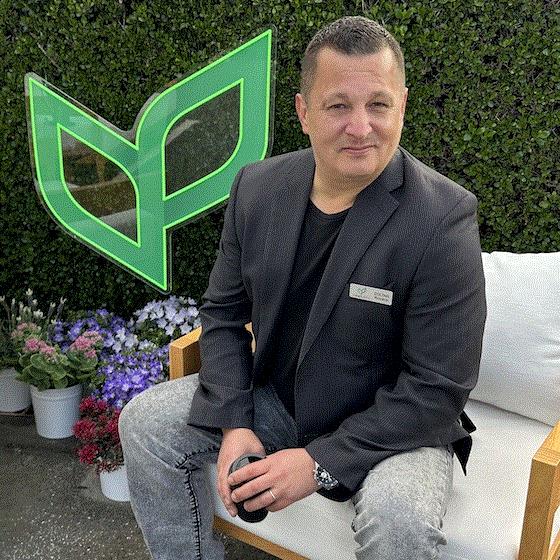
Zoltan replaces Joey Wiseman, who's taken a key position as head of North American sales and operations for Unex Inc., a Dutch exporter of bareroot perennials and bulbs. And so I should congratulate her, too!
Said Zoltan in the press release, “I’m excited to lead the ThinkPlants team and build on the strong foundation that has already been established. ThinkPlants offers an impressive and diverse selection of perennials, and I’m looking forward to working with our partners and customers to continue growing the program.”
Zoltan was also a GrowerTalks Young Grower Award winner in 2008—meaning we knew he was destined for big things! (You can listen to/watch my podcast with Zoltan HERE.)
As for Joey’s new gig with Unex, she stated, “Bareroot perennials have always been a passion of mine, and Unex’s diverse selection of perennial products, combined with their quick production times, is unsurpassed in our industry. I have known the team at Unex for many years and have always felt this would be a great place for me to contribute. I’m excited to begin this new endeavor and make an impact that supports our wide base of grower customers.”

An opportunity in ilex from Midwest Groundcovers
Here’s one for those big-idea people out there: The chance of a strategic partnership with Midwest Groundcovers, growing and marketing a big selection of ilex (holly) genetics suited for holiday sales and beyond.
There are two lines: the Merry Christmas Holly brand and The Peter Orum Collection (named for the late founder of Midwest Groundcovers). There are as many as 50 proprietary varieties in the collection, among them cold-hardy I. rugosa × aquifolium crosses suited to USDA Zone 5—well beyond the range of traditional English holly.
“The collection spans multiple growth forms and includes confirmed red-berried female selections, supported by production know-how developed over many years of dedicated horticultural work,” said the press release on the topic.

Peter walking his holly fields in Michigan, seeking out the best selections.
“Peter’s dream was always to see these plants take root in North America and our responsibility now is to make sure that work reaches its full potential,” said his daughter, Christa Orum-Keller, Chairman of the Board of Directors of Midwest Groundcovers & Midwest Trading. “We're taking a thoughtful, measured approach to identifying the right partners who can carry his vision forward—whether that means growing the brand, licensing the genetics or some combination of both.”
As part of this evaluation, the company has identified several potential paths forward—among them licensing select ilex genetics to qualified nursery partners, transitioning the consumer-facing Merry Christmas Holly program to a partner with holiday retail expertise, and continuing select propagation and liner-supply collaborations. Midwest Groundcovers expects to explore these options over time, with no fixed timeline for a decision.
Midwest Groundcovers said they welcome "confidential conversations with qualified nursery brands, growers and strategic partners" interested in learning more about these opportunities.
Interested? Reach out to Mary Stewart, consultant and board member of Midwest Groundcovers, via EMAIL.

Finally …
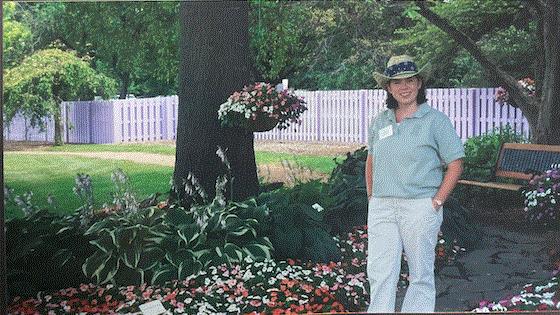
It’s fun to take folks down memory lane—folks like Kate Terrell, now owner and president at Wallace’s Garden Center in Iowa. But some time back, she was getting her professional career kicked off as an intern at Ball and that piece of fence brought it all back.
Wrote Kate, “Reading your last e-news was a funny reminder of the lavender-purple fence at the Ball Gardens. I remember doing tours as an intern and answering questions about it. I dug up an old intern pic with that purple backdrop. So cool that you kept a piece of it. Thanks for the blast from the past.”
Meanwhile, Hortistican Dr. Marvin N. Miller told me he recalls that the paint color used for the fence was “Island Paradise,” although he can’t recall the supplier. However, a search revealed nothing by that name that’s not more of a blue-green tone. About 10 minutes of diligent AI digging brought up “Purple Paradise” from Behr that looks a bit deeper … but the fence would certainly have faded in the sunlight.
Perhaps we need a swatch from those purple leather pants to really know for sure ...


Feel free to email me at beytes@growertalks.com if you have ideas, comments or questions.
See you next time!

Chris Beytes
Editor-in-Chief
GrowerTalks & Green Profit
This e-mail received by 34,239 loyal readers!
Thanks to my loyal sponsors, who help me reach the 31,506 readers of Acres Online in more than 60 countries. Want to be one of them (a sponsor, that is)? Give Kim Brown a shout and she will tell you about our many advertising opportunities.