The Altman Fellows Program
I always like sharing my travels with NLI readers. I've been quite fortunate in my career that I've had the opportunity to travel far and wide exploring different horticulture operations. That being said, this past spring has been wild. I think since mid-January, I probably haven’t had more than a single full week in the office! While I completely enjoy every second of exploration, some trips are definitely more insightful and rewarding. That's why I'm thrilled to be able to share highlights from one of my more interesting trips this spring.
I just got back from visiting Ball's Las Limas production facility in Nicaragua. This is one of the major sites that provides unrooted cuttings for flower growers across North America. It was an absolutely incredible trip and I'm so thankful that I was invited and had the opportunity to experience this incredibly productive and streamlined facility. However, before I get into the trip, I want to share a bit more about why I had the opportunity to visit.
About a year and a half ago, I was asked if I would be interested in joining a new early career faculty cohort that was being formed through the generous support of Ken Altman. Ken has been an avid horticulturist and innovator in the horticultural industry for a long time. He's also a generous philanthropist, who likes to support good horticulture and good people. Ken, along with his friends Drs. John Dole (North Carolina State University) and John Erwin (University of Maryland), decided they wanted to establish a cohort of early career faculty who focused on different aspects of the horticulture and floriculture industry. Immediately, the idea sounded very fun and exciting. Even more, it sounded like a great opportunity to make amazing connections, build lifelong friendships and collaborations, and engage in something unique within our academic community. Of course, I jumped at the opportunity.
The group was formed and selected five faculty representing different skills and strengths that could come together and build a strong team. While the idea was to get expanded geographic representation, it just so happened that the five candidates selected were in the southeastern U.S. (there really must be something in the water down here!).
The team was assembled and since then we've had several meetings and the opportunity to visit different production operations to learn first-hand and experience unique horticultural settings. In addition to myself, the team also includes Ryan Dickson from the University of Arkansas, Melinda Knuth of North Carolina State University, Leynar Leyton, a colleague of mine from the University of Florida, and Eric Stallknecht from Virginia Tech University. Each of us brings a different mindset and background to the group and that makes for a fun setting.
Part of our program directive is to develop large, scalable projects, and as we develop these projects I'll be sure to share them with you. For now, I want to focus on another of our goals—visit exciting and new production facilities and find ways to support the stakeholders, sharing ideas and opportunities to improve efficiency, quality or sustainability. We also like to solve problems! This focus gave us the opportunity to tour Las Limas and what an amazing experience that was.

Visiting Las Limas
In all my travels, I've never been to Central America and our team immediately jumped when the invitation was first presented. Las Limas is one of the most productive facilities in the hemisphere! None of our group had ever been to anything like this before and we were absolutely not going to sit this one out.
For those not aware, Ball FloraPlant opened a facility just outside of the mountain town of Estelí, a few hours drive outside of Managua, Nicaragua. The site opened roughly 10 years ago when much of the non-rooted cutting production from Ball’s color division was moved from a farm in Costa Rica. The site was selected for several reasons, including good water, good weather and a lot of light—everything you need to produce a lot of plants quickly, and they certainly do that. This is a state-of-the-art facility that sits on 100 acres with much of that footprint occupied by greenhouse space, located over 2,700 ft. above sea level.
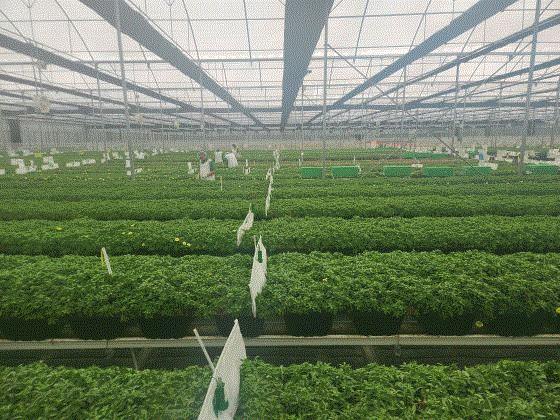
The first day we worked with the logistics and programming team. Typically, when we go on a logistics tour, I get sidetracked by plants, irrigation and substrates. It can be hard to concentrate. Not here—the coordination and streamlined nature of this facility was impressive. There was almost no automation—everything was done by hand with care. Cuttings were transported to a cooling room where they were slowly brought down to temperature, all within 30 minutes of being cut. The cuttings were boxed and put on a plane, so that within 48 hours of being cut, they're delivered to growers all over North America. That's impressive and the timing is critical. The logistics to make that happen and maintaining over a 99.9% fulfillment rate is crazy. What's even more, they can process over 2.7 million cuttings a day!
The cutting quality is incredible. They plant out trays of cuttings every week to check for quality control. They know exactly when and how to take the cuttings so that the customer in the U.S. gets uniform and high-quality plant material.
Sanitation was also at the top of their priority. From cutting direction to worker areas, they took their cleanliness seriously. To enter the facility, we had to thoroughly was hands, remove any jewelry (no watches, sunglasses, etc.) and wear a lab coat. That was just to enter the facility. As we entered or exited any single chamber, we had to swap out a smock over our lab coat with a clean one. Plus, every 10 minutes a chime goes off throughout the facility where every single person sanitizes their hands. (I bet you thought your sanitation practices were thorough.) I've likely never had cleaner hands than when I was in that facility. By the time we were finishing up, I didn’t even realize I was doing it!
Production is also down to a science.
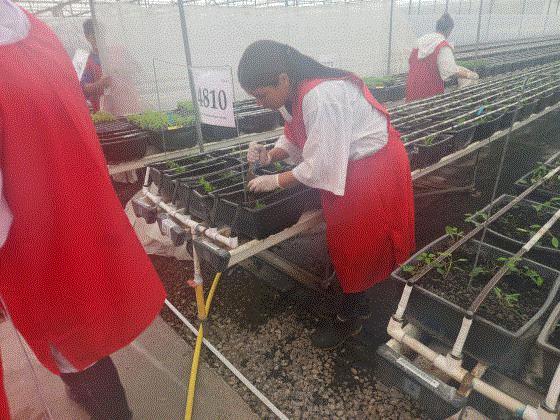
The second day was our horticulture day. We learned how they manage light and environment. Notice I didn't say control. They've found production methods that are perfectly dialed into the environmental conditions in the area. They also recapture and reuse all of their water. Of course, my favorite part was the growing media—or lack thereof. Everything in the facility is grown in 100% volcanic rock. It's like a full hydroponic system. These volcanic rocks are sourced locally from a nearby volcano. After each production cycle they pull the plant material, clean any major roots and steam the media in the container to sanitize. There is, of course, some loss and they need to be topped off each cycle, but overall, the same media has been in the same tubs for 10 years! Still as productive as the very first day.
While there's so much to say about a trip like this, it wouldn't have been nearly as fun or insightful without my cohorts. So I asked them each to share a brief message on what they found most insightful and their biggest takeaways from the trip. That way you don’t have to hear me drone on and can get some other insights.
Eric Stallknecht—Virginia Tech
While we're often thinking about our own backyards, or the stakeholders in our own states, that's ultimately only a fraction of the interconnected global horticultural industry. As a group missioned to support the floriculture industry in North America, it takes understanding the international connections to put everything into perspective, and there's likely no better group than Ball Horticultural to inform that perspective. Ball graciously allowed us to visit their Las Limas facility in Estelí, Nicaragua, and educate us on their vegetative cutting production servicing North American markets. The process and the precision of the facility was nearly perfect, probably best described as a symphony.
It would be easy to assume that a greenhouse in Nicaragua would face different challenges than we face in North America. That might be a little true, but plant physiology doesn’t change depending on where you are and cultural practices that need refinement exist across borders. Whether that relates to fertility management, sanitation practices, PGR use or greenhouse environmental control, there's still a lot to work on to improve how we produce plants. The horticultural industry is experienced and has tremendous expertise, still, refining cultural management needs to be constantly addressed as new variety releases bring new issues or new technologies are on the cusp of adoption.
Ryan Dickson—University of Arkansas
Gaining firsthand insight into stock and cutting production at Las Limas was an invaluable experience and a true educational milestone for our team. We were all struck by the seamless integration of technical precision, innovation and rigorous quality control standards, all of which are clearly underpinned by the dedicated people who make Las Limas a world-class operation. The knowledge we gained regarding cutting supply and cold chain management will allow us to better appreciate the high-quality products coming out of these facilities while helping us guide our research, teaching and outreach in more meaningful ways for the nursery and floriculture industry. By understanding the intricacies of the production process at the source, we're better equipped to support U.S. growers through impactful data and informed guidance moving forward.
Melinda Knuth—North Carolina State University
Visiting Las Limas was an incredible experience. I love seeing the global connectivity of our industry. It puts into perspective how intricate and complicated the ornamental horticulture supply chain is. The passion the Las Limas team had for providing quality, consistent cuttings for growers to use and, ultimately, for the end consumer to enjoy was inspiring. I'm grateful for being able to see the facility and make connections with the team.
Leynar Leyton—University of Florida
When you see calibrachoas and coleus at home and in the landscape, it's hard to believe they originated from unrooted cuttings, cut by hand in Nicaragua. Even more impressive, from the moment it was cut by hand, it took 30 minutes for that cutting to be placed in a shipping box and only 24 hours to reach the United States. The level of care and precision that we observed at Las Limas in Nicaragua was impressive. It was inspiring to see a team of engineers, horticulturists and plant people working hard to provide the best product to their customers. We often talk about how globally connected our industry is; I'm grateful I had the opportunity to see it and experience it first-hand with the Altman Fellows and for the connection we made with the Las Limas and Ball Teams.
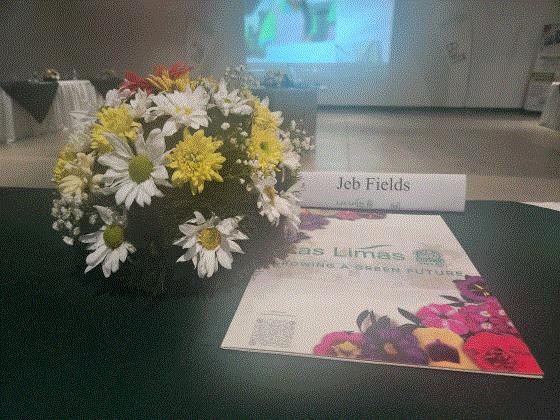
In the end, this was a trip I will remember for a lifetime and it wouldn't have been possible without several people who truly cared and wanted to make this a memorable event. I cannot thank the team at Las Limas enough. There were so many individuals who shared their knowledge, insights and ideas with us. The team definitely rolled out the red carpet, so to speak, and I have to admit that the level of expertise in this facility was outstanding. I truly appreciate your time and effort to host our group.
I also want to thank Jim Kennedy and Nathan Jahnke of Ball Horticultural who coordinated and scheduled everything on our trip. We felt like rockstars being chauffeured around and having everything organized ahead of time. You certainly know how to host a meeting.
Finally, I, of course, want to thank John Dole, John Erwin and Ken Altman for having the foresight, drive and passion for establishing this cohort, which continues to provide so many opportunities for our group. It means so much.

Sign up for the 2026 Southern Garden Tour
If you’re in the southeastern U.S., you won’t want to miss this three-day, three-garden tour. The Southern Garden Tour is an annual mainstay for southern flower trials. Maybe not as celebrated as the California trials, but these trials are critical to moving plant material forward in the industry. The hot (sometimes oppressively) weather conditions in the southeastern U.S. lends itself for a perfect plant trial experience. One of our mottos from my time managing trial gardens is if it can make it here, it can make it anywhere!
With this in mind, three premier trial gardens across the southeastern U.S. will open their doors for attendees this June 2-4. The tour begins at young’s Plant Farm in Auburn, Alabama, before heading to the University of Georgia in Athens, Georgia, and finishing up at Metrolina Greenhouses in Huntersville, North Carolina.
Each day you can visit a new site where growers, educators, plant breeders and plant enthusiasts will gather to evaluate hundreds of new variety introductions in their respective open houses. While industry members are able to visit each of these trial gardens throughout the summer, going on the official tour ensures that you'll get full attention and access to the plant material. Plus, who wouldn’t want to join the party with friends at the same time?
“The Southern Garden Tour often gives horticulture industry professionals their first opportunity to observe emerging plant genetics and objectively evaluate their performance in the heat and humidity of three intense Southern climates,” said Dr. Mark Yelanich, director of research and development at Metrolina Greenhouses. “It’s also a valuable opportunity to network and connect with industry peers, while experiencing the design and beauty of some of the premier trial gardens in the Southeast.”
Industry members can register for each stop of the Southern Garden Tour at the
event’s website, which provides information on all three trial garden sites, along with travel resources and event details.

HRI Scholarship Program Applications Due in May
Calling all students! The Horticulture Research Institute (HRI) has several scholarships for students interested in nursery and greenhouse production, landscaping, garden center businesses, ornamental breeding, or anything ornamental horticulture-related. In years past, students would have to pour through several different scholarships to find which they're eligible for. However, for the past couple of years, the HRI Scholarship Program has coordinated their efforts to allow students to submit a single application and be eligible for dozens of different scholarships. There's literally no reason not to apply.
Applications for the HRI Scholarship Program are due May 31. Students with career aspirations within the environmental and ornamental horticulture industry are encouraged to apply. There are scholarships for undergraduate and graduate students. Some scholarships are for students in specific states, while others are more broad. The point is there are many opportunities to support the next generation of horticulturists, and we hope to get as many applications as possible. Students can find more information and submit their applications
HERE.
One of my favorite scholarships is the Sydney B. Meadows Scholarship. A few years ago, the Sidney B. Meadows Scholarship Fund partnered with the HRI Scholarship Program to make it even easier for students (and those of us who write recommendation letters!). This prestigious scholarship, which has been awarded since 1989 and provided over $670,000 to students throughout the southeastern U.S., just increased its annual award. Of course, your HRI Scholarship application will make you eligible for this award, too—what a deal!
You can find out more about the Sidney B. Meadows Scholarship fund
HERE.

Farwest Announces Keynote Speaker: Dr. Charlie Hall
Every August, green industry members from around the country gather in Portland, Oregon, to attend one of the premier horticulture trade shows in the U.S. Farwest has been a mainstay trade show for years, boasting the biggest and greenest industry trade show in the west.
Registration is now open for this year’s show, which is scheduled for August 26–28. As always, the show will be held in the Oregon Convention Center, conveniently located in downtown Portland. You can register to attend
HERE and take advantage of all the exciting networking, educational opportunities and showcases. You may also want to check out their tour schedule and grab a seat as soon as you can—they often sell out as we approach conference time. The early bird gets the worm, as they say.
Another exciting opportunity is this year’s keynote speaker, Dr. Charlie Hall. If you’re not familiar with Charlie, you're in for a treat. He's a profound speaker and the industry’s favorite economist. This year, Charlie will kick off the trade show with his insights on “Overcoming Decision Paralysis in the Midst of Uncertainty.” As the entire industry is feeling pressure of a changing economy, how can we strategically respond and make confident decisions? This seminar will help navigate the uncertainty as Charlie shares practical insights to help protect what you've built. What a great way to kick off the show.

AFE Young Professionals Webinar Launch
Whether you’re just getting your foot in the door or somewhat established, anyone in the earlier stages of their career can benefit from as much support and connection as they can get. Through the Young Professionals Council (YPC), the American Floral Endowment (AFE) has aimed to assist early career folks who want to get ahead in their career.
In that spirit, the YPC is launching a new webinar series focusing on professional development and leadership, made possible with generous support from the Demaree Family Floriculture Advancement Fund. The series will consist of five webinars that will run through November.
The new program kicks off next Thursday (April 23) with an Industry Leader Panel called “Stories, Challenges & Advice for Young Professionals." This panel will bring three experienced leaders together to share their career journeys, key lessons and perspectives on the evolving industry. You can join in live at 1:00 p.m. Eastern next Thursday or watch the recording at your own pace.
Make sure to register
HERE and keep a look out for upcoming sessions.


Think big,

Jeb Fields
Editor-at-Large
Nursery & Landscape Insider
This has been received by 31,202 of the hardest-working horticulturists in show business!
If you're interested in reaching more than 31,000 readers who eagerly await every Nursery & Landscape Insider (and surely read every word!), contact Kim Brown ASAP and she'll hook you up.