GroMoreGood Grassroots Grant
If we know anything for certain, it's that time outside and in the garden generates tons of benefits for kids (and adults), both physically and mentally. (And if you want to look at it through a sales lens, it's probably also beneficial for plant sales 20 years from now.)
Which is why, if you know of any local youth gardens, or know someone trying to start one, you want to point them in the direction of
Kids Gardening. This nonprofit has teamed up with the Scotts Miracle-Gro Foundation to hand out GroMoreGood Grassroots Grants. They’ll be awarding a total of $100,000 to 120 programs to either start or expand their youth gardens or greenspaces in 2026.
Winners will be selected based on demonstrated need and program impact. Programs may receive $750 to $1,500 in funding, with the option to apply for additional award categories for those that have higher financial needs, those serving a majority of LGBTQ+ youth, and those led by people of color that serve a majority of youth of color.
Deadline to apply is January 30, so act fast!
For full details, head
HERE.

Organic Soil Guide
Northeast Wisconsin Technical College just released an online guide called
Soils: A Practical Guide for Organic Farmers and Gardeners. Written by Valerie Dantoin, it covers critical aspects of everything relating to soil, including testing, fertility management, composting, erosion prevention and integrating organic practices that foster long-term soil vitality.
Billed as something that’s applicable to both commercial growers and gardeners, the guide was also developed for use by high school and technical college teachers to expand their organic agriculture knowledge and teaching tools.
If you’re looking to do a little lifelong-learning yourself, this online guide might be a good place to start. You’ll find sections on soil chemistry, organic matter, carbon flows and nutrient cycles, as well as how to translate those principles into growing action. There’s even a section on soils for urban farms, gardens and green spaces.
The guide was developed thanks to the help of a grant from SARE (Sustainable Agriculture Research and Education).
View it
HERE.

What Do Consumers Want?
Proven Winners just released a retail survey that asked consumers that very question. They gathered responses from 7,500 consumers who purchased plants within the past two years. You’ll probably want to view the whole report HERE.
The question I honed in on was “What type of plants would you like to see more of in your area? Predictably, “low maintenance” topped the list at 60%, but right behind that were drought-tolerant plants at 55% and pollinator-friendly plants at 54%. Meanwhile 47% of respondents said they wanted more natives or nativars. Ready-to-plant containers? Only 17% wanted more of these.
It goes to show that habitat-enhancing and low-water plants are fairly attractive qualities for a lot of consumers, myself included. I’m admittedly a lazy irrigator and our summers are often dry and hot, which means I pretty much do not even consider a plant unless its tag says drought-tolerant.
Nominate a Young Grower (or Retailer)
There’s a lot of young horticultural talent out there, and they deserve recognition. That’s why, for more than 20 years, GrowerTalks and Green Profit have honored the best and brightest with the annual Young Grower Award and Young Retailer Award.
Nominations are now open for the 2026 edition of the GrowerTalks/Ball Horticultural Company Young Grower Awards and the Green Profit/The Garden Center Group Young Retailer Award. Candidates must be under 35 years old and illustrate leadership qualities, creativity and passion for the plant industry. A panel of discerning green industry professionals will select a winner from the top three nominees (which are chosen by the Ball Publishing editors). The three finalists in each award category will be treated like royalty at Cultivate'26, and the winners will be announced at AmericanHort’s Unplugged event Monday evening of Cultivate.
Our Young Grower and Young Retailer Award winners and finalists from 2025. Could you be next?
You can nominate an employee, peer, friend or even yourself! Just remember, applicants must be under 35 years of age as of July 14, 2026 and live in the U.S. or Canada. Application deadline is March 1. Thank you Ball Horticultural Company, BASF, AmericanHort, and The Garden Center Group for investing in the future leaders of our industry!
P.S. Our very first Young Grower Award winner, way back in 2005, was Andrew Britten. The Chris Beytes Podcast has just made its YouTube debut by interviewing Andrew, who is now the Technical Sales Manager – Tropicals & Foliage, for Ball Seed.
Watch it
HERE.

Report from the MT Outpost
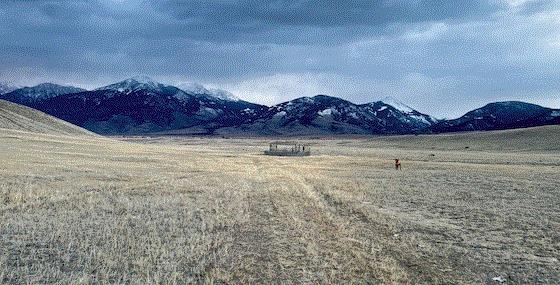
Montanans love to obsess about the snowpack—all for different reasons: they’re concerned about summer irrigation, they want to enjoy snowsports, and/or they equate it with what kind of wildfire season it will lead to. The latter, of course, is more lore than hard fact; while a good snowpack can be helpful, several other factors can conspire to trigger a terrible fire season regardless of a winter's snowfall. I find all of it to be a classic case of taking something highly complex and trying to simplify it into one data point.
Right now, the Montana Outpost is snowless, and it feels wrong, and everyone is going around talking about winter as a disaster (while bracing for it to hit later on, of course). Meanwhile, over in Cooke City, which is also in my county, they’ve been receiving massive amounts of snow for the last two months. Confession: I enjoy holding multiple truths like this.
In the Natural Resources Conservation Service (NRCS)
recent report, their SNOTEL sites show an interesting dichotomy.
1) They’re seeing record and near-record LOW SNOWPACKS in the western U.S. (Though to complicate this, low elevation sites are the lowest, while high-elevation sites are often above average.)
2) They’re also seeing record and near-record HIGH PRECIPITATION.
And so, while I don’t expect the snowpack talk to simmer down any time soon, I do enjoy gathering all these data points—the official ones and the anecdotal ones—because I’m convinced that the more room we make for all the variables, the closer we get to understanding the thing itself.


Until next time,

Jennifer Duffield White
jwhite@ballpublishing.com
This email received by 26,967 loyal readers!
Want to be one of the lucky sponsors who reach those readers of GreenTalks? Drop Paul Black a line and he’ll tell you what a bargain it is!
GreenTalks® is a registered trademark of Ball Horticultural Company in the U.S.