The Heimos poinsettia trial in 4K video splendor
Videographer extraordinaire Osvaldo Cuevas has corrected the color and optimized the audio, and our VIDEO TOUR of the 2025 Millstadt Young Plants/ Hoffmann Heimos Greenhouses Poinsettia Trial is now ready for its international debut!
In it, I visit with all seven breeders represented to learn about their newest poinsettia offerings (actually, in three cases, I play the expert). You’ll see lots of new reds that fit specific niches, an excellent new dark red that almost leans into burgundy territory, some euphorbia types (including an important improvement) and a poinsettia that I would call a Christmas coleus.
Plus, as a bonus for sticking on 'til the end, learn all about bracts from Hortistician Dr. Marvin Miller. Did you know that, botanically speaking, there are nine kinds of bracts? Marvin tells you which one poinsettias have.
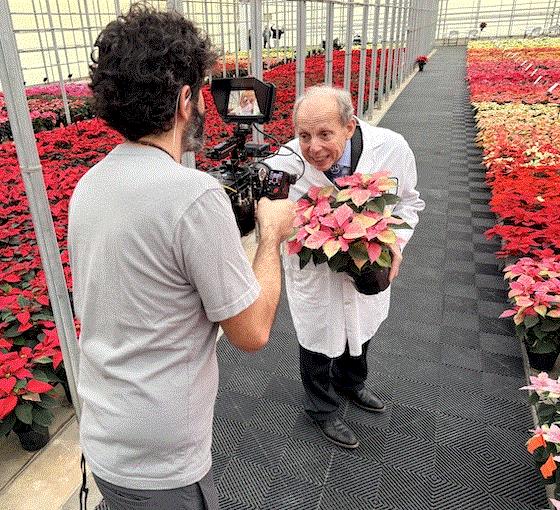
Watch the video HERE. And tell me what you think of Marvin’s Bract Attact video HERE. I’ll be sure to pass your comments along … he loves hearing from his fans!

Poinsettias down under
My friend Scott Franklin, National Sales Manager for Pohlmans, one of the largest growers in Australia (they also have their own IGC), sent a note up to us Yanks in the northern hemisphere about how their poinsettia season is going down south. Remember, it’s Christmastime in Australia, too, but it’s also the middle of summer, with daytime temperatures in the 90s F. Here’s what he had to say about poinsettias in that sort of climate:
Reading your article about growing poinsettias in Florida reminded me of how we go about it here in Queensland.
We do all our own propagation and start with out with own motherstock plants, taking cuttings in the new year to help build the mother stock and then build the plants during the year to then take the 70,000 cuttings required for the festive season. We have similar challenges to your growing season in Florida and we require an automated blackout facility to get the perfect plant.
We have been packing and shipping poinsettia now since the first week of November and have had temperatures around 35 to 38C (95 to 100F). Makes for a challenging, but fun, time!
We grow around 90% red, but do add in a percentage of Tapestry and Red Glitter, along with Princettia Sparkling Rouge, White and Red. The Australian-bred Princettia are very heat and humidity tolerant, and make for a great garden plant. The white is very compact and makes for great combo displays in the garden centres. The Sparkling Rouge allows us to offer something different.
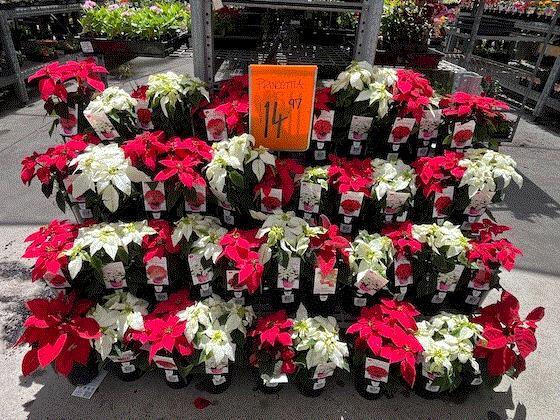
An endcap display of Princettia Reds and Whites in Australia. $15 Australian is about $10 US.
We also grow the Princettia in natural season in winter for June and July sales. We have almost sold out for the year with most stock sold in pre-orders.
The selling season has been good so far, even with the challenges of summer storms and the usual heat/humidity we get at this time of year—just like Florida! But we wouldn’t have it any other way.
Merry Christmas to all!
Thanks for the update, Scott!
It’s interesting that Princettias are a twice-a-year plant in Australia … I know they started out up here as a possible Valentines/springtime offering, which is one reason Suntory avoided calling them poinsettias, but that idea never seemed to catch on, so now Princettias (and the other euphorbia hybrids that have joined them) are considered a novelty form of poinsettia.
But I did not know they were bred in Australia by Bonza Botanicals, a joint venture between Suntory and the distributor/producer Oasis Horticulture. I thought they came from Japan. Scott told me I should ask the breeder, Andrew Bernuetz, for the fascinating story behind Princettias, so I’ve reached out to Andrew to see if he'll tell us more.

Pantone’s Color of the Year 2026
While all the paint companies introduce their own colors of the year, I like Pantone’s because they're in the color trend business, not the paint sales business. And they’ve just announced what we’ve all been waiting anxiously for—their 2026 Color of the Year. Without further ado, it is … drum roll, please …
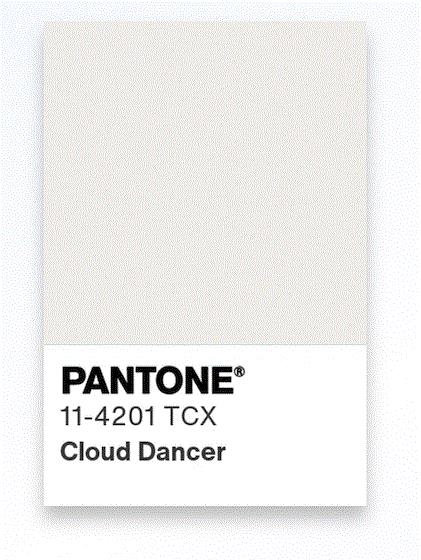
Hmmm ... we used to call that off-white.
Pantone’s color boffins describe Cloud Dancer thusly:
“A lofty white that serves as a symbol of calming influence in a society rediscovering the value of quiet reflection. A billowy white imbued with serenity, Cloud Dancer encourages true relaxation and focus, allowing the mind to wander and creativity to breathe, making room for innovation.”
A few more hints about why they chose the lightest shade since they started the Color of the Year program in 1999:
A Need for Serenity: Amid a constant barrage of digital demands and a non-stop news cycle, Cloud Dancer offers a “refuge of visual cleanliness” and an “architectural stillness” that promotes quiet reflection and well-being.
A Fresh Start: The soft, off-white hue is described as a blank slate or an empty page, symbolizing new beginnings, the chance to disconnect, and the opportunity to rethink priorities and build with intention.
Balance and Versatility: It’s a balanced white with both cool and warm undertones, making it highly versatile for use across fashion, interior design and technology products. This versatility allows it to serve as a supportive background that lets other colors shine or stand alone as a minimalist statement.
Inspiration for Creativity: Pantone frames the color as a quiet tone that sparks expansive thinking, inviting designers and individuals to use their imagination and fill the “blank canvas” with new ideas and approaches.
In essence, the choice of Cloud Dancer is a conscious statement of simplification, intended as a gentle, natural antidote to a frenetic and overstimulated society.
Or you could go for a walk in the woods …
But, hey, I mean, okay, white goes with everything. Pantone shows it with pastels, with shadowy colors, with beverage-inspired tones, with sky colors, with tropicals (which includes the Pantone colors Iris Orchid and Bright Marigold, giving you some use hints).

Speaking of trends … TPIE’s keynote will be a blockbuster!
I really enjoy helping plan the Tropical Plant International Expo (TPIE) each year. I’ve been on the committee since … oh gosh, maybe 2010? … and so the upcoming show January 21-22 will be the 15th I’ve been involved with (although I’ve attended many more than that).

Anyway, a highlight of the event, and one we work very hard at, is the opening morning keynote. TPIE draws a big crowd of important growers and retailers, plus a big international audience, and we want to inform and inspire everyone. Entertainment is fine, but we pride ourselves on finding speakers that leave you with actionable ideas and this year we’ve got a doozie!
She is Jill Hawkins, founder of the consultancy The Future Thief. She describes herself as a “fashion psychologist and lifestyle futurist.” Well, our tropical products are definitely both fashion and lifestyle, so Jill is a perfect fit. She has 20 years’ experience working with clients like L’Oréal and LEGO, blending design thinking, foresight skills and psychological science to help businesses understand the culture shifts taking place in society.
Her keynote will be at 9:00 a.m. Wednesday, January 21.
Learn more about TPIE and register HERE.

What’s your plan for the semiquincentennial?
The huh what?
Semiquincentennial. “Semi” meaning half and “quincentennial” meaning 500 years (a fact you’ll want to remember for the year 2476), so semiquincentennial means 250—meaning what America will be celebrating on July 4, 2026. Got any plans?
That topic came up among the editors recently and we decided we should give you an early warning so you can think about those pots of red, Cloud Dancer and blue petunias, those stars-and-stripes accessories, the tri-corner hat planters, tableaus of George Washington crossing the Delaware made out of succulents … okay, that one is a bit weird.
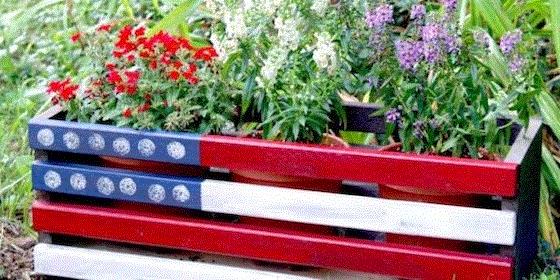
Photo: Cassie Steele.
Still, it’s a giant occasion. I remember how big the 200th was in 1976. I'd just gotten my driver’s license, and I drove to Miami to see the Tall Ships—remember them? It was called “Operation Sail” and was the largest gathering of tall-masted sailing vessels (16, from 14 countries) in centuries.
Had I been in the flower business at age 16, however, I’d have skipped the boats and gone to my local garden center!
So, 250 years of America … should the industry as a whole dream up something big? Maybe you breeders and distributors can introduce some patriotic summer planters named for Betsy Ross and Ben Franklin? Perhaps National Garden Bureau can pull together some “History of Gardening in America” information or POP? I mean, what would America be without Victory Gardens, beds of marigolds, sunflowers, hanging baskets gracing our front porches, Christmas poinsettias warming our homes and hearts?
Let’s make sure gardening is a big part of the semiquincentennial celebration! Share your ideas HERE.

Plant health updates from AmericanHort
From keen-eyed reporter Jen Zurko and her nose for news comes this update from AmericanHort about harmonizing plant health programs and regulations from state to state.
AmericanHort may best be known for its annual Cultivate trade show and advocating for our industry with the politicians on Capitol Hill, but they’re also active in making sure that us horticulture folks have a seat at the table when it comes to plant health regulations.
Back in late October, AmericanHort’s Kamron Newberry represented the specialty crops industry at the 2025 National Plant Board Safeguarding Meeting in Annapolis, Maryland. The meeting brought together state regulators, USDA-APHIS and other industry representatives to discuss ways to better harmonize plant health programs across state lines. Kamron’s presentation, “Industry Challenges with Patchwork Regulations,” emphasized how consistent, risk-based standards and early industry input strengthen both plant health and commerce.
“The meeting was primarily focused on harmonization of state plant regulations, especially as APHIS starts to look at deregulating certain insect pests at certain federal quarantine programs,” Kamron explained. “For example, APHIS is starting to look at deregulating imported fire ant, which has been a quarantined pest since the ’50s. So when quarantines go away at the federal level states then have a decision to make on whether they are going to regulate the movement of that pest into their state or not.”
As with any government program, implementing a change can be difficult and slow. Craig Regelbrugge, longtime industry representative on legislation and government affairs, told Kamron that “old federal quarantines die hard,” so it can feel like you’re in a hamster wheel. But the constant push for deregulating older pests (like Chrysanthemum White Rust) can allow room to focus on newer pests (like spotted lanternfly).
Another aspect to consider is that if the federal government decides not to regulate/deregulate a pest, the individual states can still legislate and enforce their own rules for plant health and that’s when you get a patchwork of different regulations. It’s not only difficult to keep track of them, but it significantly impacts growers who ship plants across multiple states. These challenges were the primary theme of Kamron’s presentation.
“In our experience, federal programs have always been a way to avoid patchwork regulations because when there's an overarching federal regulation, all the states have to enter into an agreement with the one federal regulation,” said Kamron. “When APHIS has determined that a federal quarantine no longer meets the requirements of a federal program, that's when it gets pushed to the states. They have the right to regulate the plants coming into their state, so that's where the dynamics really shift around.”
AmericanHort’s involvement with the National Plant Board for more than two decades has helped ensure that specialty crops have a voice on pest regulation decisions.
“We have always been invited to give industry perspective,” said Kamron. “If there are consistent safeguards put in place for each individual state, and they also work for the entire industry, it's a win-win for both.”
One of those wins Kamron talked about in his presentation were the regulations developed for the box tree moth.
“The box tree moth compliance agreement was a big win,” he said. “How fast it was implemented, the involvement of industry within that whole process, and then its workability for the industry has been great. We would love to see that as a model for future pest programs.”

Harmonizing between states (continued)
On the production side of things, Dr. Michael Martin, AmericanHort’s Science, Research & Regulatory Programs Director, works with the certification program for nurseries and greenhouse operations, otherwise known as SANC (Systems Approach for Nursery Certification). The National Plant Board is also involved in implementing and managing this program at the state level.
If you’re not familiar with the program, growers can qualify for SANC by fulfilling specific production requirements. Michael said a lot of growers already follow most of the standards—the program is just a more formal, documented process.
Since SANC was developed in 2016, the National Plant Board, AmericanHort, other industry members and the USDA have been working on alleviating some of the pain points and improving parts of the program. One of the challenges is how the growers are realizing the benefits after going through the trouble of filling out the paperwork—or rather, NOT realizing the benefits. Some growers are asking that the program provide more of an incentive structure that includes measurable results and financial gains.
“We’re trying to balance the regulatory aspects of the program along with figuring out which benefits they do get,” said Michael. “Yes, you’re seeing the higher quality material, there are less disease incidents—that's all great and wonderful. But some growers say they’d be doing a lot of that anyway.”
Some possible incentives that have been suggested is more on the marketing side. For example, the group has discussed ways to indicate on the tag or pot that the plant the consumer is holding in their hand has been grown under SANC requirements.
Michael said that adding more incentives and benefits to the SANC program has been a top priority that they’ve been working on since May. With so many stakeholders involved, it’s a process that takes time, so new ideas aren’t implemented as quickly.
“It’s an extremely complex thing,” said Michael. “We'll talk in a meeting and say, ‘Hey, what about X, Y and Z?’ Then we’ll go talk to the states and see if the states are on board. Well, the states may come back and say, ‘We don’t like this at all. How about this?’ Then we go to the growers and it’s back-and-forth negotiations. It’s not a not a speedy thing, unfortunately, but it is a top priority for us because we know if we don’t get something out of this, we’re not going to keep doing it.”

Axiom’s gardening outlook for 2026
Market research firm Axiom released its annual Gardening Outlook Study this week, and it’s worth a look because CEO and Founder Mike Reiber has pulled together some interesting findings from his survey (which you can access HERE).
Firstly, it’s interesting in that it focuses on Gen X, Gen Y and Gen Z—us Baby Boomers are left out. (Not that I feel slighted. I know our biggest gardening days are behind us and we’re now retiring and taking up skydiving and pickle ball.)
But back to the respondents: Just over half were Gen X (age 45-54), 23% were Gen Y (29-44) and 22% were Gen Z (22-28). All the survey respondents own a home and say they purchased garden plants last year.
Here are some highlights from the survey:
Key findings related to time and money spent gardening:
• 47.6% spent more time gardening in 2025 – the highest level since 2022
• Respondents spending 50% more time gardening increased 27% in 2025 vs. 2024
• Respondents spending 100% more time gardening increased 41% in 2025 vs. 2024
• 49.5% spent more money gardening in 2025 – an 11.5% increase from 2024
• 42.8% expect to spend more money gardening in 2026
• 50.2% expect to spend more time gardening in 2026
• 63.6% will plant more and expand their gardens in 2026
Key findings related to Gen Y and Gen Z respondents compared to Gen X:
• Gen Y (66.7%) and Gen Z (63.8%) spent more time gardening in 2025 versus Gen X (33.1%)
• Gen Y (66.7%) and Gen Z (65.2%) expect to spend more time in 2026 versus Gen X (37.2%)
• Gen Y (61.1%) and Gen Z (53.6%) spent more money gardening in 2025 versus Gen X (43.0%)
• Gen Y (63.9%) and Gen Z (49.3%) expect to spend more money in 2026 versus Gen X (31.4%)
Key purchase drivers for garden plants and supplies:
• Specific variety of plant type (36%) remained the most important decision factor in 2025
• Price (19%) and highly descriptive tags (11.6%) were the second and third most important decision factors
• 77% are willing to pay more for the specific color of flower or variety
• 52.1% are willing to drive 6-10 miles for the color or variety they want
• 55.2% have a shopping list
“Data on 2025 activities and expected activities in the coming year paint a promising picture for the 2026 gardening market,” said Mike. “In spite of economic uncertainty, job losses and inflation, gardeners spent record amounts of time and money on their gardens. Respondents say they’ll likely continue this in 2026—especially respondents who are 22-28 and 29-44 years of age.”
There’s a lot more you can dig into in the survey, including the popularity of big boxes vs. independents, and where consumers get their information (spoiler alert: IGCs beat out the web!)
For more information on the Axiom 2026 Gardening Outlook Study, download the report HERE.

What’s a sofa cost?
Do you know?
Depends on the sofa, right? At Rooms to Go, $477. At Stickley, $6,297. Sourced through a designer, $16,000.
That's a question Gabriele Natale, president of furniture manufacturer Manwah, asked Furniture Today Executive Editor Cindy Hodnett in a story called “Has the ‘new normal’ arrived for the furniture industry?”
“Most consumers don’t know what the price of a sofa was yesterday. They just know what they have to spend. They are looking for the best possible value for their money.”
Cindy was interviewing furniture company execs at the recent High Point (North Carolina) Market, where tariffs have hit the import furniture market like a ton of bricks. But as the title implied, this tariff situation is the “new normal” for the furniture industry and many others. Prices will have to be adjusted accordingly. But will the consumer notice unless we point it out?

$600? Or $6,000?
Gabriele made a good point. What prices do you know really well? Perhaps your weekly grocery staples like bread, eggs and coffee (yikes, has coffee ever gone up!). But things you buy seasonally, like Christmas trees or hanging baskets? Or those you buy only a few times in your lifetime, like patio sets and flat screen TVs? Their prices are all over the place and nobody knows what they should cost because there are such widely varying sizes and quality standards. At Best Buy, I can buy a massive 98-in. Hisense 4K television for $999 or a Samsung 8K for $34,999. As Gabriele says, I will shop for the best value for my money.
If I walk into any garden center, I can find hanging baskets for $15, for $30, maybe even $50. Occasionally on sale for $10 or $12. Even I—a seasoned industry pro—don’t know what they should cost. I will shop for the best value for my money.
They say consumers will have to spend an additional $132 on Christmas this year because of tariffs and maybe that’s so. But will they know they’re spending more? Only if you tell them. Otherwise, give them the best value for their money, whatever that amount might be.
Agree with me or think I’m an idiot? Give me your views HERE.

Finally …
For nearly 10 years, we did all our planting at Indian River Ornamentals on a 4x8 plywood potting bench and not once did I consider adding this feature:
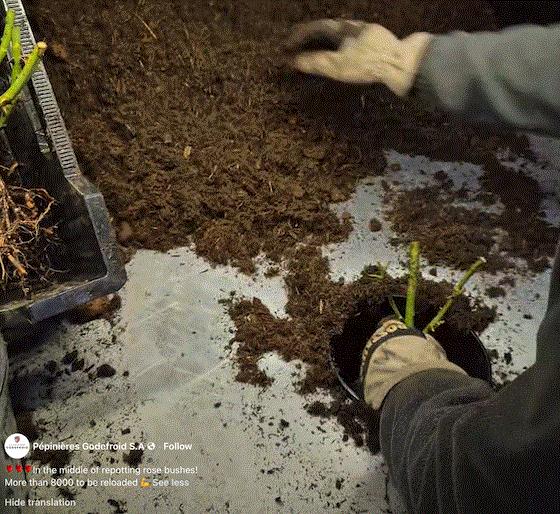
It’s a hole cut into the bench just the right size to hold a pot as the worker slides the potting mix in and around the roots. This is from a nursery in Belgium called Pépinières Godefroid (pépinières means “nursery” in French); I found THIS VIDEO showing it in use.
They’re doing bareroot roses, and the system may be quite suitable for a crop like that where you have to support the plant with one hand and fill the pot with the other.
Slick idea for the small nursery!
Feel free to email me at beytes@growertalks.com if you have ideas, comments or questions.
See you next time!

Chris Beytes
Editor-in-Chief
GrowerTalks & Green Profit
This e-mail received by 30,114 loyal readers!
Thanks to my loyal sponsors, who help me reach the 29,728 readers of Acres Online in more than 60 countries. Want to be one of them (a sponsor, that is)? Give Kim Brown a shout and she will tell you about our many advertising opportunities.