Restart of Schneider Young Plants!
That was the happy headline on a one-hour-old Facebook post I spotted on Tuesday, quickly adding an upbeat angle to the sad news I broke last week about Schneider Young Plants having to declare bankruptcy in order to keep the business going.
I did report what the press release said they hoped for: “The management and curator are currently exploring several restructuring and restart options. Discussions with potential partners and investors are in full progress.”
Well, I reckon those discussions have been fruitful! Here's the Facebook post in its entirety:
As of October 21, 2025, it’s official: The restart of Schneider Young Plants B.V. has become a reality!
Two new investors—Jan den Hartog and Bernd Postma—have taken over the company following the bankruptcy.
Our focus: The production of young plants from seed—including annuals, biennials, perennials, cut flowers and cyclamen.
Our new roles:
– Jan den Hartog acts as an engaged investor
– Bernd Postma leads the transformation process
– Jacob Schneider remains the driving force behind international sales
– Jan Arends continues to oversee production and product innovation
Our goal: From our location in Woudrichem, we aim to develop Schneider Young Plants into Europe’s most automated and highest-quality producer of seed-raised young plants. That takes a strong team, professional suppliers, reliable partners in every country and customers who value our quality, craftsmanship and commitment. Together, we’re building the future of Schneider Young Plants!
A heartfelt thank you to our suppliers—especially our seed suppliers—for their confidence in the restart and willingness to continue working with us. And to our sales partners, for their remarkable loyalty and ongoing support.
See you soon!
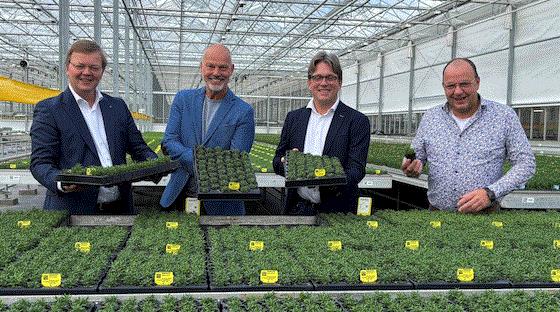
Jacob (left) with his new partners.
They added that they would be exhibiting at Trade Fair Aalsmeer where you can see everyone in person and learn more about Schneider’s comeback.
Sounds like a happy ending ... er, beginning!

Sakata partners with Kientzler in Guatemala cutting farm
Sakata (AKA Sakata America Holding Company, Inc.) announced the formation of a new company called Tikal LLC, a joint venture with the Kientzler family of Germany. Tikal will operate a young plant farm in Guatemala under the name Innovaplant de Guatemala S.A. That will make it a sister company of Kientzler’s other Innovaplant ventures in Costa Rica and in Germany (where they produce elite stock for the off-shore farms).
Now this is interesting, as Kientzler announced the new farm at CAST 2025, where they display in a section of Sakata’s greenhouse. They said they'd acquired a 45-hectare (108-acre) farm in Jalapa, Guatemala, formerly owned by Monsanto, and that they were going to start out with 2 acres of state-of-the-art pilot greenhouse. But no mention then of the partnership with Sakata. Either they still had details to work out or the idea of buying into the farm came later.
Either way, Sakata is now a partner in the Innovaplant venture (no word on percentages of ownership), and they say this marks “a significant expansion of Sakata’s footprint and long-term investment in North American ornamental young plant production.”
 "Somewhere right about here," said Chris, who's been to Guatemala exactly once.
Byron Calderon, a veteran of The Ecke Ranch's Guatemala farm, has been appointed general manager.
“This investment represents a significant milestone for our company, contributing to our long-term vision in the horticulture industry,” said Dave Armstrong, Executive Chairman of Sakata Seed America.
Added Andreas Kientzler, president of Kientzler, “We are excited to combine our expertise and resources with Sakata to drive innovation and excellence in the supply of great young plants to the industry.”

Another vertical goes horizontal
Meaning belly up. This time, it’s Eden Green Technology, a Texas-based vertical farm/greenhouse operator producing hydroponic herbs and salad greens. The company recently filed a WARN notice with the Texas Workforce Commission in which they state that the closure “is expected to be permanent and will affect all employees.” That's 102 employees, from the CEO down to the packing staff. December 13 will be their last day of operation.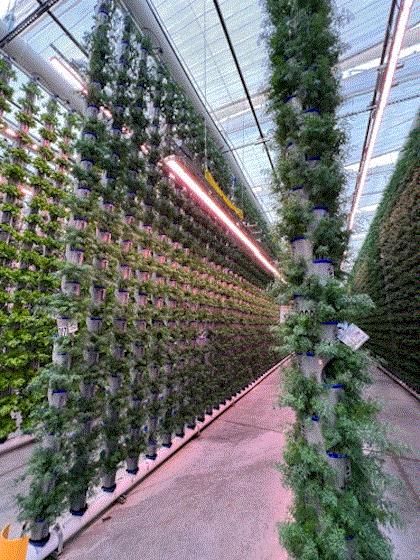
As for the reason? We haven't found one published. But perhaps it was yet another case of running out of other people’s money. Online sources are vague and confusing, saying Eden Green had raised anywhere from $16 million to $34 million in funding rounds, and spent anywhere from $40 million to $87 million building two phases of greenhouses (5 acres total) at their Cleburne, Texas, campus, about 45 minutes south of Fort Worth, depending upon how you interpret the information.
Regardless, 5 acres of greenhouse and a whole pile of bespoke hydroponic tube technology for even just $40 million was going to be hard to pay back, even if they managed the 5 million pounds per year of harvest they projected.
Eden Green was founded by a couple of South African engineers, Eugene and Jacques Van Buuren, who developed the hybrid technology concept (a vertical growing system within a traditional greenhouse) as a way to combat hunger amid a growing population. They brought the technology to North America in 2017 and built a facility as a test-bed. They opened their first 2-acre commercial range in 2023 and announced the start of an additional 3-acre range in October 2024.
Ironically, Eden Green was featured in an AP article in September titled, “Lots of Indoor Farms Are Shutting Down as Their Businesses Struggle. So Why Are More Being Built?” And they called themselves “The 8th Wonder of the World” in THIS YouTube video.

Some editorializing on the topic
It’s no longer surprising when these vertical farm startups fail, especially after this sort of spending. It’s yet another case study of venture-capital-fueled optimism meeting the realities of agriculture. They rely on massive up-front investments to build high-tech infrastructure—usually a one-off system they invented rather than using tried-and-true components.
And they grow crops like lettuce, herbs and microgreens, which have razor-thin margins and stiff competition from field-grown alternatives. And retailers aren’t paying a premium for their promises. A restaurant might, but you can’t pay back $40 million selling a few trays a week, even to Gordon Ramsey. So they wind up doing round after round of fundraising to keep the lights on.
And, lastly, they all tout that they're the solution to the “broken” traditional agricultural system. But they’re not growing calorie-dense or protein-rich food that will sustain the additional 2 billion earthlings expected by 2040. They’re growing greens that turn quickly and have shelf appeal. Nobody's figured out how to grow staple crops like wheat, rice or legumes in a vertical farm. So while they may be solving for freshness and urban access, they’re not solving for global food security.
Anyway, off my soapbox. There WILL be successful vertical farms, producing the right crop in the right place for the right market. And we will write about them!
Thought on the topic, pro or con? Let me know HERE.

164-year-old bulb business closing
Truly the end of an era, sixth-generation Royal Van Zanten of Hillegom, the Netherlands, will be closing its doors after 164 continuous years in business. Possibly the oldest business in the international flower bulb market, over the years they expanded into other blooming plants, including alstroemeria, mums, asters, celosia and more. The company received the designation “Royal” as early as 1901, to signify the respect, appreciation and trust of the King of the Netherlands.
Now, the Van Zanten family hasn't owned the company since 2018; that was the year they sold out to investment firm Nimbus out of a need for financial and operational support in order to modernize and grow, said Sjoukje Heimovaara, their general director at the time. But it was also known that Nimbus invests in companies with the intent to eventually sell. They found that selling as a whole was too complicated, so they divided up the company, creating Van Zanten Breeding (in Rijsenhout) and Van Zanten Flowerbulbs (in Hillegom).
Earlier this year, the lily breeding activities were taken over by Hobaho in Lisse, and as of October 1, the rest of the commercial activities related to lily bulbs in the Netherlands, plus a bulb farm in New Zealand and sales office in Australia, were sold to Onings Holland Flower Bulbs in Poeldijk.
“We are still in talks about the tulip trade and hope to be able to announce the sale of this last business unit in the short term,” they said in the press release.
 Located on Loosterweg in Hillegom, the iconic main location for Royal Van Zanten was built in 1911. Even though the buildings and the land around it are for sale, we can assume it will long remain a landmark for residents, even when no bulb business is conducted there.

Sell out to a data center, make a fortune!
A lot of agricultural business owners count a chunk of their retirement planning in the value of the property on which they sit. Buy property at a good price (or maybe dad or granddad did), sit on it for some number of years, hope urban sprawl settles in all around your former farm land, you sell to a developer, buy a boat or motorhome or cabin and enjoy your golden years.
That’s what Merrifield Garden Center did with its Gainesville, Virginia, location (one of three): They sold the 38-acre garden center site to a data center developer for … are you sitting down? … $160 million. That’s more than $4.2 million an acre, according to records filed at the Prince William County courthouse, and probably a record for the county. Located about 45 minutes west of Washington, D.C., Merrifield was fortunate to be in the county’s “data center opportunity zone overlay district,” where data centers are allowed by right.
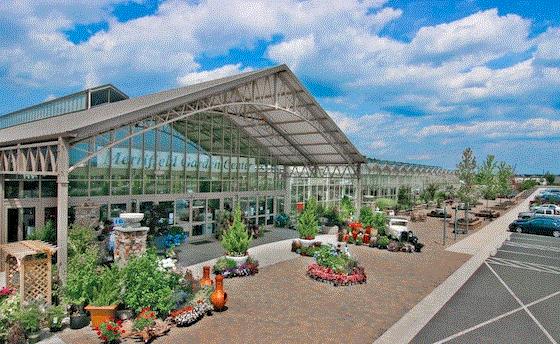
It's a shame to lose such a pretty garden center ... and one I've yet to visit!
The purchaser is Black Chamber Partners, LLC, part of a private equity firm with a focus on data center development in Northern Virginia.
Merrifield’s owners bought the Gainesville property for about $2.3 million in 2004, according to land records, and opened the garden center in 2008. It's assessed for tax purposes at $26.5 million (land and structures). A sign posted on the garden center says they’ll be closing by December 31.
No word on how Merrifield’s owners will be spending the proceeds … maybe on another location? Or nice upgrades to the remaining two?
But deal isn’t without controversy. Online, customers bemoaned the loss of the retailer, but couldn't fault the owners for taking such a lucrative deal. However, State Senator Danica Roem, whose district includes the Merrifield Garden Center, expressed both shock and disappointment.
“To have a garden center, where the business model is about plants and making sure people have greenery in their yards, go south so another data center can come in and contribute to rising energy bills and massive energy consumption, is beyond parody,” she said.
She’s got a point! But $160 million is a bigger point …

Bloomin' Easy Plants joins GardenChoice
GardenChoice is a plant genetics brand founded in 2016 during CAST when Jim Eason (Eason Horticultural Services—EHR), Ko Klaver (Zabo Plant), Arjen Vriend (Pioneer Gardens) and Rick Gazzini (GardenGenetics) connected over coffee. They were discussing a way to collaborate to enhance the products and services they offered their customers. The result was GardenChoice, with Pioneer Gardens producing GardenGenetics' unique genetics, EHS gaining access to proprietary varieties, and Zabo Plant providing the sales and marketing to the professional growers network.
Alas, EHR, which was sold by Jim to his employees, has opted to step out of GardenChoice, and so the partners have invited Bloomin' Easy to take over the ownership percentage held by EHR. Bloomin' Easy is the consumer-facing plant brand developed by Canada's Van Belle Nursery. The deal took place during Cultivate’25 in Columbus, Ohio.
Bloomin' Easy adds a consumer brand element to the partnership. In addition, they'll be trialing plants at their British Columbia nursery.
Said Ko Klaver of the addition of Bloomin' Easy, “I have personally worked with Dave Van Belle since the mid 1990s when Van Belle Nursey supplied Van Bloem Gardens with quality liners. Our friendship has always stayed strong and our mutual respect continued over the years, which made this strategic alliance such a good fit.”
 |
 |
|
MiniBeckia |
GreatMyrtle |
GardenChoice has introduced several new plants to the market and maintains a strong pipeline of selections currently being trialed for future releases. Coming soon, they’ll be offering additional colors for Rudbeckia MiniBeckia and Lagerstroemia GreatMyrtle, two of their notable introductions. Alongside these color expansions, they'll also feature the recently introduced GardenFest Coleus line, Rick Grazzini’s first foray into annuals.

From the International Plant Trials Conference
Tech on Demand Editor Bill Calkins recently traveled to Minneapolis for the 2025 International Plant Trialing Conference, held for the first time since 2015 and this time organized by All-America Selections. He came home raving about it. Here’s a brief recap:
More than 160 industry members involved in plant trialing were at the meeting in Minneapolis—bringing together trial managers who direct trial grounds for commercial growers, breeding companies, botanical gardens, universities, as well as data collection software companies, trial judges, industry media and others. The diversity of attendees and presenters covered a lot of job functions and trial objectives, but the fact is that, no matter the trial goals, many of the best practices and strategies are applicable across all use cases.
There were about 20 sessions over two full days, including general sessions for all attendees covering topics like the value of trials, international trials, management apps and software, multi-year trials for perennials and shrubs, effective trial reports, and marketing trials to the industry and consumers. Break-out sessions included deeper dives into edibles, cut flowers and careers in trialing. An interesting feature of the conference was that every session was a panel discussion—bringing diverse voices to the table and guaranteeing every attendee could relate to at least one of the speakers.
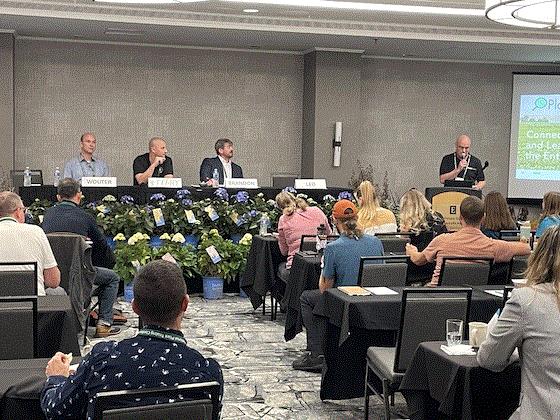
Networking was also a major goal of the Board that organized the event, so all meals and breaks were full of discussion around specific topics to maximize the information sharing. More than a dozen companies sponsored and supported the conference, and it was a Who’s Who of industry leaders who each sent representatives to participate in and lead discussion. It was great to see so much industry involvement!
If you grow trials, host events around trials, send product to trials or are interested in capitalizing on trials sometime in the future, consider attending the next edition of this event (which organizer Diane Blazek, head of the National Garden Bureau/All-America Selections, says will be in 2028).
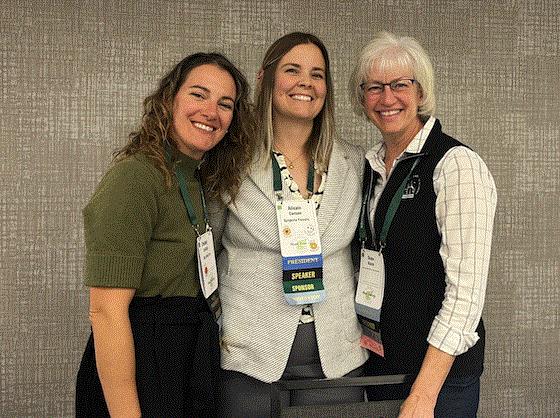
Huge shout out to the conference organizers, including (L to R) Chelsey Lenczyk (Bejo Seeds), Alicain Carlson (Syngenta Flowers) and Diane Blazek (AAS/National Garden Bureau).

September spending slowed, but the year remains “robust”
That’s according to the National Retail Federation’s CNBC/NRF Retail Monitor, powered by Affinity Solutions.
“Retail sales dipped in September as consumers hit the pause button after two solid months of back-to-school spending,” said NRF President & CEO Matthew Shay. “Amid continued economic uncertainty, consumers opted to preserve spending power in preparation for the important holiday season. While month-over-month spending data has fluctuated as consumers have reacted to changing circumstances, year-over-year gains show robust growth and signal momentum as we head into the holidays.”
Total retail sales (excluding automobiles and gasoline) were down 0.66% seasonally adjusted month over month, but were up 5.42% unadjusted year over year in September, according to the Retail Monitor. That compared with increases of 0.5% month over month and 6.81% year over year in August.
Unlike survey-based numbers collected by the Census Bureau, the Retail Monitor uses actual credit and debit card purchase data compiled by Affinity Solutions and doesn't need to be revised monthly or annually.
Specifics from key sectors include:
- Digital products (such as electronic books and games) were up 0.52% month over month seasonally adjusted and up 21.35% year over year unadjusted.
- Sporting goods, hobby, music and book stores were up 0.74% month over month seasonally adjusted and up 8.81% year over year unadjusted.
- Clothing and accessories stores were down 1.06% month over month seasonally adjusted, but up 7.35% year over year unadjusted.
- General merchandise stores were down 0.62% month over month seasonally adjusted, but up 5.52% year over year unadjusted.
- Grocery and beverage stores were down 0.76% month over month seasonally adjusted, but up 4.79% year over year unadjusted.
- Health and personal care stores were up 0.38% month over month seasonally adjusted and up 4.65% year over year unadjusted.
- Electronics and appliance stores were down 0.12% month over month seasonally adjusted, but up 4.43% year over year unadjusted.
- Furniture and home furnishings stores were down 1.87% month over month seasonally adjusted, but up 0.56% year over year unadjusted.
- Building and garden supply stores were up 0.53% month over month seasonally adjusted, but down 1.2% year over year unadjusted.

More from NRF: The holidays should be swell!
The headline from NRF’s Holiday Survey reads, “Consumers to Spend Second-Highest Amount on Record.” That near-record dollar figure is $890.49 per person on holiday gifts, food, decorations and other seasonal items. That’s second only to last year’s record $901.99, the highest figure seen in the survey’s 23-year history.
“Time and again, Americans prioritize spending on loved ones for holidays despite economic uncertainty,” said NRF Vice President of Industry and Consumer Insights Katherine Cullen. “With more consumers planning to seek out sale events this year, retailers are prepared to deliver on deals and value to ensure consumers have everything they need to make the holiday special.”
Nearly all U.S. adults (91%) plan to celebrate winter holidays such as Christmas, Hanukkah or Kwanzaa this year, in line with recent years.
Out of the total, $627.93 will go to gifts for family and friends. The remaining $262.56 will be used on seasonal items like food or candy, decorations and greeting cards.
Early shopping remains popular, with 42% of shoppers planning to begin browsing and buying for the holiday season before November. The leading reasons they shop early are to spread out their budget (54%) or to avoid the stress of last-minute shopping (41%). Even with the early start, the majority (60%) anticipate they'll finish shopping in December.
Tariffs remain top of mind for most holiday shoppers, with 85% anticipating higher prices because of tariffs. Nearly two-thirds (63%) plan to wait until Thanksgiving weekend to do most of their holiday shopping, up from 59% last year.
Online continues to be the top holiday shopping destination, with 55% planning to make purchases digitally. That's followed by grocery stores (46%), department stores (44%) and discount stores (42%).
According to the survey, the top gifts consumers would like to receive include gift cards (50%), clothing or accessories (46%), books and other media (27%), personal care or beauty items (23%), and electronics (22%).
The survey asked 8,247 adult consumers about their holiday shopping plans. It was conducted October 1-7 and has a margin of error of plus or minus 1.1 percentage points.

Finally …
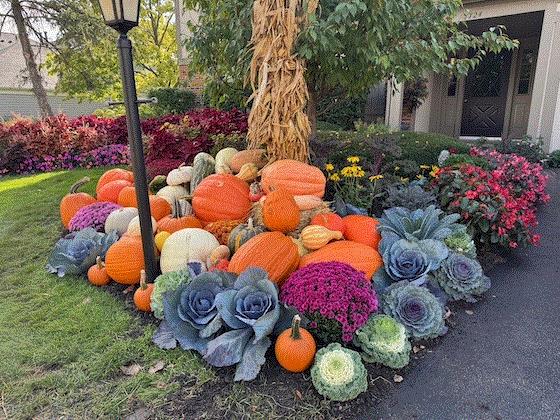
Hortistican Dr. Marvin Miller’s fall display in front of his Wheaton, Illinois, condominium never fails to impress his neighbors … and us editors! He works for weeks to source the annual color he desires. And when he can’t find it? Well, we hear about it—he’s particular about his varieties! But this year's display of pumpkins, kale, mums and more looks as stunning as ever.
Said Marvin, “I have been getting emails from neighbors complimenting me on the display, some who are blocks away. I have been doing something similar for a number of years. Neighbors look forward to it and ask me about it months after it is done and months before I do it again.”
This display features Dragon Wing Red Bronze Leaf Begonia that Marvin said has been in the ground all summer. In the background is Kale Redbor and some rudbeckias, and to their left are various coleus varieties (Redhead and Marble Mania) and a few SunPatiens plants and some caladiums. The ornamental cabbages in the foreground is Ruby Perfection.
The largest pumpkin in the display cost Marvin $99 (plus tax), he said. The four smallest pumpkins in the foreground he grew from one plant, a new variety from Burpee called Pumpkin Patch for Kids.
And apparently for hortisticians, too!


Feel free to email me at beytes@growertalks.com if you have ideas, comments or questions.
See you next time!

Chris Beytes
Editor-in-Chief
GrowerTalks and Green Profit
This e-mail received by 29,728 loyal readers!
Thanks to my loyal sponsors, who help me reach the 29,728 readers of Acres Online in more than 60 countries. Want to be one of them (a sponsor, that is)? Give Kim Brown a shout and she will tell you about our many advertising opportunities.