Plenty’s New VP of Plant Science
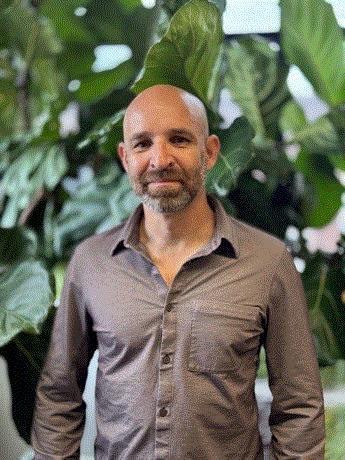
Recently, I had the opportunity to virtually meet and chat with Sasha Preuss, who has about three months under his belt as the VP of Plant Science at Plenty, a vertical farm grower with operations in Compton, California (leafy greens), and a forthcoming facility in Richmond, Virginia, that will grow strawberries in partnership with Driscoll’s.
His's located at the R&D facility in Laramie, Wyoming, where he moved from Dusseldorf, Germany, after a two-year stint at the Bayer Crop Science laboratories there. Prior to that he was at Bayer’s (and before that Monsanto’s) facility in St. Louis, Missouri, working on crop improvement, molecular genetics and genomic sequencing, robotics automation, and software development.
Our conversation was wide-ranging, but I wanted to highlight one particular segment here, which is his thoughts on how researchers, both in the public and private sector, can work with indoor farms. (The full interview will be published in the Spring Issue of Inside Grower, mailing directly to CEA producers.)
Sasha, in his own words:
The more we know about the plant response to things like photoperiod, light spectrum and light intensity, the more we lower the barrier to success. Intensity, in particular, is a simpler one to understand: the more photons you have, the more photosynthesis is created. But what’s important to remember is that plants are going to respond to spectrum and photoperiod differently based on the geography of where they’ve come from.
If I think about the opportunity to dive more into the genetics of crops we would bring to CEA, invest in the genomic sequencing—that would allow crops to be taken into unique environments, and to then have the genetics to inform them and be able to make selections based on the understanding of the genetic characteristics of the plant. I think there’s a small number of crops in the world that receive the wealth of effort in understanding their genomes and extending that at the university level would be helpful.
On Wyoming
For me, moving to Wyoming has been fantastic and has been very different than what I expected. In a state with so few people, you have fantastic access, and one of those has been our partnership with the governor of Wyoming and the state of Wyoming. Thanks to efforts across the local and statewide levels, Plenty received the state’s largest-ever economic development grant to substantially increase our R&D footprint with a new facility in Laramie. That’s due to the wonderful collaboration with the government.
Also, being close to a university allows us to have some really strong partnerships, both in the plant science department and growing opportunities in the computer science area—there’s been a lot of opportunities to create win-wins with the university here.
It’s also not just Wyoming that’s invested in Plenty. We’ve seen interest and support from Virginia as we build out a farm there, and extending that in Southern California in partnership with the City of Compton in building and operating our facility there.
One other thing to add to that—in all of these locations we’ve had a very strong commitment to the local community, whether that’s in Compton, where about a third of our workforce comes from the local community, (and) here in Wyoming we’ve got a lot of University of Wyoming graduates. They are not just partnerships with the university, but a flow of talented people from the university into the company.

Wageningen Teams Up With RED Horticulture
To move the industry forward, researchers are constantly pushing the boundaries, looking for ways to make indoor growing more efficient and sustainable. Now, the renowned research organization Wageningen University & Research (WUR) in the Netherlands is partnering with start-up RED Horticulture (headquartered in Lyon, France) to study and harness dynamic lighting spectrums to enhance plant growth and development. Specific crops for this initiative include tomato, cucumber and pepper.
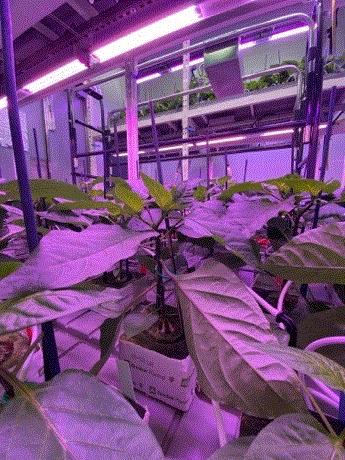
Two experts on plant photobiology and greenhouse horticulture from WUR, Professor Leo Marcelis and Associate Professor Ep Heuvelink, will work with Theoharis Ouzounis, chief scientific officer at RED Horticulture to develop the strategies.
“LED lights can exert profound effects on the growth and quality of plants,” said Leo in the announcement. “Initially the light intensity and spectrum of LEDs was kept constant during cultivation.
“However, it is now opportune to delve into the possibilities of dynamically adjusting lighting strategies. We have joined forces with RED Horticulture, a dynamic LED lighting company, to investigate the impact of these lighting strategies on the production of young plants.”
Read the full announcement HERE.

MSU’s Lighting Workshop Coming Up
I’m going to give you the details for Michigan State University’s Horticulture Lighting Workshop, but first, you must know there are only a limited amount of spots left. So if you’ve waited and you want to go, now’s the time to sign up. I’ll be there, too (Is that incentive? I’ll leave that up to you to decide!).
The event is Monday, December 18 starting at 8:30 a.m. at the Plant & Soil Sciences Building on MSU’s campus. You’ll hear about a variety of topics, starting with “Light concepts, principles and terms for horticulture” and moving to “Indoor sole-source lighting of seedlings and leafy greens,” as well as “Supplemental greenhouse lighting” and much more. Speakers include MSU academics like Erik Runkle and Roberto Lopez, as well as Nathan Jahnke from the Ball Seed Tech Team and Dan McMahon from Philips.
Once the speakers are finished, it’s time to tour the horticultural lighting research projects and facilities at MSU. Visitors will see:
-
Indoor lighting of leafy greens and culinary herbs
-
High-wire vegetable crop inter-lighting
-
Supplemental lighting of young plants
-
Photoperiodic lighting (specialty cut flowers, tropicals and foliage)
-
Environmental strategies to enhance strawberry flavor
-
UV lighting for height control
-
Low-intensity lighting for downy mildew prevention
CLICK HERE for the full schedule and to register.

Speaking of MSU
We are running a four-part series from researchers at MSU in our print Inside Grower magazine, starting in the November issue. The series focuses on research related to end-of-production strategies. CLICK HERE to read the first story on lighting at the end of leafy green production and watch future issues for more.
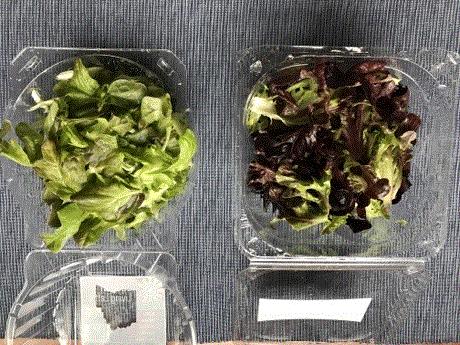
You can read the full November issue of Inside Grower online at inside-grower.com. If you like what you see and you’re a qualified subscriber, you can sign up to receive the magazine quarterly for free HERE.
Consider Mid-Ohio Next Year
I say next year, but it’s really just weeks away (!). I didn’t know about this meeting, and when the folks at the Mid-Ohio Growers Meeting called to ask about getting the word out there, I figured other people might not know about it, either.
The two-day event is in its 12th year and runs January 11-12 at the Mount Hope Event Center near Millersburg, Ohio. It normally attracts between 1,200 to 1,500 attendees, and features more than 30 seminars on a variety of topics, including food safety and horticulture production methods, along with floriculture information and other topics. There are Ohio Pesticide Application Training Credits available, as well as a trade show and networking opportunities.
CLICK HERE to find out more and to register (or exhibit). Here’s the full list of speakers, which includes our very own enews author Paul Pilon!
Finally, a Lost Space Tomato—Found!
Count Astronaut Frank Rubio as one relieved space man after a dwarf tomato he lost on the International Space Station (ISS) was recovered some eight months later.
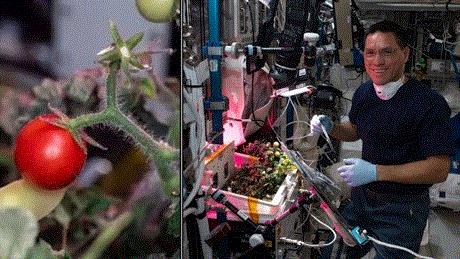
It became a running joke aboard the space station, where Frank participated in growing the tomato in the Veg-05 experiments, but when it came time to sample the fruits of their labor, it floated into unknown parts of the station, seemingly lost forever.
You can read the full story on Space.com. And if you’d like to know more about the Veg-05 growing experiments, head to NASA.gov.
As always, feel free to email me at jpolanz@ballpublishing.com with comments, questions, news and views.
Until next time,

Jennifer Polanz
Managing Editor
Inside Grower
This email received by 30,200 loyal readers!
Interested in advertising in Inside Grower? Contact Paul Black or Kim Brown and they'll show you how easy, effective and affordable it is.