AmericanHort Recommends Terms for Disease-Resistance Claims
Kudos to AmericanHort and its research foundation, the Horticultural Research Institute (HRI), for publishing a set of scientifically correct and internationally recognized terms related to pest and disease in ornamentals. This action is in response to a recent industry-initiated movement to standardize the terms used on marketing tags on newly released plant material in reference to specific diseases and/or abiotic stresses.
Disease/pest resistance and tolerance to abiotic stresses (such as drought, cold exposure, etc.) in plants contribute greatly to plant health and ultimately to the success of our industry. As more new plants are anticipated to be released targeting disease and/or abiotic stress management, the industry will be faced with how to best represent these traits to customers and set performance expectations. Often the terms "resistance" and "tolerance" are used interchangeably, and oftentimes "resistance" is mistakenly thought to equal "immunity."
I want everyone to be clear that everything from this point forward is attributed to me—not AmericanHort or HRI. I took their lead and want to expound upon it because it's an important subject.

What is Immunity (Plant Pathogens)?
The technical definition of resistance is, “the ability to exclude, hinder or overcome the effects of a specified pathogen or pest; the opposite of susceptibility.”
When it comes to coping with pathogens (including fungal, bacterial, viral and phytoplasmas), the best/highest level of plant performance is immunity, which means the plant can completely restrict the pathogen from entering the plant. In other words, even when the plant is grown in the presence of the pathogen, it won't become infected.
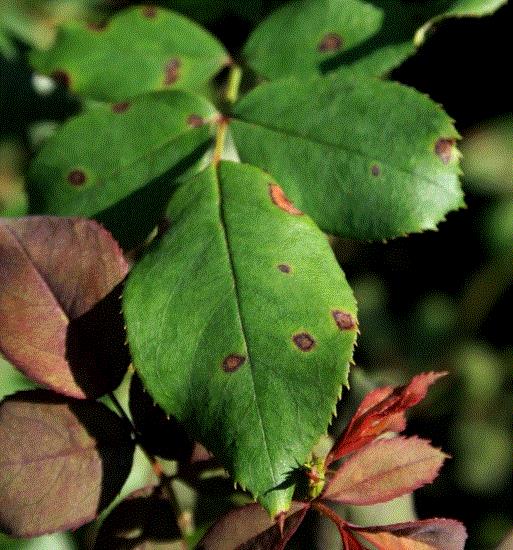
Sometimes, as with Knock Out Pink Rose (shown here), there's initial immunity that's present when the cultivar was released. Often, it happens to fade with time, as the pathogen evolves to overcome genetic resistance.
A good example of this is some of the new cultivars of impatiens with downy mildew immunity. Now here’s the catch (there’s always a catch)—generally, immunity to pathogens is due to one or two genes that prevent infection. That’s why sometimes a cultivar/variety that was once immune becomes susceptible. In fact, the pathogen has simply evolved to find a way to overcome genetic resistance. For this reason, rarely do plant breeders find a permanently immune plant, but rather it's a long-term battle between plant breeders and pathogens. That’s some serious job security!

What is Immunity (Plant Pests)?
Plant pests include insects, nematodes and mammals (particularly deer and small children). Plant pests offer a different set of challenges in the landscape. Most of these pests cause highly visible damage to the foliage, flowers and fruits. They're also generally highly mobile. This makes sanitation, which is fairly effective to reduce pathogen pressure and infections, much less effective.
In a cruel twist of fate, many beetles and mites can vector viral or fungal pathogens. The classic example of this is chestnut blight, with rose rosette also causing similar devastation to a critically important ornamental taxa.
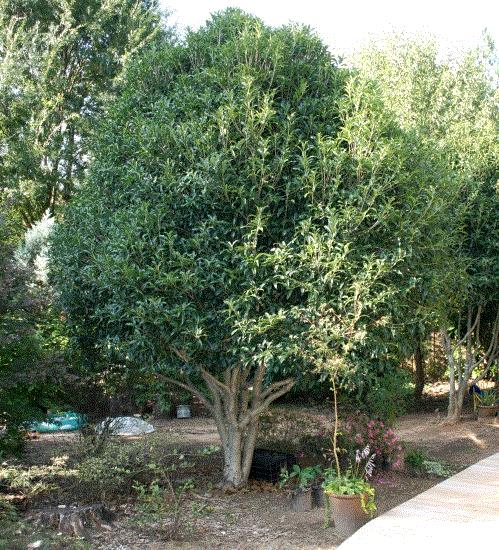
Osmanthus frangrans, commonly known as fragrant tea olive, is native to Asia and with few native pests or pathogens that affect its performance, it's an amazing performer in North America.
Immunity to pest pressure means that when the pest is present, it won't feed on that plant, even when no other food source is available. In other words, the pest would rather die or move long distances to find a preferred food source (much like children and brussel sprouts).
Interestingly, oftentimes from a genetics perspective, pest resistance in ornamentals is due to physical restriction of the insect (like pubescence/leaf hair) or a chemical that the plant produces that isn't palatable by the insect. These traits can be much easier to breed into new ornamental cultivars, and especially when it comes to things like pubescence, they generally last a lot longer because the pest is not likely to evolve fast enough to overcome the plant's defense.

Dawn Redwood
There really aren’t a lot of plants that hold up well to pathogens and insects (particularly in high-pressure areas) and one of my favorite trees that does is dawn redwood. Being native to central and western China, it has it an advantage many of our native species don't have. Quite frankly, it has few natural pests/pathogens that co-evolved with it in our landscapes.
Now, the mantra that exotic species are tougher than natives doesn't hold true for all (or even most) exotic species, but sometimes it gives exotic species a leg up.
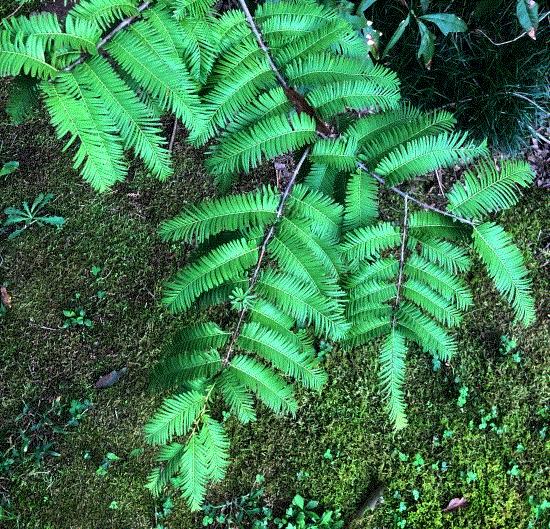
Hard to deny that the soft foliage of dawn redwood isn't worthy of a landscape.
There are many cultivars of dawn redwood on the market, and quite frankly, you can’t really go wrong with any of them. Older cultivars are generally green foliage forms and big (60-plus ft. tall and 30- to 40-ft. wide), but starting with the cultivar Ogon, we were introduced to chartreuse foliage and a smaller size. This has culminated in the most recent cultivar Amberglow (that I covered in a previous newsletter this summer).
Amberglow checks in noticeably smaller at about 30 ft. by 15 ft. It also seems to have an orangish tinge when foliage has just emerged, which fades to a bright yellow, and foliage holds up better in hotter environments. Native from Zones 5 to 9 (10), it’s a legit shade tree and street tree across most temperate regions globally.

Moving to Resistance (Pathogens)
Resistance to pathogens differs from immunity because it means that the plant is infected, yet it's either completely asymptomatic or is able to localize the infection. Highly resistant cultivars/varieties are often asymptomatic or show no visible symptoms. But they can also quickly isolate the infection and prevent spread, even across a single leaf by (for example) dropping that foliage before the pathogen moves to the petiole and stem.
Intermediate resistance is a step down, in that the cultivar/variety will show symptoms. However, the onset of symptoms may be later, may be less severe compared to a highly susceptible cultivar/variety or may be able to rapidly outgrow earlier injury to mask the damage.
What many people don't grasp is that infection requires a susceptible cultivar and an environment conducive to infection. Plant breeders constantly work on the genetics side to make cultivars/varieties genetically resistant. But we can’t control environment. The result is that oftentimes, people assume a cultivar is resistant or even immune, when in reality they simply live in a region where the environment doesn't allow the pathogen to grow and infect the plants.
Case in point, folks in California, Arizona, Nevada and Colorado generally have much less foliar disease compared to the Mid-Atlantic states, where humidity is much higher and much more rainfall occurs in the summer months (pathogens generally like rain and high humidity). But there are always exception—case in point, downy mildew, which prefers cooler and drier (yet with adequate humidity) environments.

Moving to Resistance (Insects)
Generally, there's no distinction as to high or intermediate resistance to insect pressure. Instead, two other terms are used )and they're doozie terms, so be patient with me).
First, antibiosis resistance affects the biology of the insect, so pest abundance and subsequent damage is reduced compared to that which would have occurred if the insect was on a susceptible crop variety. Antibiosis resistance can also result in increased mortality, or reduced longevity and reproduction of the insect.
A classic example from the insect world would be a physical barrier, like pubescence, that prevents insects from laying eggs on a host plant. For example, azalea lace bug can’t physically lay eggs on azalea cultivars that have a lot of pubescence (leaf hairs), even though the adults may be able to feed on pubescent plants to a limited extent. As a result, while the adults may feed on a pubescent cultivar, their babies will have to feed on another cultivar with smooth leaves immediately after hatching, leading to less damage (particularly early season damage).
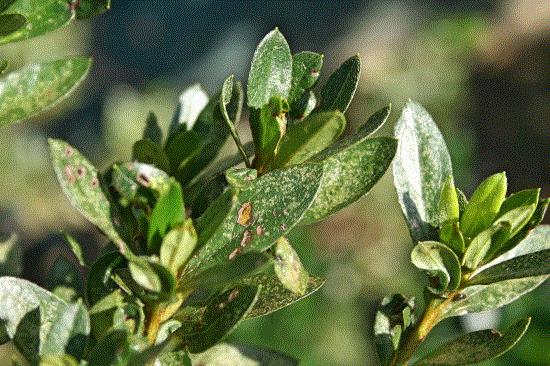
Gumpo Pink doesn't cut it when it comes to azalea lace bug resistance, partly because it has little to no pubescence.
Additionally, antixenosis resistance affects the behavior of an insect pest and usually is expressed as non-preference of the insect for a resistant plant compared with a susceptible plant. Many times, this is due to volatile (the insect can smell them like we smell lasagna) chemical compounds that cause insects to choose another plant to feed on.
Going back to azaleas for an example, I actually researched this effect and published a manuscript on it way back as a Ph.D. student. Interestingly, there are species of North American native azaleas that produce chemicals in their leaf wax that repel azalea lace bug. This is a trait that breeders have used to develop azalea cultivars less susceptible to this insect pest.

Tolerance & Susceptibility
A very important point is that above I've described how biotic (living) organisms affect plants. One term that a lot of people use to describe how a plant pathogen or pest affects a plant is tolerance. PLEASE stop doing that if you currently do. Plants do not tolerate pathogens or insects; they only tolerate environmental (abiotic) stressors. Plants tolerate drought, floods, cold, warm, windy, etc., but never any living organism.
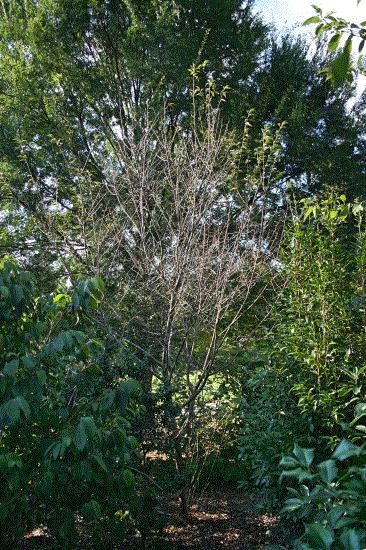
Do you see sticks? Well, you should because this is a Yoshino cherry in late August. This represents a highly susceptible cultivar that lives on in the industry because it rocks the flowers in spring.
Susceptible is the term to use when it comes to pathogens and pests, and this is defined as, “the inability of a plant to resist or restrict the invasion of a pathogen; the opposite of resistance.” Or in more understandable and realistic terms, susceptibility means that it has little to no ability to cope with pests or pathogens. Therefore, when infected (by pathogens) or infested (by pests), you'll need to use chemical or biological control to restrict pathogen spread or control insect populations.

Our Wacky Wonderful World—Notes from the Edge of Sanity
Many people proclaim that Ginkgo is top of the list when it comes to tolerating pathogens and pests, capable of living more than 1,000 years without a problem. I'm not one to make absolute statements, but I agree that it's an absolutely amazing (albeit slow-growing during juvenility) tree that can be grown in just about any environment, from Zone 3 to Zone 9 (globally), without any care, minus a bit of soil pH adjustment (it likes soil pH in the acidic range).
Case in point, it was a coveted tree during pre-Civil War America because it was a tough-as-nails tree in landscapes that received little care. Just know that the species is dioecious—and you don't really want a female because the fruit smells less-than-pleasant when it matures and falls to the ground.
Did you think that was the end of this rant? Ohhhhh no. You see, Ginkgo biloba is also the poster child of what we as humans do to species. Once native to a broad strip of temperate climate in Pangea that we now associate with Zones 4 to 8 (relatively present-day Montana to Beijing), it was separated later by oceans and finally found a home in northern temperate Asia. Because it was coveted as a timber species in Asia thousands of years ago, it was quickly decimated and only resided in a few isolated areas when it was rediscovered during the Song Dynasty approximately 1,000 years ago. From those native populations, at some point, it was introduced to Japan where a physician, Engelbert Kaempfer (employed by the Dutch East India Company) documented it in 1690. From there, it made its way to Europe and very quickly (compared to most species at the time) to North America. The oldest documented ginkgo in the United States is the male tree growing in the Woodlands Cemetery in West Philadelphia, which was planted in 1784.
When you look at a ginkgo tree next time, think about how close we as humans came to eliminating that species. Then think about how much we covet trees like ginkgo that are so resilient. Isn’t it about time we started saving species? Especially those with abiotic and biotic resistance/tolerance.

Live authentic,

Matthew Chappell
Editor-at-Large
Nursery & Landscape Insider
This has been received by 27,856 of the hardest-working horticulturists in show business!
If you're interested in reaching 27,856 (and growing) clients who eagerly await every Nursery & Landscape Insider and surely read every word, contact Kim Brown ASAP and she'll hook you up.