Three passings
I’m saddened to report three passings in today’s email—all industry notables who made an impact on the businesses they ran and the sectors they served.
In memoriam: Jim Youngsman
Jim Youngsman, the founder of Skagit Gardens, passed away peacefully on July 18. He was 87. We learned this from his daughter, Pamela, who followed in her father’s footsteps by starting a business of her own, a young plant company called PoppyStarts.
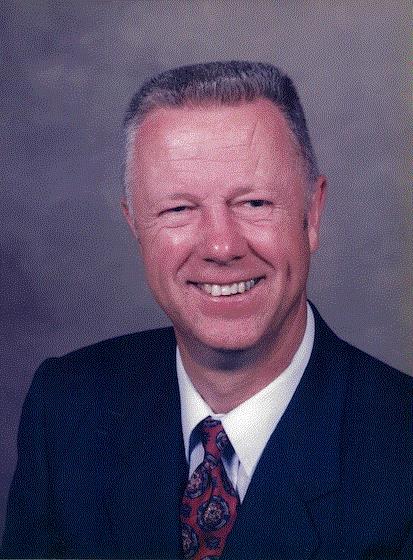
Jim’s passion for growing plants began at an early age. At 16, he built a backyard greenhouse where he grew tulips and sold them to local garden centers. He used the profits to pay his way through Washington State University, where he studied floriculture and horticulture and met his wife, Ruth. He went on to earn a master’s in floriculture from Penn State.
After graduation, Jim began his career providing vocational training to inmates at Danbury State Correctional Facility in Connecticut. A brief move to Berkeley, California, followed, then Jim and Ruth settled in Mount Vernon, Washington, where they purchased 8 acres that became Skagit Gardens, primarily selling annuals and perennials to retail garden centers, landscapers and wholesale growers in the U.S. and Canada. Their four children, Bill, Susan, Pam, and Matt, all worked at the business, which expanded to over 11 acres of greenhouses, 38 acres of field and upwards of 250 seasonal employees before Jim and Ruth sold it in 1998.

In memoriam: John Guenther
Those of you who worked with or for Ball Horticultural Company from the ’70s through the early 2000s will most likely have known John Guenther, the company’s long-time controller and senior VP. I’m sorry to report that John passed away July 31 in Sister Bay, Wisconsin. He was 83.

A thoughtful, measured man, he was especially well-known and respected in Asia, where he directed Ball’s production and marketing subsidiaries in Japan, South Korea, Taiwan and Australia.
Born in Detroit and educated at the University of Michigan, John did a stint in the Navy on a guided-missile destroyer. He then was hired by Arthur Andersen, where he worked in their Chicago and Melbourne, Australia, offices.
He joined Ball in 1973 as controller and never left, finished his career there, retiring in 2005 as Senior VP, after which he and his wife, Christine (who preceded him in death in 2015), split their time between Wilmette, Illinois, and Egg Harbor, Wisconsin, traveling to Europe, South America and Asia. John is survived by two children, Elizabeth (John) Dischner of Wilmette, and Andrew (Tiffany) of Manlius, New York; four grandchildren; and a brother, Paul (Ruth) Guenther of Racine, Wisconsin.

Remembering Tom Piini
Another passing, this time of Tom Piini, the founder and president of Micro Grow Control Systems of Temecula, California, on August 4. He was 71.
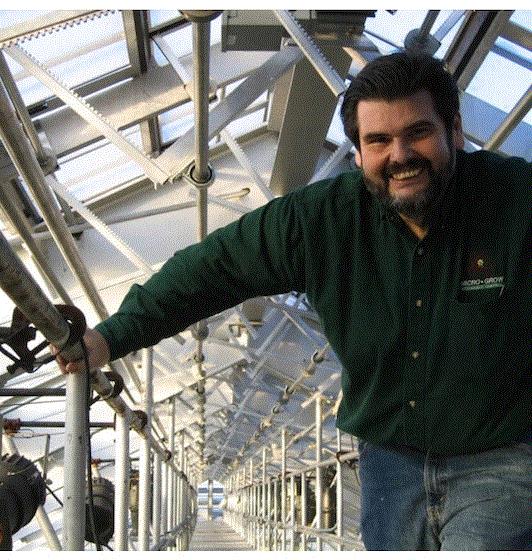
Tom was a pioneer in the greenhouse industry, creating some of the first computerized environmental controls for greenhouses. He and his team developed controls for watering systems, propagation, misting and fogging, and his controls are used in every kind of greenhouse and indoor growing space, from commercial greenhouses to university and research institutions. In 2013, Micro Grow expanded with the acquisition of control manufacturer QCOM.
Tom’s contributions extended far beyond technology; he built a company culture rooted in integrity, service and a passion for advancing agriculture.
“Tom Piini is a legend in our industry,” said Dan Bilhorn, owner of United Greenhouse. “We worked on hundreds of projects together and we were friends for over 40 years. Tom was brilliant about what a project needed and a gregarious, kind man. I will miss him forever.”
Tom’s son, Chris, vice president of the family business, is now at the helm, ensuring the continuity of the values and innovation his father championed. Chris said he and his team—many who have more than 20 years of service—are committed to honoring Tom’s legacy while guiding the company into its next chapter.
“My father was a true pioneer—not just for this company, but for an entire industry," said Chris. "He believed in creating solutions that made indoor agriculture accessible, efficient and sustainable. It is an honor to continue his work and carry forward the vision he dedicated his life to.”

Bailey Nurseries appoints a new CEO ... and he's not a Bailey!
For the first time in the company’s 120-year history, Bailey Nursery will be led by a non-family CEO. Jorge Becerra is the man taking the top spot; current CEO and fourth-generation family member Terri McEnaney will transition to Board Chair.

Terri McEnaney is handing over the reins of her family's business to Jorge Becerra.
Jorge is a native of Ecuador, with a strong background in agriculture; his father expanded the family’s cattle ranch to include one of the country’s first commercial shrimp farms. To support that new effort, Jorge earned undergraduate and graduate degrees in aquaculture from Texas A&M University. Later moving on from the family business, he joined Cargill, where he spent 25 years, including many in leadership roles within their Animal Nutrition and Health business units.
But shrubs are a long way from shrimp.
“What drew me to Bailey was the culture and values. It resonated with me at a very personal level—the way I was raised, the way I’ve conducted business my whole career,” said Jorge in the company press release. “After spending my career focused on producing food that nourishes our bodies, I’ve come to see horticulture as a different kind of nourishment: one that improves lives and brings beauty to the world. That’s incredibly inspiring to me and I’m honored to help shape the future of a company with such a meaningful legacy. I’m especially looking forward to connecting with our customers and industry partners to learn from them and support their continued success.”
“This moment is the result of years of planning to evolve our structure while continuing to support the Bailey Nurseries team, our customers and partners, and our core values,” said Terri of their first non-family CEO. “Jorge brings not only deep global experience in agriculture, but also a genuine curiosity, a people-first approach, and strong alignment with who we are and where we’re going.”

Jen attends the PPA Symposium and finds lots of learning
Here’s an item from GrowerTalks Editor Jen Zurko, who spent last week surrounded by perennial people:
If you asked me to describe the Perennial Plant Association (PPA) Symposium in a couple of words, I would say camaraderie, networking, education—and a ton of perennial plants.
This was my first time ever attending the PPA Symposium, so I was eager to see what our perennial expert Paul Pilon has been able to experience for years, and it was all of the things I described. The symposium is held in a different location every year (this year it was in Des Moines, Iowa) and I like how it’s organized, giving attendees lots of choices—on which days to attend, which tours to sign up for and different educational tracks.
I say “days to attend” because this isn’t an event where you can show up for one day—you need a couple of days to really get the whole experience and have the time to spend with growers, landscapers, academics and suppliers.
And that’s how Emily Bibens Chung, PPA’s executive director, described the event when we sat down for a brief chat.
“This isn’t a selling show; in the perennials sector, it’s really about the relationships and building connections,” she explained. “We say it’s like a family reunion. You have to come for two or three days to really see what PPA is all about.”
The event is broken down into two days of tours and two days of educational sessions, with a small trade show area open in between breaks. I purposely chose the Pollen to Plug Tour because it more closely matched what I knew our readers would want to learn about.
It was a packed day with six stops, including the North Central Regional Plant Introduction Station, where they preserve over 60,000 different plant genetics, from corn to cornflowers; Country Landscape Company, which is a landscape supplier that also has a garden center open to the public; and a private native perennials garden at Ana and Ed McCracken’s house designed by Iowa horticulturist Kelly Norris, where I learned about the “rattlesnake master plant” (Eryngium yuccafolium), a perennial herb in the parsley family that early settlers thought was an antidote for rattlesnake bites (it is not!).
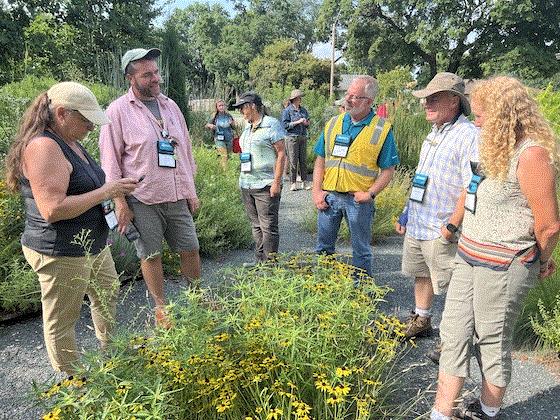
Kelly Norris (second from left) designed Ana and Ed McCracken’s garden using all native perennials. There were a lot of happy rattlesnake master plants.

PPA (continued)
I want to tell you a bit more about two of the stops, Iowa State University and Swift Greenhouses. Did you know that Iowa State has one of the largest seed labs in the world? I learned that they do a slew of different things here revolving around seed, including testing for pathogens, looking for noxious and invasive weeds among “good seed,” conducting DNA testing, conditioning seed and testing germination rates. They do this on a wide range of seed, from row crops to ornamentals.
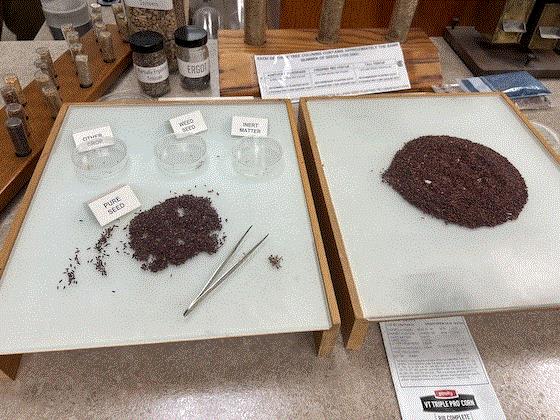
Iowa State University’s Seed Lab looks for noxious and invasive weed seed through piles of “good seed” by hand. Literally like a needle in a haystack.
Swift Greenhouses is a multi-generation greenhouse operation in Gilman, Iowa, that specializes in perennials. Third-generation owner Scott Swift said that about 60% of their business is growing perennial plugs for small- and medium-sized growers. The other 40% is finished perennial plants for IGCs and hardware stores located within about a 250-mile radius of Central Iowa. (They also produce a smattering of houseplants and tea roses, as well as herb plugs, which Scott said are “economically priced.”). All in all, Swift grows 1,000 varieties of perennials, from seed to liner to tissue culture.
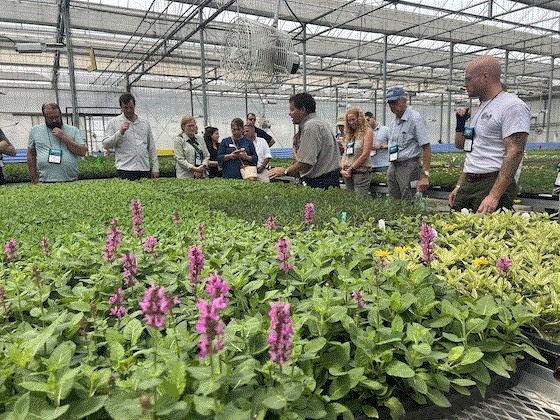
Scott Swift (middle, foreground) taking PPA Symposium attendees on a tour of his perennial production operation.
Scott’s grandfather Earl bought the business in 1952 to produce vegetables for the local market (as many of these older family businesses did) and it slowly evolved into a bedding plant operation as Scott’s father and mother, Larry and Carol, grew the business, adding perennials in 1970. When Grandpa Earl started, the operation was 15,000 sq. ft. and everything was grown in homemade wooden trays and sold by the dozen; now it’s 6.2 acres of strictly perennial production grown in 50-cell trays filled via a flat-filling machine with their own custom peat-based growing media.
The final stop of our tour was Reiman Gardens on Iowa State University’s campus across from Jack Trice Stadium where attendees from all the different tours converged to have great food together in a great atmosphere that included a butterfly conservatory. I also learned that Iowa State is the birthplace of one of my favorite cheat foods, Rice Krispie Treats. I will think about that every time I eat one. Which should be less often.

Speaking of PPA I …
A couple of news items out of the annual Symposium:
The PPA has announced its 2026 Perennial Plant of the Year is Andropogon gerardii Blackhawks.
Selected by PPA members, this exceptional ornamental grass cultivar, commonly known as Blackhawks big bluestem, stands out for its striking appearance and resilience once established.
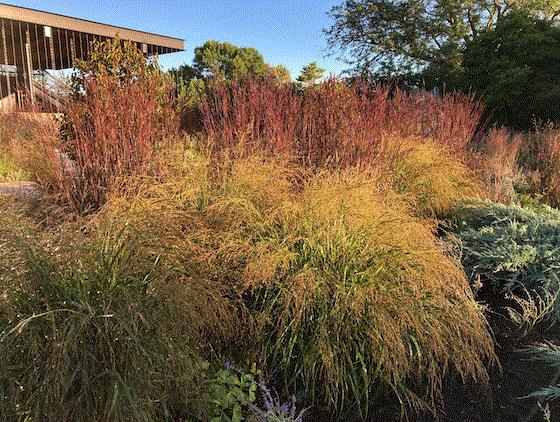
More compact than other big bluestem varieties, Blackhawks reaches a height of 5 ft. and a width of 2 ft. Its near-black coloration and strong, upright growth habit create a dramatic presence in fall gardens. The dark green leaves emerge in spring, gradually transitioning to reddish-purple tips as summer progresses. By August, the characteristic three-parted “turkeyfoot” inflorescences appear, and by September the entire plant takes on a deep purple hue.
Richard Hawke, director of ornamental plant research at the Chicago Botanic Garden, said Blackhawks is “notable for its compact size and sublimely dark burgundy leaves, stems and flowers. It quickly became a standout in the Chicago Botanic Garden’s ornamental grass trial. It is the perfect choice to add color, texture and movement to smaller gardens or landscapes where one of its bigger relatives would overwhelm.”
Blackhawks big bluestem also provides vital habitat. Its dense foliage and sturdy stems offer nesting sites and cover for birds, while also serving as a larval food source for several skipper butterfly species.
Though it forms a single clump, it may reseed in the garden. This cultivar is remarkably low maintenance, with no major pest or disease concerns. The only required care is cutting it back to the ground in late winter like other ornamental grasses. Once established, a process that may take a few years, Blackhawks becomes very drought tolerant.
For a stunning fall display, consider pairing Blackhawks big bluestem with companion plants like black-eyed Susans (Rudbeckia spp.), tall stonecrops (Hylotelephium spp.) and asters (Symphyotrichum spp.). Their contrasting textures and movements beautifully complement the bold, vertical spikes of Blackhawks.
You can visit the Perennial Plant of the Year website for more information.

Speaking of PPA II …
During PPA’s National Symposium, three perennial professionals were presented with Special Recognition Awards in honor of their contributions to the industry.
The Emerging Perennial Professional Award, which recognizes an individual who's a talented and diligent newcomer to the perennial plant industry, went to Ben O’Brien, owner of Wild by Design in Picton, Ontario, Canada. Founded in 2014, Wild by Design is guided by Ben’s passion for plants and naturalistic planting design, but also by the desire to create gardens and landscapes that provide people with the same simple delights and pleasures as the wild rural landscapes of his youth. He's a passionate young plantsman and progressive planting designer bringing the best of the new perennial movement to Canada.
The Perennial Outreach and Education Award, which recognizes an individual or organization who has distinguished themselves by advancing perennial plants and the industry through education, advocacy, awareness, outreach or promotion, went to speaker and lecturer Rebecca McMackin, Arboretum Curator of Woodlawn Cemetery in the Bronx, New York. Rebecca is a dynamic public speaker, writer, lecturer and advocate on the importance of ecological gardening, advocating for North American native plants and perennials. Her “Let your garden grow wild” TED Talk has been viewed more than a million times.
The Perennial Excellence Award, which recognizes an individual or organization who has distinguished themselves through their contributions, skills and efforts related to herbaceous perennial plants and the perennial plant industry, was presented to Jack DeVroomen of DeVroomen Holland Garden Products in Gurnee, Illinois. A member of PPA since its inception more than 40 years ago, Jack has been a friend, colleague and trusted resource for many people worldwide. He's spent the past 50 years traveling to the United States and Canada, representing the company that his grandfather founded 100 years ago, and introducing colleagues and plant enthusiasts to a plethora of European plant introductions. Jack has made significant contributions to the perennial plant industry, both in North America and in Europe.

BioWorks hires biological control expert Dr. Glen Stevens
BioWorks of Victor, New York, announced that Dr. Glen Stevens has joined the company as a Research & Development Associate. He has more than two decades of experience in biological control, soil health and sustainable agricultural systems.
In his new role, Dr. Stevens will play a vital role in advancing BioWorks’ product pipeline by designing and executing efficacy trials targeting a broad range of insect pests and plant pathogens, as well as evaluating the performance of biostimulants. He'll work out of BioWorks’ fully equipped lab and greenhouse space at the University of Florida's Sid Martin Biotech Incubator in Alachua, Florida.
Prior to joining BioWorks, Dr. Stevens served as Lab Manager at the University of Idaho, where he led research on soil health and pest dynamics. He has also held faculty positions at Ferrum College and served as a Research Scientist at the Conservation Management Institute. He completed a postdoctoral fellowship at the University of California-Davis and earned his Ph.D. in Biology from Virginia Tech.
“I’m excited to join BioWorks because of the company’s strong commitment to sustainability and innovation,” he said. “One of my favorite parts of working in agriculture is connecting directly with growers, understanding their goals and helping to find sustainable solutions, especially when those conversations happen in the field. BioWorks is the perfect place to continue doing that work at a larger scale.”

Natives: High demand leads to shortages?
Ellen Wells found us this interesting Fast Company article on how growing demand for native plants has put a stress on supply. It makes sense: Think about the challenges you have supplying or sourcing native plants … for that matter, even knowing what’s native and where it’s native to!
The story is focused on landscaping and the demand for drought-tolerant plants in the West, but it applies most anywhere. And the author got this part about the nursery industry right:
It’s a very concentrated and top-heavy industry consisting of a number of massive players making significant sales with popular, non-native species, along with a number of smaller, regional nurseries that face economic pressures such as high land prices and aging ownership.
But what struck me most were these two paragraphs:
Much of this push comes from good faith efforts to cut water usage and conserve natural resources, as well as emerging legislation to cut down water usage. The Colorado Legislature already passed SB 24-005, a bill that prohibits local entities from using non-native plant species on commercial, institutional, industrial and common-interest community properties, as well as public spaces and state facility projects. It goes into effect January 1, 2026, and will likely exacerbate the shortage.
States including Illinois and Delaware have also passed legislation encouraging the use of native plants, and in 2022 the federal Native Plant Species Pilot Program Act, which establishes native planting pilots for federal land management, was signed into law.
“Encouraging” the use of native plants is one thing, but we still have the question of “what’s native?” And when does “encouraging” morph to “requiring”? Colorado is about to require natives on what sounds like any non-residential landscape job—that’s a massive opportunity for anyone growing natives … but is the seed or young plant material even available to meet potential demand?
I’m curious what you think about legislating one plant over another. And about Colorado specifically. Got an opinion or inside knowledge? Let me know HERE.

Finally …
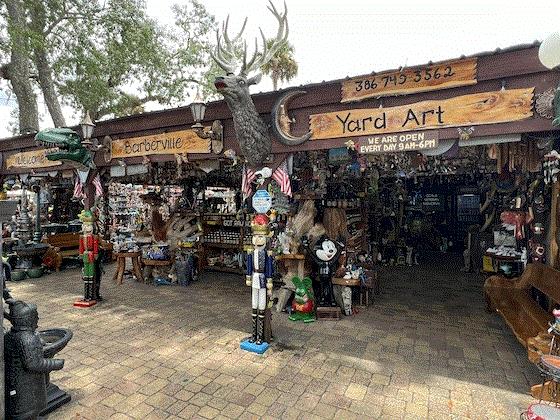
For a little while, Ball Publishing owned a magazine called Roadside, dedicated to the interesting and unusual places found along America’s forgotten highways—you know, the Corn Palace and the Idaho Potato Museum and such. Last Saturday, I felt like a Roadside reporter as Laurie and I dropped in at Barberville Yard Art Emporium. I love a fun, quirky destination and this place is just that!

Located on Highway 40 about 30 minutes west of Daytona Beach (where we'd also stopped at another amazing attraction, Buc-ee’s), Barberville Yard Art Emporium bills itself as “3 acres of whimsical pieces.” Truly, you’ll never see more Talavera Mexican pottery and figurines outside of Mexico, along with loads of Haitian reclaimed oil drum art, wood carvings, recycled cast aluminum furniture and statuary … it’s a hoot! Literally hundreds of thousands of pieces, they say, with something for everybody—and plenty priced under $15, assuring the tourists and their kids will leave with something.
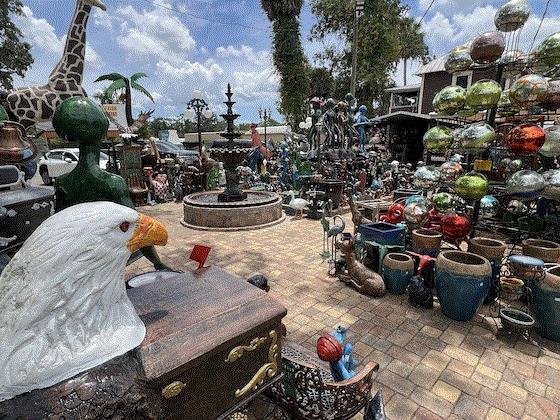
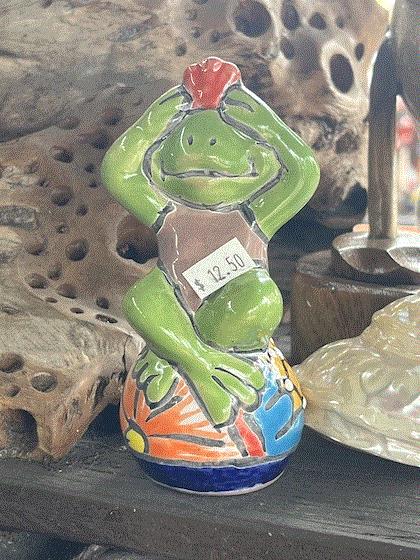
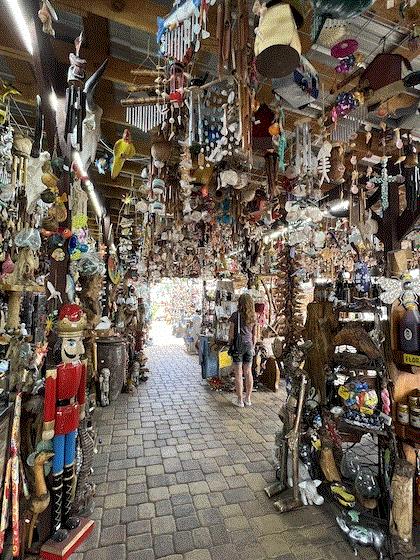 We even found what we collect, a frosch koenig (frog with crown). When we told the cashier of our find, she told us the story of a customer who said to her, “I bet you won’t have what I want.”
“Try me,” she replied.
“An aardvark,” he challenged. She smiled and said, “Come this way,” and led him right to one.


Feel free to email me at beytes@growertalks.com if you have ideas, comments or questions.
See you next time!

Chris Beytes
Editor-in-Chief
GrowerTalks and Green Profit
This e-mail received by 29,752 loyal readers!
Thanks to my loyal sponsors, who help me reach the 29,752 readers of Acres Online in more than 60 countries. Want to be one of them (a sponsor, that is)? Give Kim Brown a shout and she will tell you about our many advertising opportunities.