July Farm Update
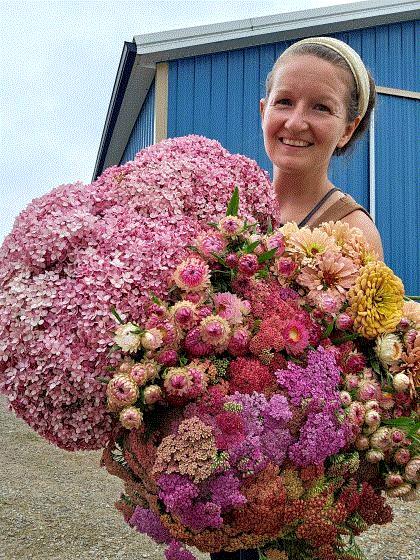
Summer blooms coming in hot!
All our spring planting is starting to pay off! Full disclosure—I don’t love the heat. Starting in July, I count the weeks until the fall reprieve in September. To make matters a touch more challenging, rain has been inconsistent. It’s pouring for twenty minutes or dry as a bone. I often wonder what happened to the soft gentle afternoon rains we had when I was a kid.
With the warmer than normal temperatures in southeast Michigan, the heat-loving summer annuals like celosia, sunflowers and zinnias are exploding in the fields. We have an acre of outdoor dahlia production this season and they are starting to bud up, too!
We are leaving the farm for a weeks’ vacation and trust me—its desperately needed. Tater will be playing on the sandy beaches of Lake Michigan, while I hope to take the time to recharge, so it's been a wild week getting the farm squared away for our absence. We have a great crew and the farm will be in great hands. I am excited to see what the dahlias look like when I return!
I had the pleasure of touring Sunny Meadows Flower Farm in Columbus, Ohio, for Debra Prinzing’s new book release “The Flower Farmers”. Read on to learn about Steve and Gretel’s farm, their stunning lisianthus and more!
With all that being said, let’s talk shop.

At Sunny Meadows Flower Farm
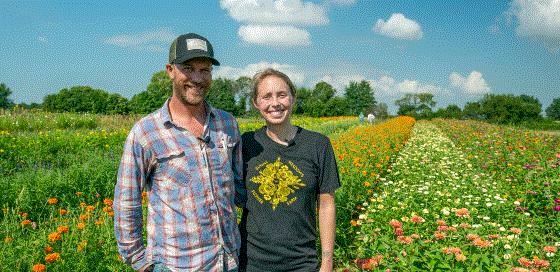 Steve and Gretel Adams, husband and wife dream team of SMFF. Photo by Tilmor
Meet Steve and Gretel Adams, the husband and wife dream team behind Sunny Meadows Flower Farm. They are first-generation farmers who owe their success to tenacity, perseverance and passion. Steve says SMFF is a culmination of twenty years of blood (not too much), sweat and tears.
SMFF started as a homestead farm in 2006. Steve and Gretel hoped to sell eggs, produce, homemade soaps and meat. Over the years they saw tremendous opportunity and profits in flower farming, and by year seven the farm transitioned to 100% flower production. Steve and Gretel have more than eighteen greenhouse structures on their farm, totaling an acre of production. Half of the structures are heated. Their anemone, ranunculus and spring crops start flowering in early March. Easter and Mother’s Day are the target flowering dates for spring production.
In addition to the greenhouses, Steve and Gretel have 65 acres of field production. Half of the acreage is cover cropped. They have 100,000 dahlias planted for outdoor production this season. I had the pleasure of seeing one of their 14-acres fields of luscious sunflowers, zinnias, rudbeckia, celosia and strawflowers. It’s truly a sight to behold!
SMFF specializes in florist wholesale and grocery bouquets. The SMFF farm crew can make as many as 500 bouquets in an afternoon. They ship flowers all over the country, and service florists and grocers in Cincinnati, Cleveland and Columbus. Steve and Gretel are leaders in the slow flowers movement and have their production systems down to a science. Steve and Gretel offer consulting services for intermediate and seasoned growers. If you don’t have a chance to make it to one of their future farm tours, I highly encourage you to book a
SESSION. They are a wealth of information.

Lisianthus Production Tips from Sunny Meadows
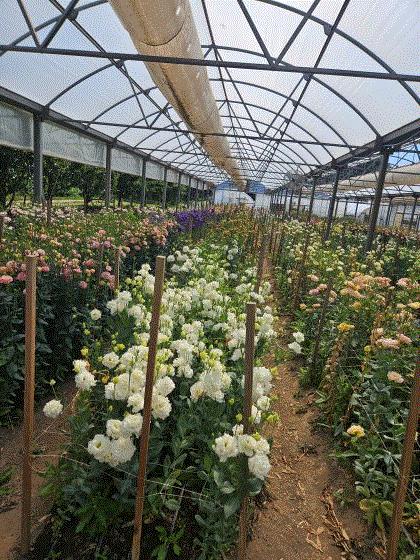
Summer is peak lisianthus season at SMFF, and Steve and Gretel were kind enough to open their farm for attendees to see their incredible lisianthus!
Steve steams soil to mitigate disease pressure. Steve steams before the lisianthus are planted, and this is a critical step in growing a healthy crop. Fusarium is one of the primary challenges in lisianthus production and can live in the soil profile for years.
The lisianthus in the trial greenhouse were transplanted in Week 2 and were heated to 50F during the winter months. The planting crew installs Hortonova netting and plant two plants per square on diagonals. The blooms and stem length were spectacular!
Steve and Gretel sell their lisianthus by the bloom count instead of stem count. Florist bunches have 20 blooms per bunch, grocery store bunches have 10 blooms each.
Steve encouraged attendees to reduce watering and fertilizing once the plants set flower bud. By reducing the water, the internodes between blooms are shorter. Compact spray lisianthus are less prone to damage and ship better. The harvest crew doesn’t cut the lisianthus per se; they use their hands to snap the stems off at the third node. Steve and Gretel will baby the lisianthus to get a fall flush on their first and second succession of plants.
Breeders have varieties bred for all season production. However, succession-planting lisianthus is a challenge. Steve states that often lisianthus planted six weeks apart will flower at the same time, and the later succession is shorter than the first. Tater and I have also seen this—if someone knows how to solve this problem please
DROP US A LINE. We would all love to know how to fix this!
Breeders such as Takii and Sakata take special interest in SMFF lisianthus production due to their location in the Midwest. Many trial sites for lisianthus are on the east and west coasts. SMFF provides valuable feedback to the breeders on how cloudy winter conditions can impact production. Gretel and Steve are also the voice for U.S. flower color preferences. Our designers prefer pastels, muted tones and hard-to-describe colors, while other parts of the world prefer bold blooms. Fingers crossed that more breeders listen to Gretel and Steve and continue to create sophisticated colors in lisianthus!

Words of Wisdom From Gretel and Steve

Steve and Gretel gave us an assortment of tips, both about practical farm operations and keeping the right mindset, Here are a few:
- Use an air compressor blow gun to get buckets apart with minimal effort.
- Take your finances seriously. Many farms are asset-rich and cash-poor. Make strategic decisions to lay a strong foundation for future success early in your farming career.
- Mother’s Day is the Super Bowl and you need to be physically conditioned for it. Be kind to your body so you can farm for your entire career.
- As you embark on your flower farm journey, it’s worth thinking about the succession plan for the farm. If you don’t have children to take over, start thinking early about your exit strategy, such as creating an employee buyout option.
- Build the structures you can afford, but be aware of snow loads and ice accumulation during the winter months.
- Flowers are like fashion—there are trends that come and go. Be proactive and pay attention to in-demand colors and subtle changes in the market.
- Focus on the sales enterprises you want to pursue. You can pivot and change your farm over the years as your needs change.
- Over the years, SMFF created new enterprises to have year-round employment for their crew. Dahlia tuber sales provide hours for their crew during the heart of winter.
- Working farms aren’t perfect—they all have weedy patches. Don’t beat yourself up if things aren’t immaculate all the time.
- Steve and Gretel say that since they built this farm as first-generation farmers, you can do it, too! Hard work and consistent, steady progress go a long way.
Thank you, Steve and Gretel, for opening up your farm and your hearts to us. Thank you for giving us all something to strive for!


Until next time,
Lindsay Daschner (and Tater)
Editor-at-Large—Bloom Beat
Owner—Forget-Me-Not Farms
This email was received by 6,250 of your fellow fresh-cut flower growers!
If you're interested in advertising in Bloom Beat, contact Kim Brown and she will hook you up!