Look Ma, No Seeds!
Sometimes my gigs as managing editor of Green Profit on the retail side and Inside Grower on the CEA side coincide, sort of like Seinfeld’s colliding worlds. I had such an instance recently when interviewing Josh Kirschenbaum, vegetable account manager of PanAmerican Seed, about trends in snacking veggies for an upcoming Green Profit story.
While we were chatting about this growing trend, he mentioned a line of seedless peppers for commercial growing. The first one debuts next month and is called Peppi Grande Red, a roasting-type pepper. They're also working on a snacking seedless pepper and all in the seedless line have some cool traits.
One is that, because they need to be isolated to be seedless, they're perfect for protected culture growing like CEA.
“Another nice characteristic about them is they are super sweet,” Josh notes, saying the lack of seeds might be increasing the flavor. “The Brix comes in one to two points higher than standard snacking or roasting peppers.”
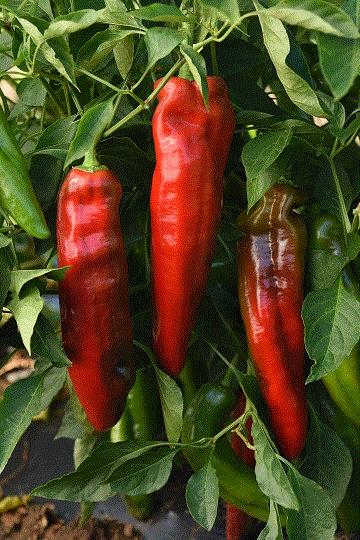
Right now, PanAmerican has snacking seeds available to trial and they hope to have something introduced within the next year. As a consumer who buys snacking peppers, I’m looking forward to taking a big bite of pepper without the seeds.
If you’re interested in what’s coming down the pike for retail, check out the November issue of Green Profit, where I talk about snacking veggies and Ellen writes about beverage trends related to edibles.

Disaster Assistance Available
Growers and farmers impacted by natural disasters in 2018 and 2019 can now start signing up for assistance through the Wildfire and Hurricane Indemnity Program Plus (WHIP+). Congress approved more than $3 billion for assistance via a disaster-relief package in early June for commercial growers who lost crops due to hurricanes (including flooding from the recent Hurricane Dorian), tornadoes, typhoons, volcanic activity, snowstorms or wildfires.
WHIP+ is available for growers in counties with a Presidential Emergency Disaster Declaration or a Secretarial Disaster Designation, but growers outside of these counties can also apply—they just need to provide more supporting documentation to establish the crops were directly affected by a qualifying disaster loss.
I wanted to double check to make sure this was applicable to greenhouse growers, so I emailed the press office for the USDA. I received a quick reply from Peter Wood, public affairs for USDA:
“Yes, greenhouse growers can apply for disaster relief through WHIP+ if the crop lost is a Noninsured Crop Disaster Assistance Program (NAP) eligible crop.
Eligible NAP crops currently include: Crops grown for food; crops planted and grown for livestock consumption, such as grain and forage crops, including native forage; crops grown for fiber, such as cotton and flax (except trees); crops grown in a controlled environment, such as mushrooms and floriculture; specialty crops, such as honey and maple sap; sea oats and sea grass; sweet sorghum and biomass sorghum; industrial crops, including crops used in manufacturing or grown as a feedstock for renewable biofuel, renewable electricity or biobased products; value-loss crops, such as aquaculture, Christmas trees, ginseng, ornamental nursery and turf-grass sod; and seed crops where the propagation stock is produced for sale as seed stock.”
There you have it. You can CLICK HERE for a list of counties that received qualifying disaster declarations and designations. CLICK HERE to read through the full release.

P.L. Light's New Intro
Earlier in September, P.L. Light Systems announced its newest addition to its offerings: the 315 NXT-LP-CMH luminaire. According to the company, the light can either be used as stand-alone technology or to supplement existing lighting.
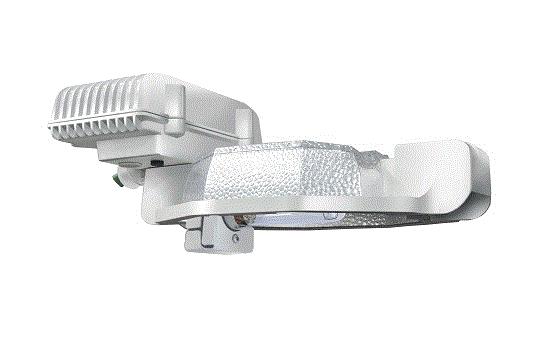
What’s key is its low radian heat output, which lends itself to vertical farm applications or facilities where ceiling height is limited.
“The well-balanced, highly stable spectrum of Ceramic Metal Halide technology delivers a natural white light that helps reduce intermodal stretching to produce a stockier, healthier plant during the vegetative growth cycle,” the announcement says. “This full spectrum light is also ideal for grading of the crop and makes for a more visually comfortable environment.”
Eric Moody, P.L. Light sales manager, says, “A big advantage is the low wattage, allowing for close-to-crop mounting, better uniformity and reduced BTUs resulting in reduced AC costs.”
It's Survey Time
If you’re a long-time reader, you know we send out links every year for our Wage & Benefit Surveys for GrowerTalks and Green Profit. In fact, this will be the 24th year for GrowerTalks and 11th for Green Profit. Why do we do it? To track year-over-year changes in hourly and salaried wages throughout the U.S. and Canada, as well as the benefits being offered and employment changes.

The survey takes about five minutes to complete, and if you enter an email at the end, you’ll be entered into a drawing to win a 128GB iPad. But don’t worry—we don’t identify any respondents; it’s all aggregated information. Special thanks goes out to Florasearch for once again sponsoring these surveys!
Here’s the link to the grower survey: https://www.surveymonkey.com/r/HZ7GJW9
And the link to the retail survey: https://www.surveymonkey.com/r/P9JR8BJ
New Vertical Farm Partnership
Glenn Behrman, founder and president of CEA Advisors, recently emailed me to let me know his company has formed a new partnership with Farminova Plant Factory, which he calls a one-stop vertical farm technology provider. The strategic partnership allows both to jointly develop future vertical farm projects for supermarkets, and other commercial and industrial end users.
“We are thrilled to collaborate with Farminova in developing our combined pipeline of vertical farming projects,” Glenn says. “This partnership recognizes the value of our company and strategy, and significantly expands both CEA’s and Farminova’s reach in the vertical farming sector while leveraging our respective strengths.”
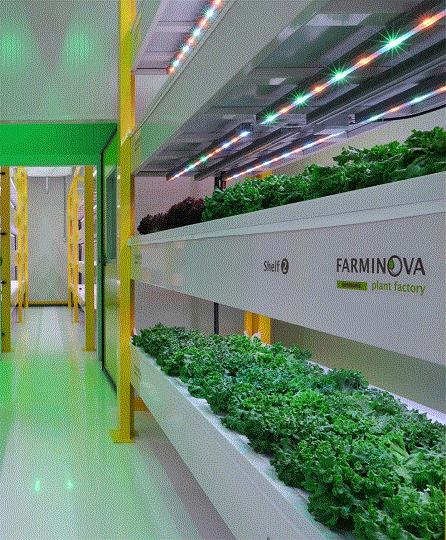
CEA Advisors is exactly as the name implies, a vertical farming consultant, as well as manufacturer and developer. Can Hakan Karaca, chairman of Cantek Group (the parent company to Farminova), says both companies have similar approaches to building vertical farms.
“We believe that the CEA and Farminova alliance in vertical farms is an important step forward for the industry, with the potential to serve a full range of commercial clients, including grocery retailers worldwide with automated farms capable of producing substantial quantities of both food and non-food products,” he says.
Farminova offers vertical farm options for growers based on size, ranging anywhere from 1,000/day heads of lettuce up to a larger 20,000/day design.

New CBD Studies
One of the drums that continues to be beat surrounding cannabis and hemp is the research aspect. There are so many claims out there about what medicinal cannabis and CBD oil can do, but few of those claims have been proven by science. Now, progress is being made to investigate those claims further.
According to a recent release from the U.S. Department of Health and Human Services and the National Institute of Health, about $3 million in research grants will be awarded to study the potential pain-relieving properties in cannabis, including both minor cannabinoids and terpenes.
“THC may help relieve pain, but its value as an analgesic is limited by its psychoactive effects and abuse potential,” says David Shurtleff, deputy direct of the National Center for Complementary and Integrative Health, the part of the NIH funding the awards. “These new projects will investigate substances from cannabis that don’t have THC’s disadvantages, looking at their basic biological activity and their potential mechanisms of action as pain relievers.”
CLICK HERE to see the whole release and the study topics receiving the grant money.


As always, feel free to email me at jpolanz@ballpublishing.com with comments, questions, news and views.
Until next time,

Jennifer Polanz
Editor-at-Large
Inside Grower
This email received by 27,397 loyal readers!
Interested in advertising in Inside Grower? Contact Paul Black or Kim Brown and they'll show you how easy, effective and affordable it is.